
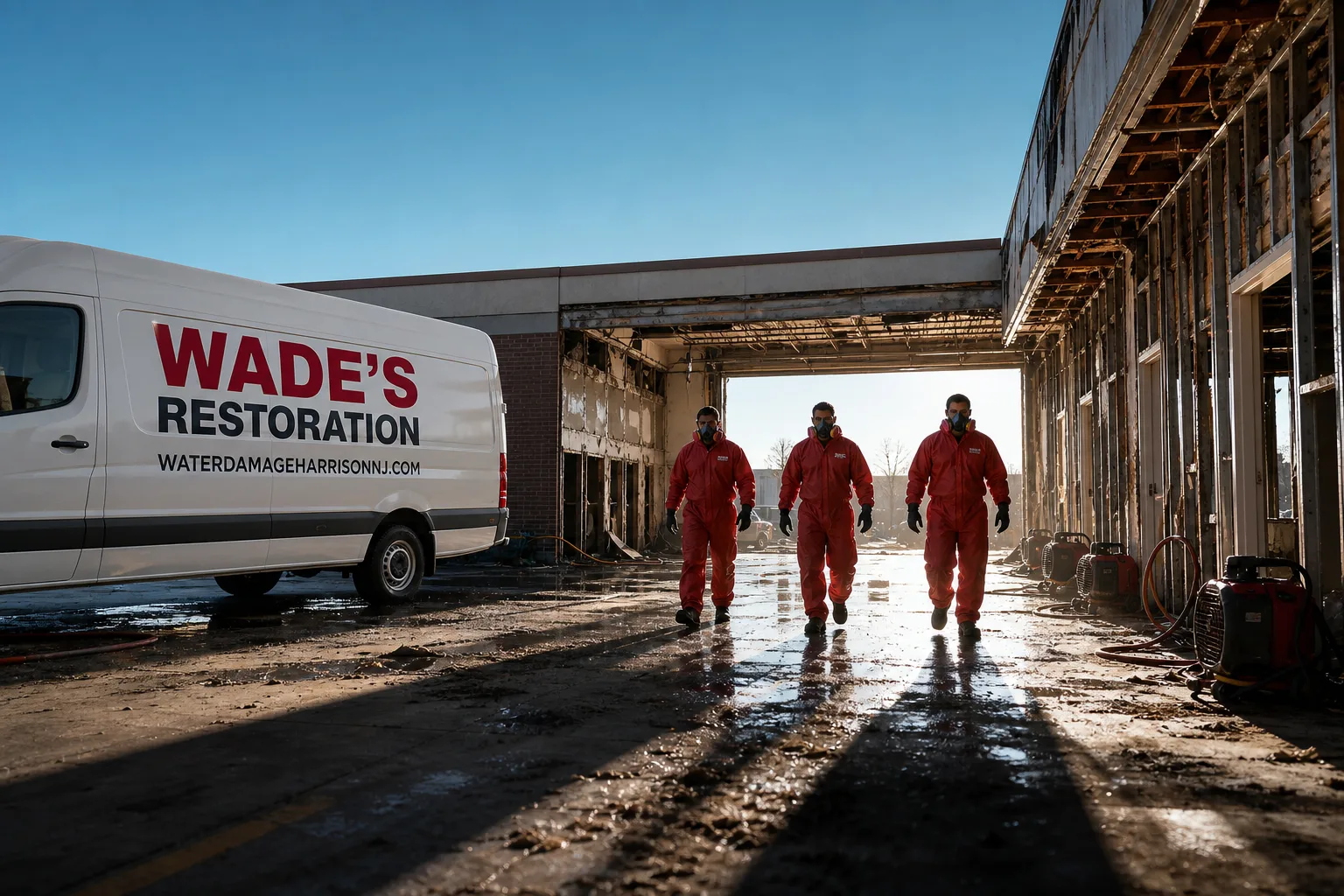
Free visual inspection and a written scope of work before any mitigation begins - photos, moisture readings, and drying logs go in your claim file
The scope we write is the scope we bill. Anything new gets shown to you, in writing, before we touch it.


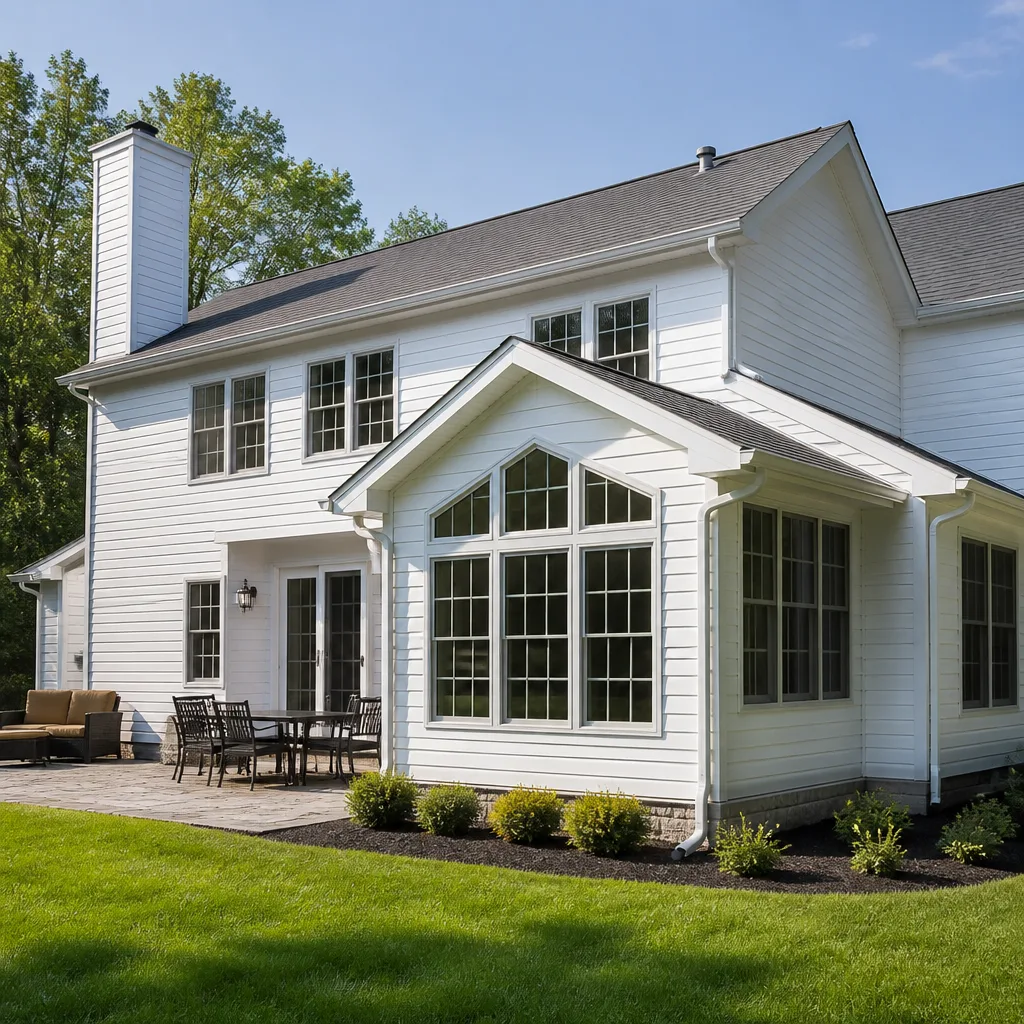
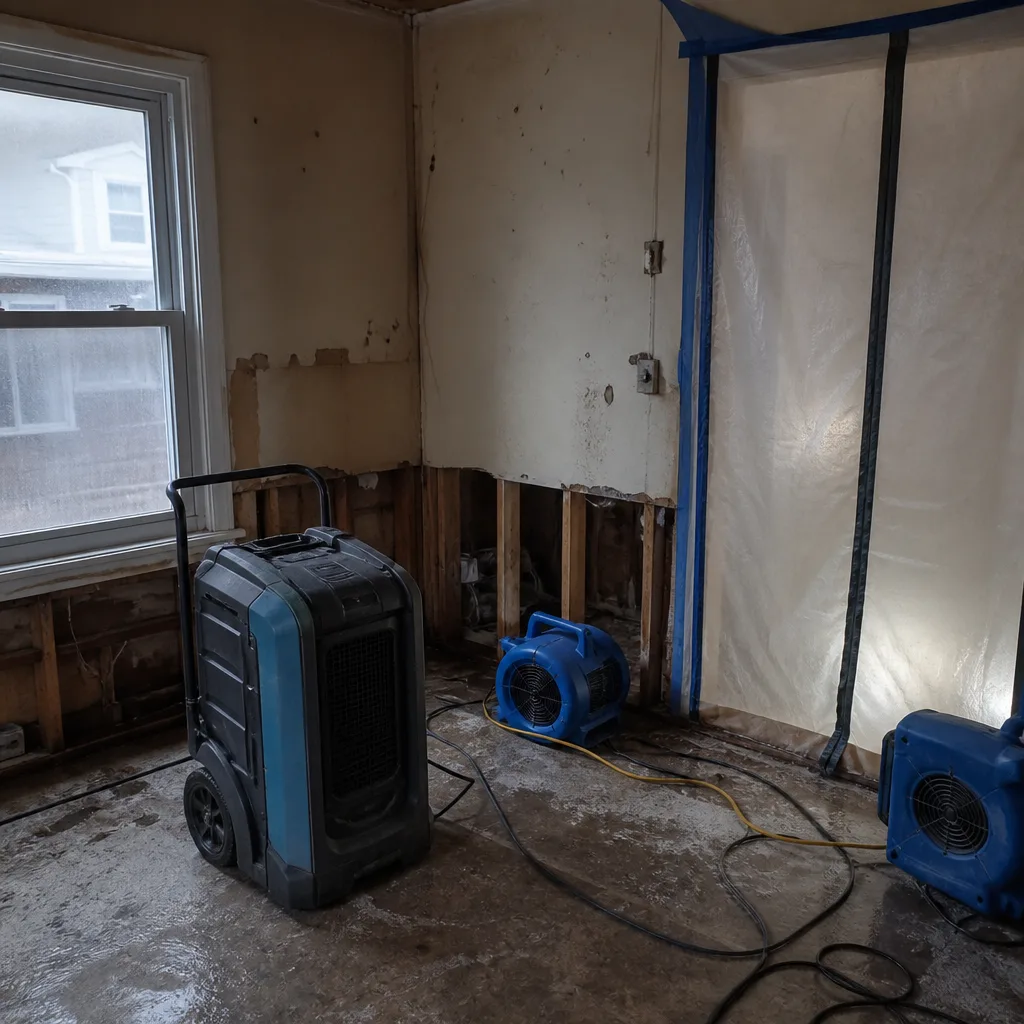 Before
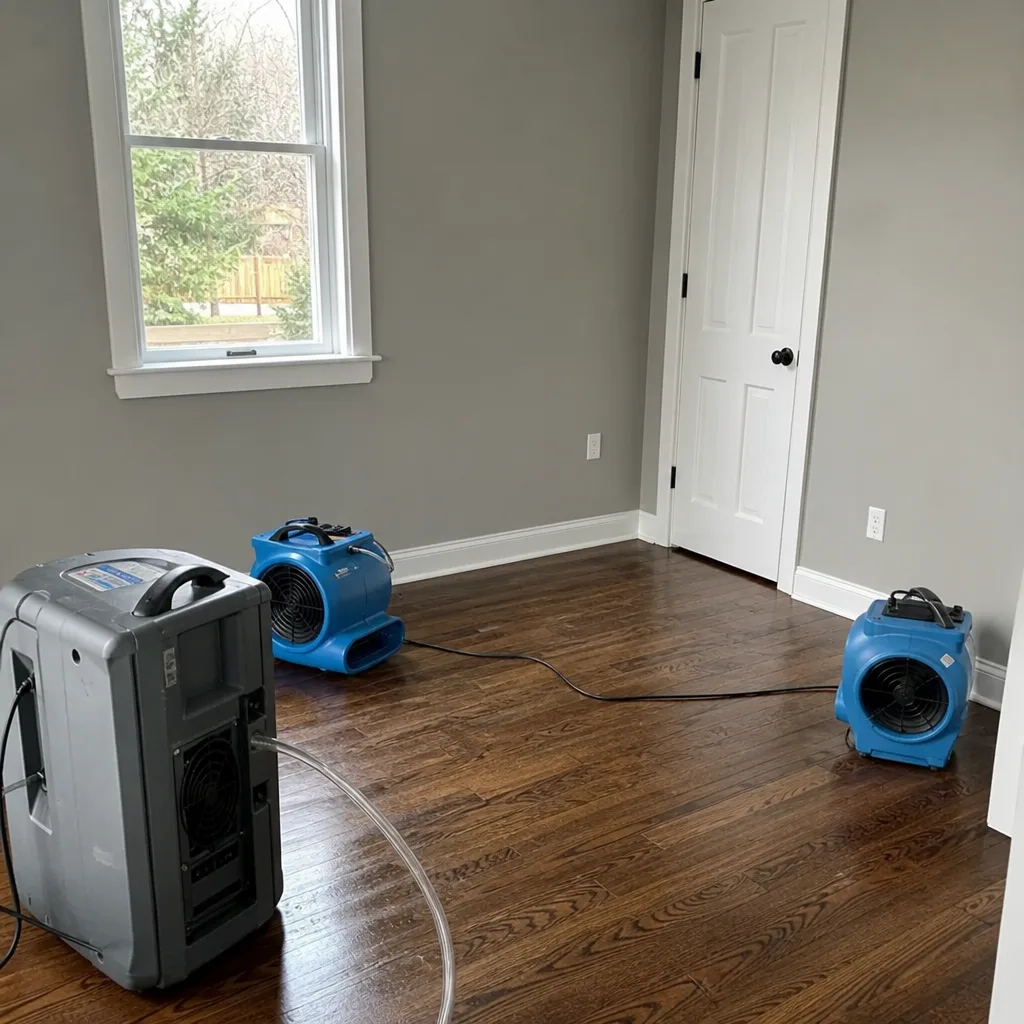 After
After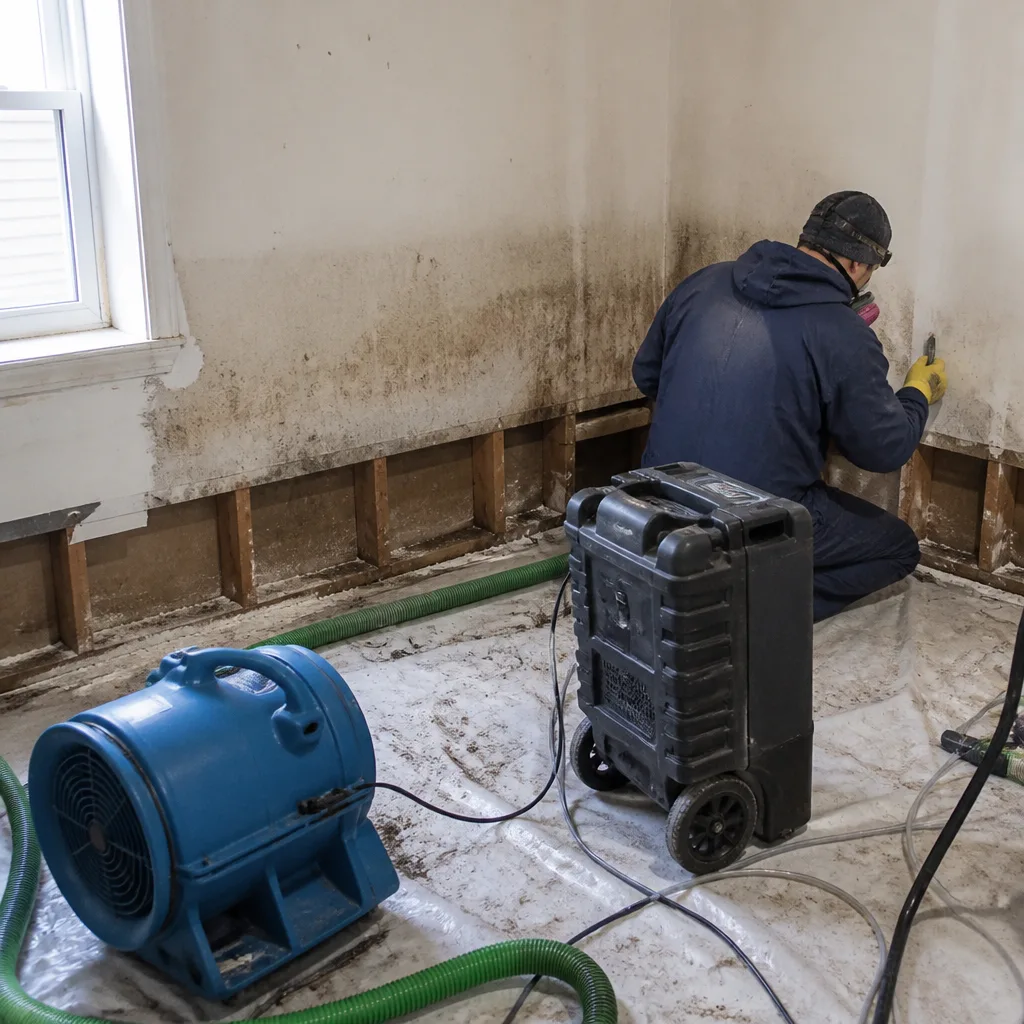 Before
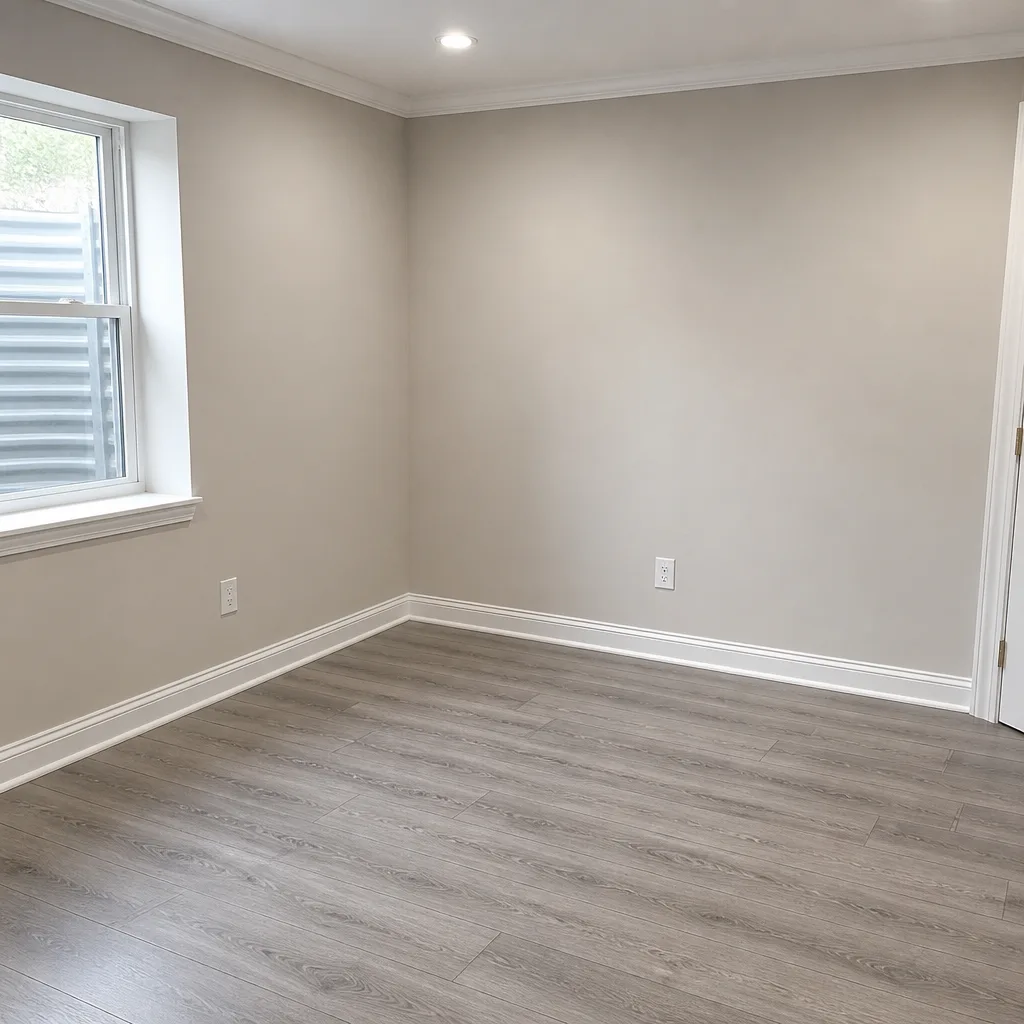 After
After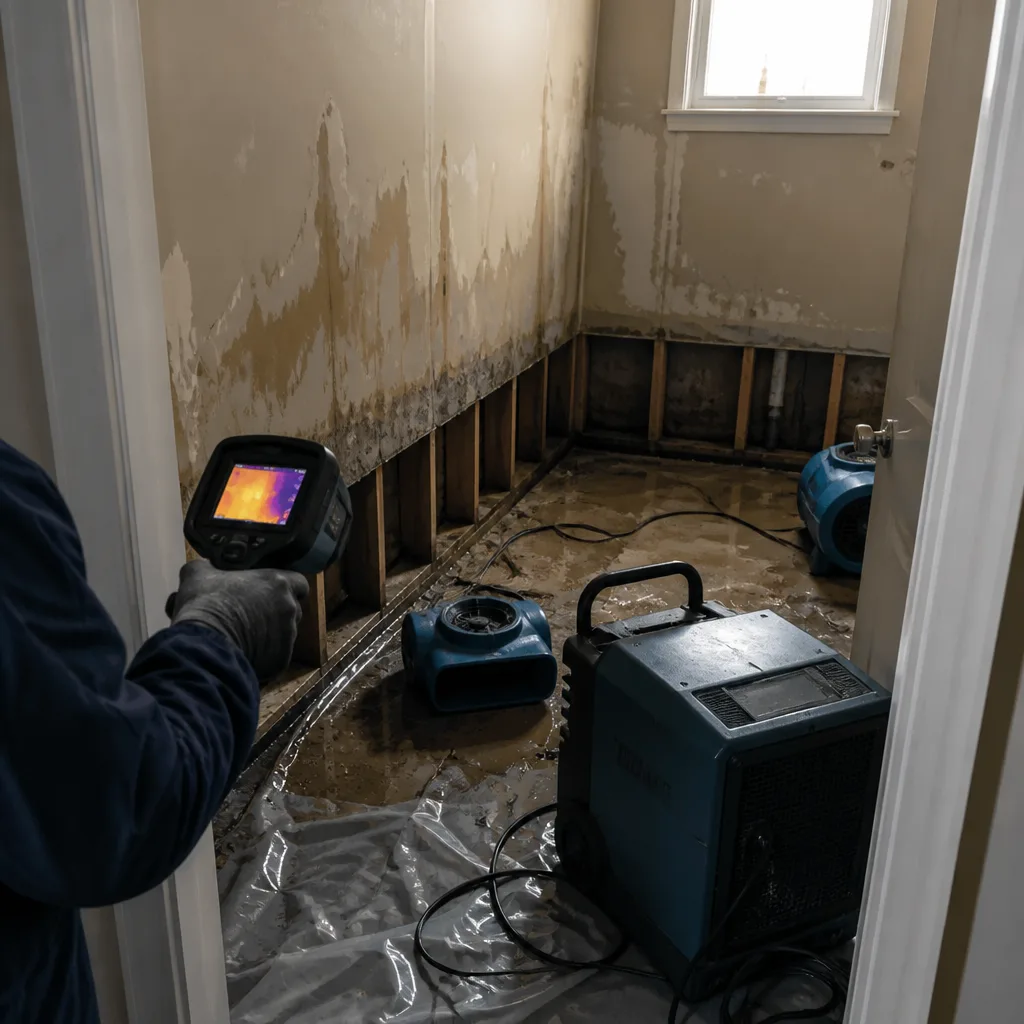 Before
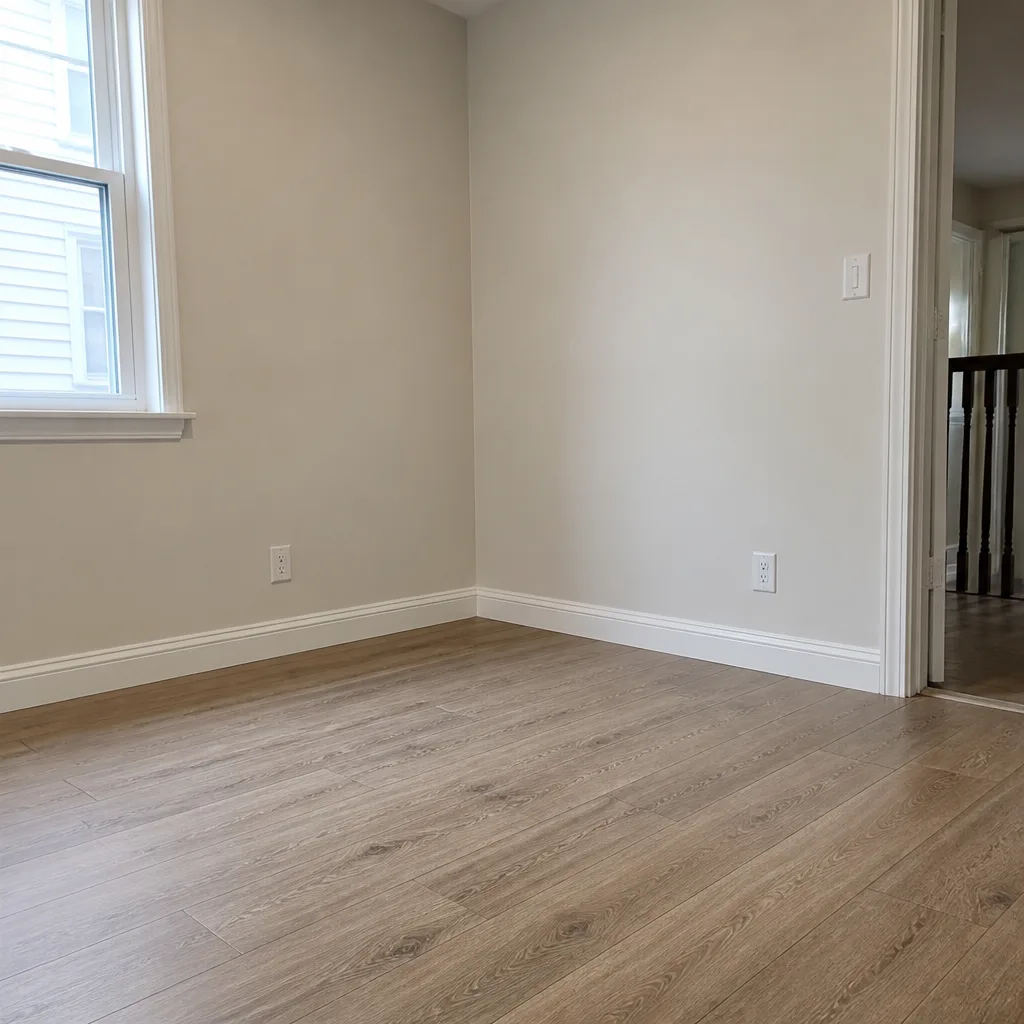 After
After24/7 Emergency Storm & Disaster Restoration in Hoboken
Storm damage doesn’t wait for business hours, and neither do we. When a nor’easter tears through the Mile Square City or a coastal surge pushes the Hudson back through the sewer lines, you need a crew that’s already been through this before, many times. Hoboken’s geography makes it uniquely vulnerable: water pools, basements flood, and every hour of delay turns a bad situation worse. Call (856) 501-6142 and Wade answers, day or night, not an answering service. We dispatch crews into Hoboken’s narrow streets within the hour, with extraction pumps, air movers, and thermal imaging cameras ready to document what the water did and start undoing it. The first hour after floodwater recedes is when you can still stop what’s coming next: mold inside wall cavities, warped hardwood, wicking up through the plaster of that 1905 brownstone. Free visual inspection, no pressure, no scripted phone tree. Just a local owner who knows exactly what a flooded garden-level unit on Willow Avenue looks like because he’s dried out dozens of them.
Understanding Storm & Disaster Restoration Severity in Hoboken Properties
Hoboken’s housing stock, overwhelmingly brick row houses and brownstones built between roughly 1870 and 1930, behaves completely differently in a flood than modern wood-frame construction you’d find further from the Hudson. Masonry walls soaked with water hold moisture for weeks without proper structural drying, and the shared party walls between attached units mean water in one home migrates sideways into the next within a day or two. Moisture mapping matters here more than almost anywhere else in the region. Water also brings contamination. Category 1 water comes from a broken supply line. Category 2 carries detergents or similar contaminants. Category 3 is what Hoboken gets too often: black water from combined sewer backflow, pushed up through floor drains and toilets when tidal surge coupled with heavy rain overwhelms the city’s aging system. That water carries pathogens and demands full containment, disposal of saturated materials, and clearance testing before occupants return. Humidity from the Hudson keeps ambience high enough that surface drying alone never finishes the job, which means using desiccant dehumidifiers and daily moisture logs until the building envelope is truly dry.
Why Hoboken Property Owners Choose Wade’s Restoration
- 45-minute response commitment: From the moment you call, we’re organizing equipment and heading toward Hoboken. In many cases, extraction starts inside the hour.
- 24/7 live answer, always a real person: No IVR menu and no third-party answering service. Wade answers his own phone and will be the one making decisions about your job.
- IICRC-certified crews: Wade and his team hold Water Damage Restoration Technician (WRT) and Applied Structural Drying (ASD) certifications, with additional Fire & Smoke Restoration Technician (FSRT) and Applied Microbial Remediation Technician (AMRT) credentials in house.
- Free visual inspection, every job: Before any work starts, Wade walks the site with you, explains what he’s seeing, and hands you a written scope. No pressure, no inflated estimates after the fact.
- Direct insurance billing: We document everything room by room, negotiate directly with your adjuster, and bill the carrier for covered losses. You focus on your family, not on paperwork.
- One team, start to finish: From emergency extraction through structural drying to base trim and finished walls, the same people who show up at 2 a.m. are the people who hand you the keys at the end.
Our Storm & Disaster Restoration Process
Inspection & Assessment
Wade arrives with a thermal imaging camera and a moisture meter. He maps where water has traveled, checks for sewer backflow contamination, and identifies what can be saved and what cannot. You get a written scope before anything else happens.
Extraction & Stabilization
Submersible pumps and truck-mounted extraction units pull standing water out of garden-level rooms, crawl spaces, and floor cavities. If windows or doors were blown out, we board up and tarp immediately to stop further damage and secure the building.
Drying & Dehumidification
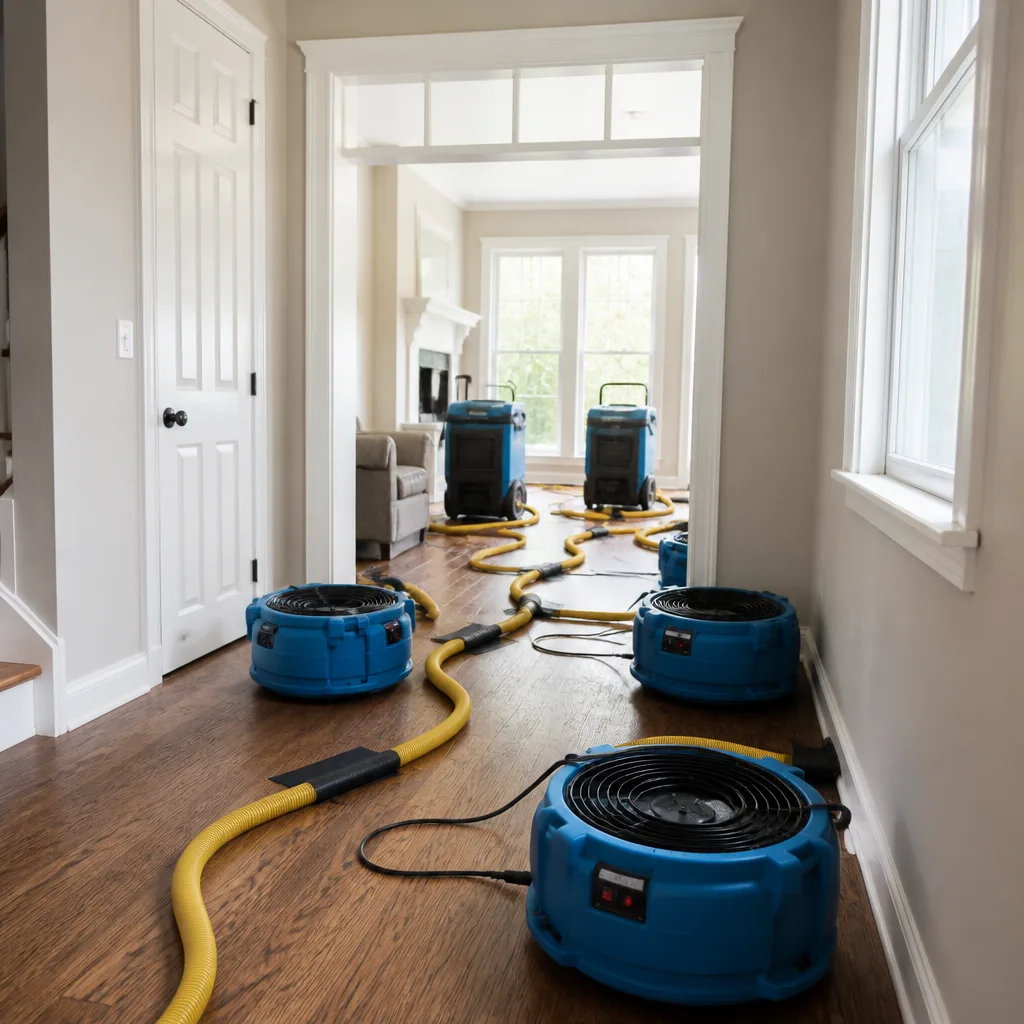
We place Dri-Eaz air movers, Phoenix desiccant dehumidifiers, and Injectidry drying mats behind baseboards and under flooring. Because Hoboken’s masonry walls dry slowly, we run daily moisture checks and adjust the placement until readings are normal, not just until the surface feels dry.
Cleaning & Sanitization
HEPA air scrubbers run continuously during demolition and cleanup. For Category 3 water events, we contain the affected area, remove saturated drywall and plaster, and apply EPA-registered antimicrobials before any rebuild begins.
Mold Prevention & Corrosion Control
Every storm restoration in Hoboken includes a mold-readiness step: sanitizing affected framing, applying mold-resistant coatings, and checking garage and exterior hardware for salt-air corrosion that worsens after water exposure. Any hardware showing pitting or rust is flagged for replacement.
Repairs & Restoration
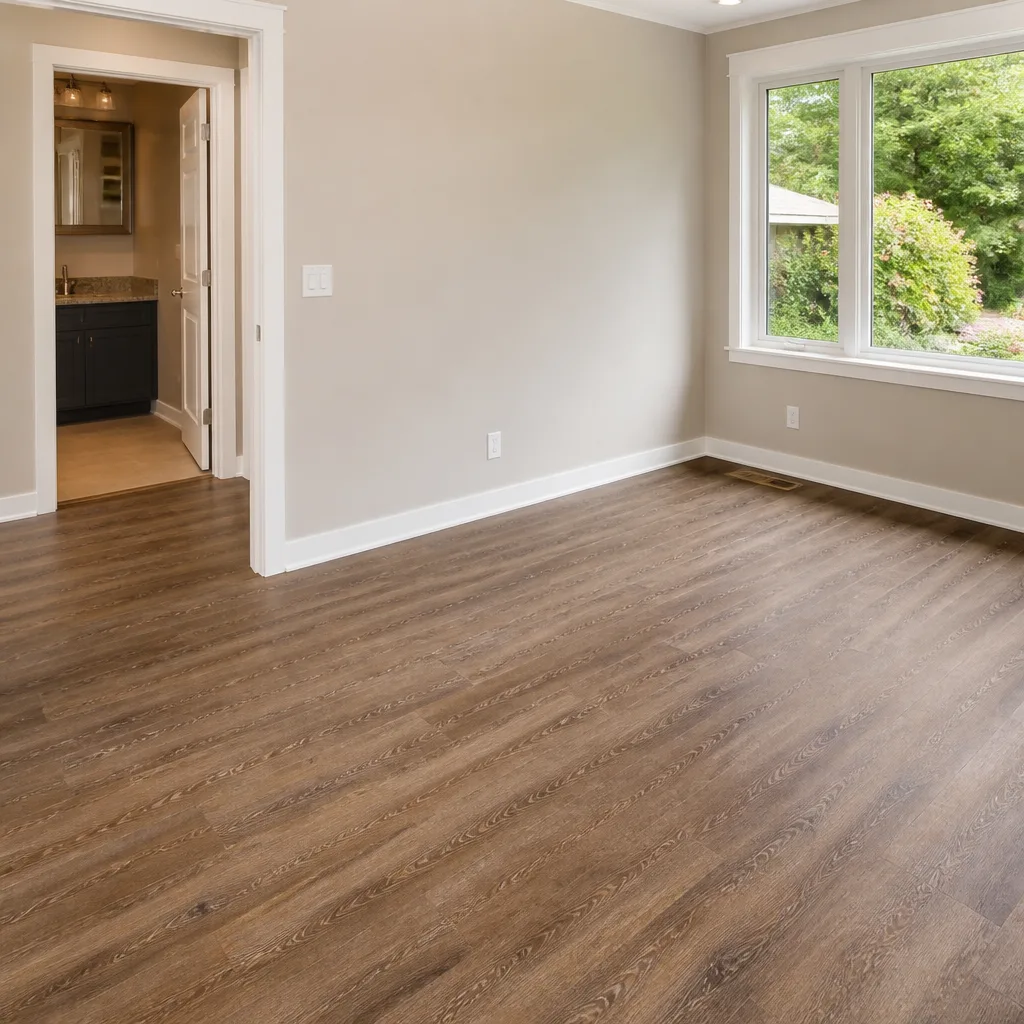
The final step is putting the building back. Drywall, trim, flooring, paint, and any structural repairs needed are completed by the same crew. We hand you a full moisture log and photo documentation for your insurance file.
Need Emergency Storm & Disaster Restoration in Hoboken Now?
Crews minutes away, answering live 24 hours a day. The sooner we start, the less it costs.
Working With Your Insurance Company
After a storm, the insurance process can be as exhausting as the storm itself. Our job is to make the claim part simple. We document from the first hour: photos of every affected room, moisture readings logged daily, thermal imaging captures, and a detailed line-item scope that matches industry estimating standards. Wade communicates directly with your adjuster, so you’re never stuck relaying messages between two sides who don’t want to talk to each other. If the adjuster questions a line item, Wade explains the reasoning in technical terms they understand, backed by moisture maps and photos. In Hoboken, where flood claims often involve city sewer backflow and basement contamination, documentation of exactly where the water came from matters for coverage determination. We capture that evidence before it’s cleaned up and gone.
What We Provide Your Insurer
- Thorough documentation of the loss
- Photos of all damage, room by room
- Moisture readings and drying logs
- A detailed, line-item scope of work
- Direct coordination with your carrier
Built for Hoboken’s Loss Calendar
Hoboken’s storm damage follows a predictable rhythm, and a restoration company that’s been working these streets learns it through repetition. January and February bring deep freezes that split aging cast-iron and galvanized supply lines inside uninsulated exterior walls of prewar brownstones. When the thaw comes, water runs inside walls and across ceilings for hours before anyone notices. March through May sees spring rains meeting a water table that’s already high from the Hudson, producing stubborn basement seepage through coarsely mortared fieldstone and brick foundations. June through August delivers the sudden thunderstorms that dump two inches of rain in forty-five minutes, overwhelming the combined sewer system and sending Category 3 backflow through drains in lower-level units. September through November is nor’easter season, and that’s when we’re busiest. Garden-level apartments along Observer Highway and the western blocks near Willow Avenue flood repeatedly, year after year. Knowing the calendar means we anticipate, pre-stage, and respond faster. It also means we can tell you honestly whether that damp wall in March is a one-time event or an early warning of a bigger problem.
Storm & Disaster Restoration Across Hoboken’s Neighborhoods
Hoboken may be only a square mile, but the flood patterns shift block by block. Down along Observer Highway and the old rail corridor near Willow Avenue, the low-lying western edge, stormwater gathers first, and garden-level units routinely take water during nor’easters. The blocks around Church Square Park are older brownstones with deep garden entrances that collect runoff from higher ground and direct it straight into basement stairwells. Up on Castle Point and along Hudson Street, wind damage is a bigger factor; windows, doors, and roofing take the brunt of eastern storms coming off the river, and we do more emergency board-up and tarping up there than anywhere else in the city. The midtown blocks near Washington Street’s commercial corridor often see mixed-use buildings where a retail space floods and water migrates into adjacent residential units through shared walls and floor systems. Because our crews know these blocks, we don’t waste time figuring out where to park or which entrance accesses the below-grade unit. We know before we arrive.
Specialized Storm & Disaster Restoration Services We Offer in Hoboken
Storm Damage Cleanup
After the wind passes and the water recedes, what’s left behind is the problem: mud, debris, broken glass, and saturated building materials everywhere. We remove it quickly and methodically, separating materials that can be saved from those that must go. Storm cleanup in Hoboken’s row houses often means working in tight quarters and narrow stairwells, which is exactly the kind of work our equipment like compact XPOWER extractors and low-profile B-Air air movers is built for.
Flood Damage Restoration
Hoboken floods, and it floods repeatedly. Our flood restoration work starts with aggressive extraction and doesn’t stop until the building envelope is dry all the way through masonry walls, which can take several days with proper dehumidification. We also address what the flood left behind in terms of contamination, especially when combined sewer backflow introduced Category 3 water into the lower floor.
Emergency Board-Up
A broken window or a blown-open door leaves your property exposed to looters, animals, and more weather. We board up with plywood, secure the entry, and make sure the building is safe before we leave, whether or not you’ve chosen us for the full restoration. Board-up in Hoboken frequently means protecting street-level entrances on busy blocks, where security matters immediately.
Roof Tarping
Wind-driven rain exploits any opening. A missing slate or a lifted membrane on one of Hoboken’s flat roof decks lets water pour into the units below. We tarp affected sections using heavy-duty poly sheeting and batten strips, creating a temporary dry-in that gives you time to plan proper repairs without further intrusion.
Debris Removal
Storm debris can be more than an eyesore; it can be structurally dangerous. Broken branches, torn-off gutters, shattered glass, and waterlogged furnishings all have to go before restoration can begin. We handle removal and disposal, including materials contaminated by flood water that cannot simply be left at the curb.
What happens when you call
- 1
A real person answersNo phone trees - you reach a local pro.
- 2
You get an upfront price rangeHonest numbers before anyone is dispatched.
- 3
A background-checked tech heads outLicensed & insured, dispatched right away.
- 4
You approve before work beginsNothing starts until you say go.
Storm & Disaster Restoration Costs in Hoboken, NJ
The question every Hoboken homeowner asks, nursing a flooded basement at 3 a.m., is a fair one: what is this going to cost? Here are honest numbers for this market. A standard Category 1 water extraction and drying job involving a single room or a contained basement area typically runs $1,800 to $3,400 in Hoboken. When combined sewer backflow turns it into a Category 3 event requiring full containment, drywall removal, sanitization, and disposal, expect $4,500 to $9,000 or more depending on square footage. Emergency board-up runs $350 to $700 for a street-level door or window. Roof tarping on a typical rowhouse roof section costs $500 to $1,200. Storm debris removal with disposal typically falls between $400 and $1,800 depending on volume and contamination. Insurance covers much of this on most policies for surface water and wind damage, though sewer backup coverage is a separate rider many Hoboken owners have had to add after repeated events. We offer a free visual inspection and a written scope before any work begins, so the number you hear up front is the number that stays. Call (856) 501-6142 and Wade will walk the job with you and put it in writing.
We Also Serve Cities Near Hoboken
We work throughout the Meadowlands region, not just the Mile Square City. Homeowners in Union City, Jersey City, Secaucus, and Kearny call on us for the same reason Hoboken does: a local owner who answers his own phone and shows up with the right equipment. Same crews, same response time, same guarantee.
Hoboken Storm & Disaster Restoration Questions, Answered
Why does my Hoboken basement flood even when it’s not raining heavily, and is that Category 3 water?
Your basement is flooding because the Hudson River keeps Hoboken’s water table so high that groundwater pushes through foundation walls and floor slabs even without heavy rain. Add the city’s combined sewer system, and tidal backflow has contaminated water moving up through drains. If the water is coming up from the floor drain or sewer line, assume it’s Category 3 and treat it as contaminated. Don’t wade into it without protection, and don’t let children or pets near it. Call us at (856) 501-6142, and we’ll confirm the source and set up containment quickly.
How fast does mold start in a Hoboken brownstone after storm flooding, and what should I do first?
Mold can begin colonizing damp surfaces in as little as 24 to 48 hours, especially in a masonry brownstone where the walls hold moisture deep inside. The first thing to do is stop further water intrusion, if possible, then call a restoration company so extraction and professional drying begin immediately. Do not wait for the weekend to be over. Call (856) 501-6142 as soon as the water recedes enough for us to work safely.
Why do garage door springs and hinges corrode so much faster in Hoboken than inland, and what do you replace them with?
Salt air from the Hudson River, combined with the high humidity that never really leaves this area, attacks the untempered steel in springs, hinges, rollers, tracks, and fasteners. A spring that would last seven to ten years inland may snap in two or three years in Hoboken. When we replace storm-damaged hardware on coastal row houses, we use galvanized or powder-coated springs, stainless steel hinges and fasteners, and nylon rollers designed for corrosive environments. If you’re noticing rust on your garage door hardware, it’s worth a corrosion inspection before the next storm. Call us and we’ll take a look, no charge for the visual.
Can you dry out a garden-level Hoboken apartment that flooded, or does everything need to be torn out?
In many cases, yes, we can dry a garden-level unit without a full gut. It depends on the water category, how long it sat, and what materials are wet. If it’s Category 1 water caught quickly, our Injectidry mats and high-capacity dehumidifiers can pull moisture from behind baseboards, under flooring, and out of solid masonry walls. If it’s Category 3 water or the water sat for more than 48 hours, we’re usually removing drywall, saturated plaster, carpet, pad, and base trim to get to the framing. The free inspection tells you which path you’re on before any invoice is written.
My neighbor’s unit flooded, but mine looks dry-why would I need restoration work?
Hoboken’s attached brownstones share party walls, and moisture from a flooded unit migrates laterally through the masonry within 24 to 48 hours. You see a dry wall; we might find moisture at 40% relative humidity inside the same wall using a penetrating moisture meter. If we don’t dry both sides, mold grows inside the wall cavity and affects both properties. If your neighbor’s unit flooded, especially if it’s attached to yours, get a free inspection before you assume you’re in the clear.
How quickly can you actually get to a Hoboken property after a storm?
We aim for 45 minutes or less from your call to leaving the shop, with equipment loaded and a plan already forming based on which block you’re on. During nor’easters, when demand spikes across the entire low-lying western part of the city, we stage equipment near the hardest-hit blocks in advance. Call (856) 501-6142 and you’ll reach Wade directly, not a call center wondering which office to dispatch from.
Will my insurance cover storm restoration in Hoboken, and how do you handle the claim?
Most homeowners policies cover wind damage and surface water intrusion, but sewer backup and tidal flooding often require a separate rider that many Hoboken owners have added after past events. We photograph everything, log daily moisture readings, prepare a line-item estimate in industry-standard format, and communicate directly with your adjuster. When coverage questions come up, especially around Category 3 contamination, we provide the technical documentation that supports the claim.
What should I do in the first 30 minutes after I discover storm flooding?
First, protect yourself: don’t walk through standing water if you can’t see the floor, and don’t touch electrical outlets or panels. If you can safely reach it, shut off power to the affected area. Then call (856) 501-6142. Take photos before we arrive if you can do so safely. Beyond that, do not attempt to pump large volumes of water yourself; improper drying leads to mold inside walls. A real restoration professional will start extraction properly within the hour.
Serving Hoboken, NJ - Our Local Coverage Area
We’re based in the Hoboken area and know this community well. Use the map below to see our service coverage - if you’re nearby, we can almost certainly help.
Storm & Disaster Restoration in Hoboken: The Full Picture
This page is here to give you the real picture of what storm restoration in Hoboken actually involves, the costs, the timelines, the risks, and the recurring nature of the problem. The Mile Square City has dealt with catastrophic flooding for generations, and the patterns are well documented. In 2012, Hurricane Sandy left more than 80% of the city underwater, and while that was an extreme event, smaller nor’easters bring the same dynamics to the same low-lying blocks every year. Water drains off the heights of Weehawken and Jersey City and pools in Hoboken’s flat bowl with no natural outfall. The combined sewer system backs up. Garden-level units flood. Party walls wick moisture sideways. And the clock starts ticking on mold before the water is even all the way gone. That’s the reality we work in, and it’s why our approach here, from pre-staging equipment on Willow Avenue to running daily moisture logs, is built around this specific city’s failure modes. Not a generic storm response. A Hoboken response.
Wade Ferris started this company in 2007, and his name is the one on the truck and the license. He answers his own phone, meets you at the door, and stands behind the work with a 90-Day Done Right Promise in writing on every water, fire, and mold restoration job. If it isn’t done right, he makes it right. That’s the deal.
Written by Wade Ferris, Owner at Wade’s Restoration, serving Hoboken, NJ and surrounding communities.