
Quick Summary
A typical water damage drying cost ranges nationally between $1,384 and $6,384, with pricing determined by extraction speed, contamination category, and affected material types. Wade's Restoration emphasizes that achieving complete structural drying within the critical 24- to 48-hour window using daily moisture tracking prevents costly secondary structural reconstruction and mold growth. Readers will understand how itemized mitigation phases streamline insurance claims and can call 24/7 for a free visual inspection and a written structural drying estimate.
Water Damage Drying Cost: Cut Repair Bills and Downtime
A typical water damage drying cost ranges between $1,384 and $6,384 nationally, with an average project coming in around $3,868. However, what you ultimately pay depends heavily on how quickly standing water is extracted, the specific materials affected, and the overall scope of remediation.[3]
When contaminated water is involved or moisture sits long enough to require antimicrobial remediation, drying and remediation together often fall between $4.00 and $6.50 per square foot before separate structural repairs begin.[2]
Understanding Water Damage Drying Cost: Key Averages and Timelines
Water restoration invoices are rarely a single line item. Professional contractors like Wade’s Restoration divide the job into distinct phases: emergency extraction, drying and remediation, and post-drying reconstruction. Grouping these together under a single rough estimate often causes confusion during insurance claims.
The total price tag shifts based on structural saturation and the category of water loss. Emergency water extraction costs vary depending on the depth and volume of standing water present.
The Critical 24- to 48-Hour Drying Window
The U.S. Environmental Protection Agency (EPA) advises drying wet or damp materials within 24 to 48 hours because mold generally will not grow if areas are dried within that window. Beyond 48 hours, standing water wicks upward through drywall, insulation, and framing, transforming a straightforward drying project into an expensive remediation claim.[1]
What Does Water Damage Drying Cost? Price Breakdown
Knowing how contractors categorize phases of work helps you evaluate estimates and verify that your insurance adjuster is working with realistic numbers.
| Service Category | Estimated Cost Range | Primary Objective | Billing Standard |
|---|---|---|---|
| Emergency Extraction | Scope-dependent | Removes standing water quickly | Volume and depth of water |
| Drying and Remediation | $4.00 – $6.50 / sq. ft. | Addresses contamination, wet insulation, and mold risk | Containment and antimicrobial treatment |
| Structural Rebuild | Billed separately by trade | Replaces unsalvageable flooring, drywall, and trim | Itemized material and labor quotes |
The Difference Between Extraction, Drying, and Full Restoration
A successful recovery follows three sequential steps:
- Emergency Extraction: Removing standing water to prevent moisture from migrating deeper into structural materials.
- Drying and Remediation: Removing bound moisture from materials and treating affected areas to prevent microbial growth.
- Repair and Reconstruction: Replacing damaged materials and repainting. Keeping this phase separate from mitigation ensures you only replace materials that cannot be salvaged through drying.
Why Standard Square-Foot Formulas Fail in Dense and Historic Buildings
Online calculators and generic insurance estimating tables rely on assumptions built around modern construction: open floor plans, single-layer drywall, and wood-stud framing. In historic communities and older properties, these standard formulas frequently fail.
Older properties feature multi-wythe brick walls, dense plaster-and-lathe partitions, and rubble-stone foundations. These materials behave very differently than modern drywall. Porous masonry and rubble stone draw water upward through capillary action, trapping high levels of hidden moisture inside structural cavities.
Monitoring and Drying Strategies
Drying strategy impacts both project timeline and overall costs:
| Drying Strategy | Monitoring Method | Cost and Property Impact |
|---|---|---|
| Unmonitored Daily Setup | Equipment left running on arbitrary timers | Increases costs, risks over-drying or missing trapped moisture |
| Monitored Drying | Daily moisture mapping and tracking | Runs equipment only until verified dry standards are reached, keeping costs controlled |
Drying Costs by Material: Drywall, Hardwood, and Basements
Need water damage drying cost?
We’re available now - call for a fast, free estimate.
The type of material submerged plays a major role in your final drying bill. Different assemblies require different approaches to manage moisture effectively.
Drywall and Ceiling Water Damage
According to specialists at Wade’s Restoration, clean water in drywall can frequently be dried in place using airflow and dehumidification. However, if water has sat above a ceiling for an extended period or contains contaminants, wet drywall loses its structural integrity and must be removed to allow wall cavities to dry.
Hardwood Floor Drying
Hardwood floor drying often requires specialized extraction and drying equipment to draw moisture out of the wood grain and subfloor, helping prevent cupping and full replacement when addressed early.
Flooded Basements and Sub-Grade Masonry
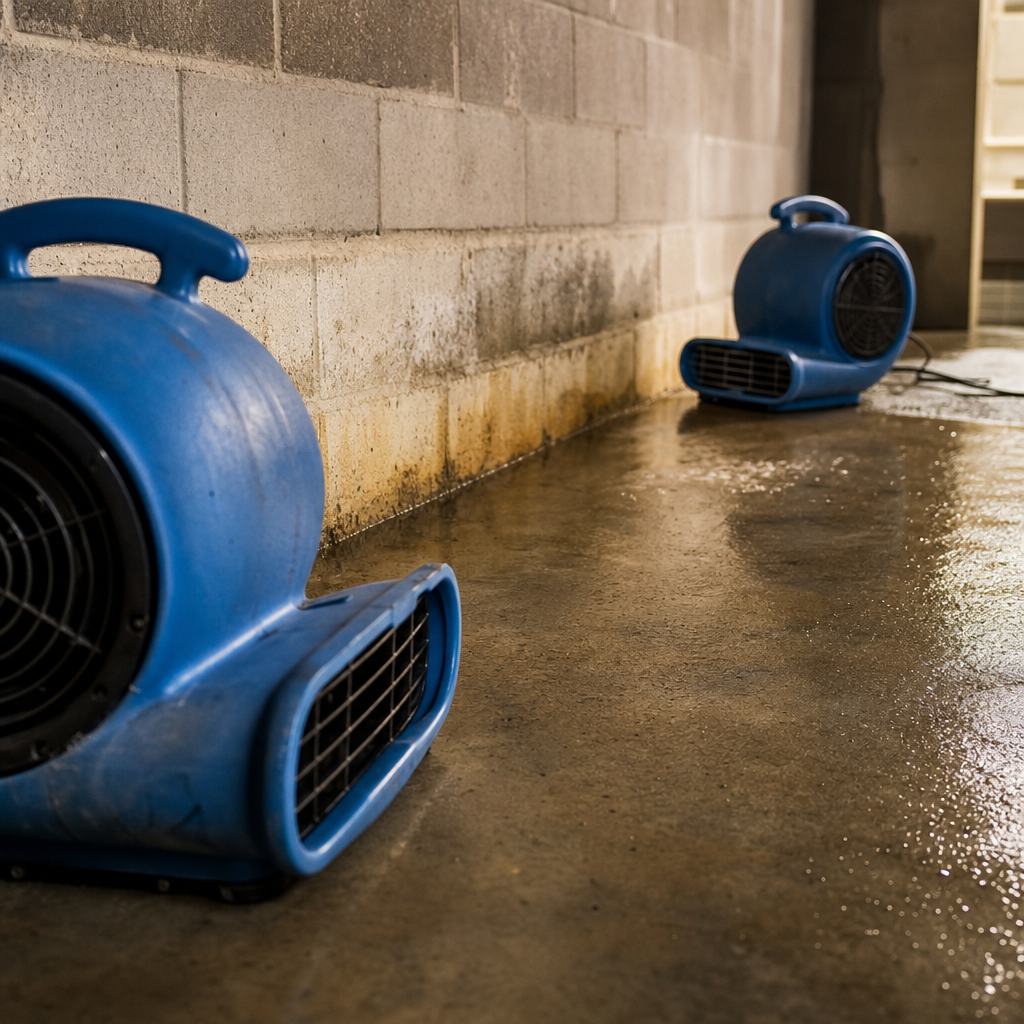
The cost to dry out a flooded basement depends on the volume of water and whether hydrostatic pressure is pushing groundwater through the foundation. Concrete footings and masonry walls absorb significant moisture and require continuous dehumidification within a contained area.
Does Homeowners Insurance Cover Water Mitigation and Drying Services?
Most standard homeowners policies cover sudden and accidental water damage, such as a burst pipe, water heater failure, or an appliance supply line rupture. Gradual damage from long-term unresolved leaks is typically excluded.
Insurance adjusters look closely at the line-item split between mitigation and rebuild costs. Documentation supporting a drying claim typically includes:
- Photographic evidence taken before, during, and after extraction.
- Daily psychrometric logs showing temperature and humidity levels.
- Moisture records demonstrating that structural materials reached dry standards before reconstruction began.
Frequently Asked Questions About Water Damage Drying Costs
How much does it cost to dry out a water damaged house?
The national average ranges from $1,384 to $6,384, with an overall average of approximately $3,868. Actual costs vary based on the class of water loss, materials affected, and necessary remediation.
What is the average cost per square foot for water damage drying?
When water requires containment, antimicrobial treatments, or remediation, drying and remediation together typically run between $4.00 and $6.50 per square foot, excluding subsequent structural rebuild work.
How long does the professional water drying process take?
Under managed temperature and airflow conditions, structural drying generally takes several days. The EPA recommends drying wet materials within 24 to 48 hours to prevent mold growth.
How much does it cost to rent commercial dehumidifiers and air movers?
Equipment rental rates vary by equipment type, capacity, and region. However, operating equipment without proper monitoring can lead to prolonged drying times and unaddressed structural moisture.
Get Fast, Transparent Structural Drying
If you are facing water intrusion, working with professionals such as Wade’s Restoration to extract standing water and dry affected materials within the critical 24- to 48-hour window is essential for minimizing property damage and keeping overall restoration costs down.
Need water damage drying cost?
We’re available now - call for a fast, free estimate.
Sources
- Chapter 4 – epa.gov
- How Much Does Water Damage Restoration Cost? [2026 Data] – jbizmedia.com (2026)
- Water Damage Insurance Claims Statistics (2026) – consumeraffairs.com (2026)
Related reading: Flood Restoration Near Me | 10% Off & Free Estimate | Same-Day Service
Related reading: Water Damage Restoration Service – Call Now-10% Off – Same-Day Service – Free Estimate
Related reading: Water Damage Restoration Cost – 10% Off & Free Estimate – Same-Day Service
Frequently Asked Questions
How does daily moisture tracking reduce overall water damage drying costs?
Unmonitored drying frequently runs rental equipment on arbitrary timers, driving up daily fees and risking incomplete drying inside wall cavities. Wade's Restoration uses daily moisture mapping to ensure commercial dehumidifiers and air movers run only until verified dry standards are met, preventing unnecessary rental expenses and providing the exact documentation insurance adjusters require.
Why do water damage drying costs increase drastically after 48 hours?
Beyond the 48-hour window, trapped moisture begins fostering rapid mold growth and wicking deeper into structural framing and masonry. This shifts a standard clean-water drying job into a specialized hazardous remediation project that requires containment barriers, antimicrobial treatments, and costly material teardowns.
How can property owners verify their structural drying estimate before work begins?
Standard square-foot calculators fail to account for hidden moisture in subfloors, plaster, and dense masonry, making on-site metering necessary for an accurate scope of work. Property owners can call Wade's Restoration 24/7 for a free visual inspection and a detailed, written structural drying estimate that separates mitigation from rebuild costs.
About the author
 |
Sarah Higgins Sarah is a seasoned restoration specialist with over eight years of experience managing complex property recovery projects. Holding a B.S. in Construction Management from Rutgers University, she combines technical expertise with a compassionate approach to guide homeowners through stressful emergencies. Her writing focuses on practical advice for water damage mitigation, mold remediation, and navigating the insurance claims process. |
Water damage, flood, or mold emergency?
We’re available now - call for a fast, free estimate.
Call Now - Free Estimate