
Quick Summary
Residential water damage restoration costs typically average $3,868, with total project expenses ranging between $1,383 and $6,369 based on water contamination categories, affected square footage, and structural saturation levels. To eliminate pricing uncertainty and streamline insurance approvals, Wade's Restoration provides transparent, line-item pricing breakdowns and meticulous moisture documentation from initial extraction through complete structural rebuilding. Readers will understand how to differentiate repair versus replacement expenses and can request a free on-site visual inspection with an upfront, flat-price restoration scope to minimize out-of-pocket costs.
Water Damage Restoration Cost – Clear Pricing and Timelines
Water damage restoration costs typically range between $1,383 and $6,369, with most standard residential losses averaging around $3,868. While smaller, clean-water leaks might sit near the lower end, widespread structural saturation or contaminated water can lead to higher costs.
Water can migrate beneath floorboards, behind walls, and into foundational framing. Thorough moisture documentation, daily monitoring, and clear communication from specialists like Wade’s Restoration help clarify the restoration scope from initial extraction through necessary repairs.
Water Damage Restoration Cost Overview: What to Expect Upfront
Water damage restoration costs in brief: Most residential restoration projects fall between $1,383 and $6,369, with an average cost of $3,868. Mitigation services typically begin with water extraction, followed by structural dehumidification and eventual rebuilding. The final price depends on the square footage affected, the category of water involved, and the specific building materials that absorbed moisture.[1]
When clean supply lines break, remediation is generally more straightforward. When water carries contaminants or sits over time, labor, containment, and disposal requirements expand. Timely mitigation limits secondary damage and helps keep overall expenses lower.
Key Takeaways on Water Damage Pricing
- Emergency Water Extraction: Removing standing water quickly helps prevent liquid from spreading into adjoining rooms and subfloors.
- Structural Drying Equipment: Dehumidifiers and air movers run continuously to draw trapped moisture out of wall assemblies and flooring.
- Insurance Coverage: Standard homeowners insurance policies generally cover sudden, accidental plumbing failures while often excluding gradual seepage and outdoor surface flooding.
Cost Differences by Water Cleanliness Category
The source of the water dictates the safety precautions, equipment, and disposal protocols required during cleanup:
- Category 1 (Clean Water): Originates from broken supply lines, failed water heater tanks, or clean sink overflows. Because the water contains no pathogens, salvageable materials can often be dried in place, keeping mitigation costs lower.
- Category 2 (Gray Water): Carries chemical, physical, or biological contaminants from sources like washing machine overflows, dishwasher discharges, or sump pump failures. Gray water cleanup requires antimicrobial treatments and often involves removing saturated padding or insulation, resulting in higher costs than clean water.
- Category 3 (Black Water): Highly unsanitary water from sewage backups, toilet overflows, or rising floodwaters. As technicians at Wade’s Restoration note, Category 3 remediation involves containment, personal protective gear, and the disposal of porous materials, leading to the highest overall restoration costs.
What Does Water Damage Restoration Cost? Complete Pricing Breakdown
Total restoration costs reflect both emergency mitigation (stopping water intrusion and drying the structure) and reconstruction (repairing finished surfaces).
Standard Service Scope and Timelines
Restoration timing and costs vary depending on the severity of the damage, the category of water contamination, and the size of the affected area.[2]
Repair vs. Replacement Cost Decisions
Preserving salvageable building materials is generally more cost-effective than complete demolition. Moisture meters and sensors help determine whether flooring, drywall, or framing can be restored through controlled drying rather than full replacement.
Component Breakdown: Drywall, Hardwood Floors, and Ceilings
Need water damage restoration cost?
We’re available now - call for a fast, free estimate.
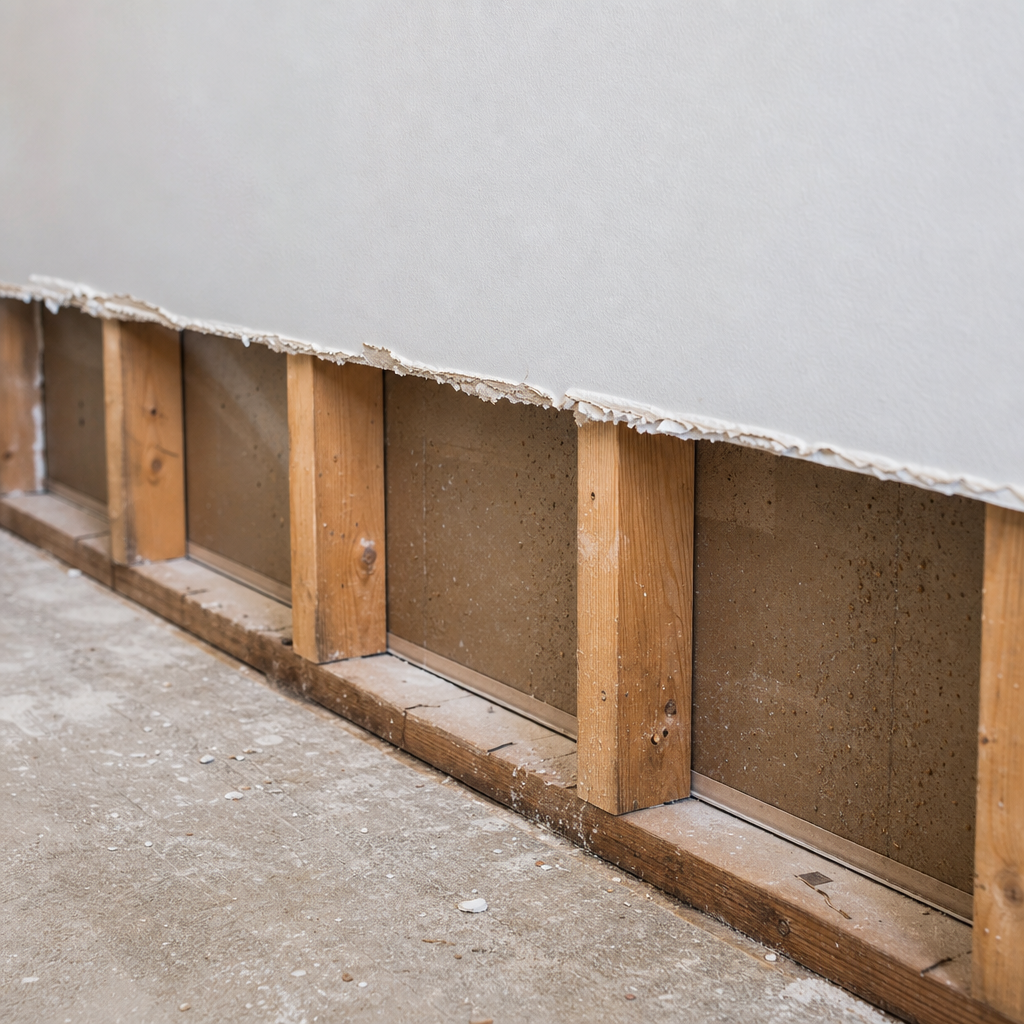
Different materials respond differently to moisture exposure. Professional assessment by Wade’s Restoration determines whether in-place drying is feasible or if material removal is required.
Ceiling Water Damage Repair Cost and Sagging Risks
Ceiling leaks often stem from upper-floor plumbing leaks or roof failures. Water collects on top of ceiling drywall or plaster, saturating overhead insulation. Wet insulation adds significant weight, creating sagging hazards. Mitigation involves draining water pockets, removing wet insulation, drying the framing, and repairing the damaged ceiling materials.
Subfloor Joists and Hardwood Floor Moisture Extraction
When water pools on hardwood, moisture can seep between seams and penetrate the subfloor below. According to Wade’s Restoration, depending on the duration of exposure and saturation levels, drying equipment may be able to draw moisture from the wood, or buckled and delaminated boards may need to be removed and replaced.
Does Homeowners Insurance Cover Water Damage Restoration Costs?
Homeowners insurance generally covers sudden and accidental water damage, such as a burst pipe or an unexpected appliance failure. In covered claims, insurance typically addresses extraction, drying, and structural repairs, minus the policy deductible.
Covered Sudden Disasters vs. Uncovered Gradual Leaks
A primary factor in insurance claim decisions is whether the damage occurred suddenly or accumulated over time. Gradual leaks, such as a slow pipe drip or persistent foundation seepage, are commonly classified as maintenance issues and are often not covered. Surface water flooding from external weather events generally requires a separate flood insurance policy.
Moisture Documentation for Insurance Claims
Proper documentation provided by Wade’s Restoration supports the insurance claims process through several standard steps:
- Photographic and video records captured prior to and during mitigation.
- Moisture logs tracking drying progress across affected building materials.
- Itemized repair estimates detailing the scope of mitigation and reconstruction work.
Frequently Asked Questions About Water Damage Restoration Costs
How much does water damage restoration cost on average?
Most standard residential restoration projects range between $1,383 and $6,369, with an overall average of $3,868. Actual costs vary based on the extent of saturation, the clean or contaminated water category, and the specific materials affected.
Does homeowners insurance cover all water damage?
Standard policies typically cover sudden and accidental water damage, but they often exclude gradual leaks, deferred maintenance issues, and external rising floodwaters unless separate coverage is maintained.
Need water damage restoration cost?
We’re available now - call for a fast, free estimate.
Sources
- Understanding the Fundamentals: The Real Cost of Flooding – agents.floodsmart.gov
- Restoration Cost Statistics (2026) – RapidEye – rapideyeinspections.com (2026)
Related reading: Flood Restoration Near Me | 10% Off & Free Estimate | Same-Day Service
Related reading: Water Damage Restoration Service – Call Now-10% Off – Same-Day Service – Free Estimate
Frequently Asked Questions
How long does structural drying typically take before repairs can begin?
Structural drying generally takes three to five days depending on the volume of moisture and the specific materials affected. Wade's Restoration tracks daily psychrometric readings to verify that framing and subfloors are completely dry before initiating sheetrock replacement or flooring repairs.
How does Wade's Restoration handle insurance claims to minimize out-of-pocket costs?
Wade's Restoration submits detailed line-item scopes, photo evidence, and daily moisture logs directly to your insurance adjuster. This comprehensive documentation ensures all necessary mitigation and reconstruction steps are approved, leaving you responsible only for your policy deductible.
Can hardwood floors be salvaged after sustaining water damage?
Hardwood floors can often be restored if mitigation starts quickly before severe buckling or board crowning occurs. Specialists from Wade's Restoration use specialized vacuum extraction mats and commercial dehumidifiers to draw trapped water from both the wood planks and subflooring beneath.
About the author
 |
Sarah Higgins Sarah is a seasoned restoration specialist with over eight years of experience managing complex property recovery projects. Holding a B.S. in Construction Management from Rutgers University, she combines technical expertise with a compassionate approach to guide homeowners through stressful emergencies. Her writing focuses on practical advice for water damage mitigation, mold remediation, and navigating the insurance claims process. |
Water damage, flood, or mold emergency?
We’re available now - call for a fast, free estimate.
Call Now - Free Estimate