
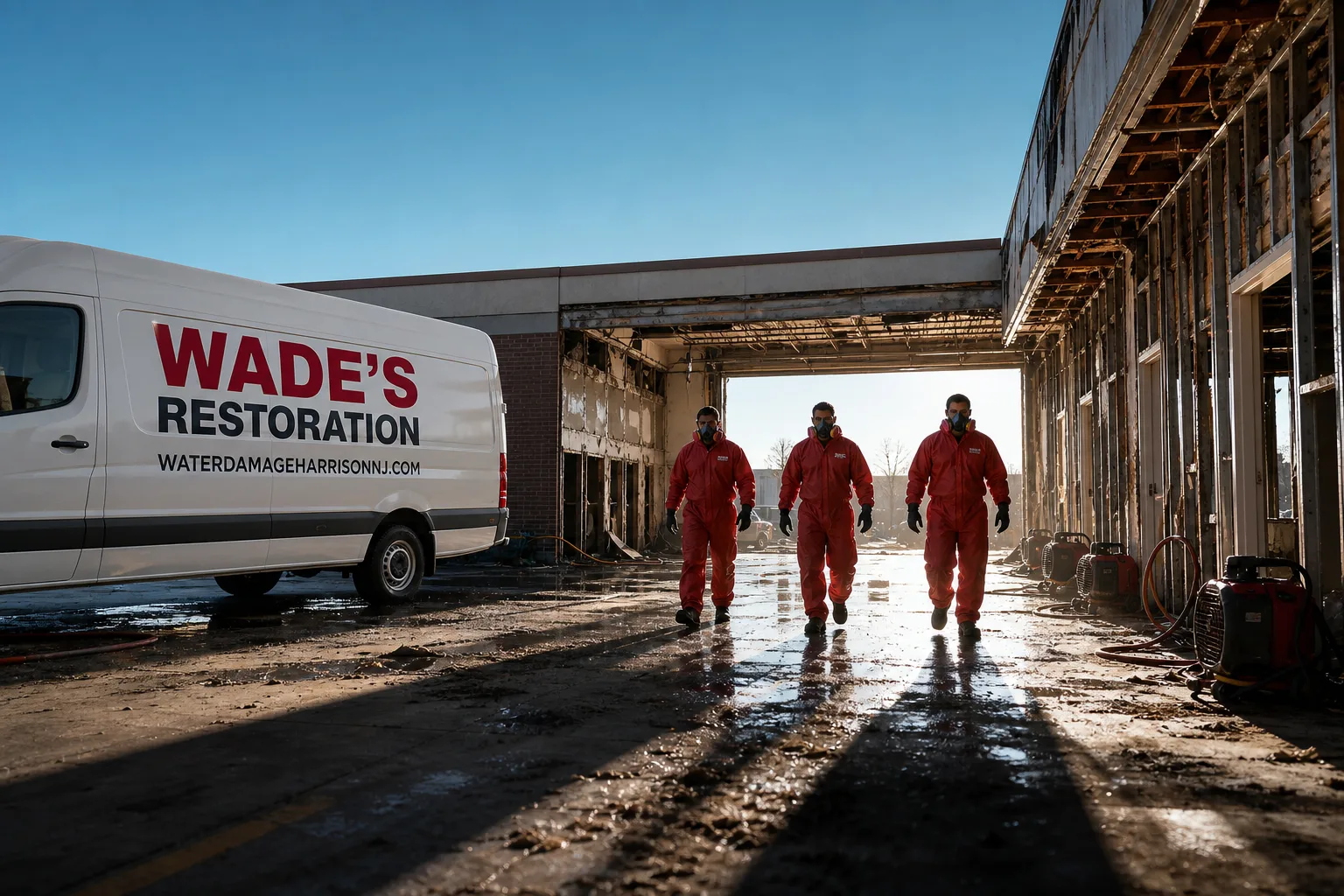
Free visual inspection and a written scope of work before any mitigation begins - photos, moisture readings, and drying logs go in your claim file
The scope we write is the scope we bill. Anything new gets shown to you, in writing, before we touch it.
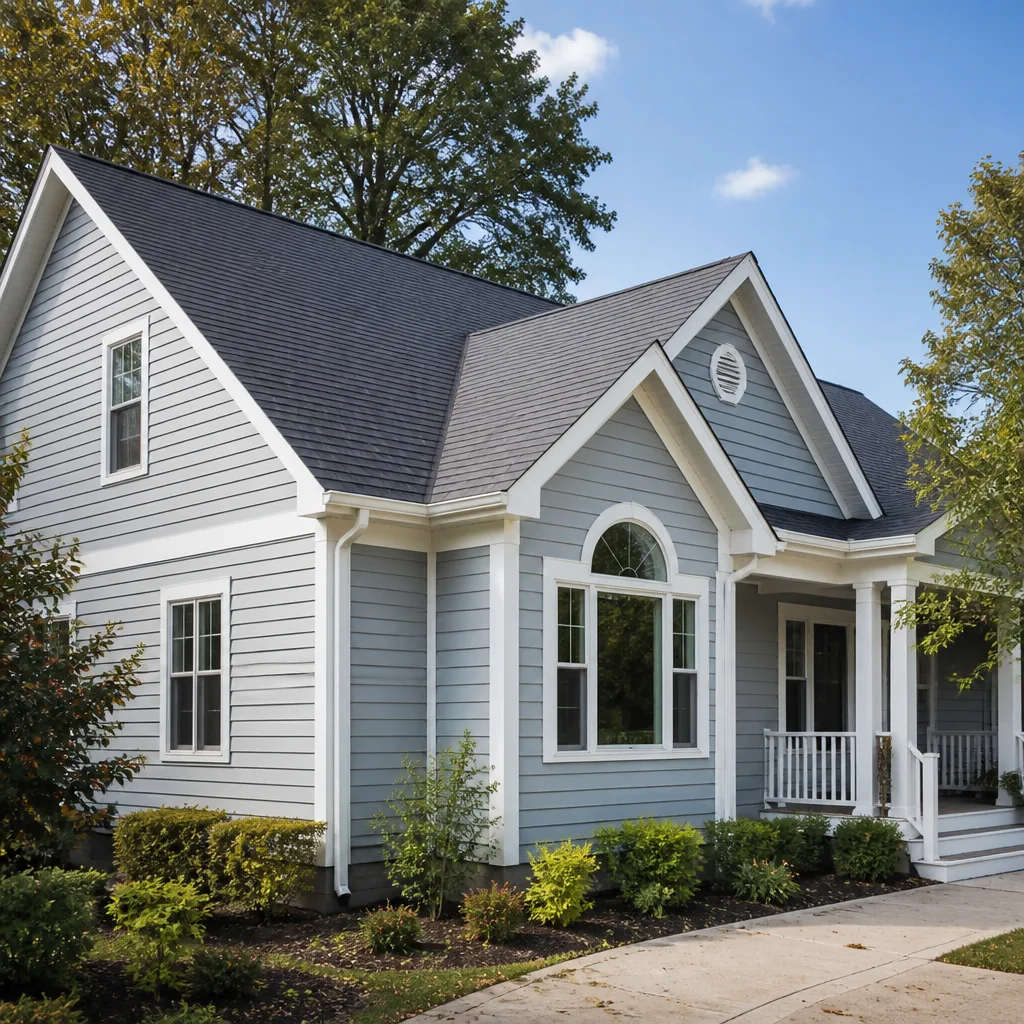
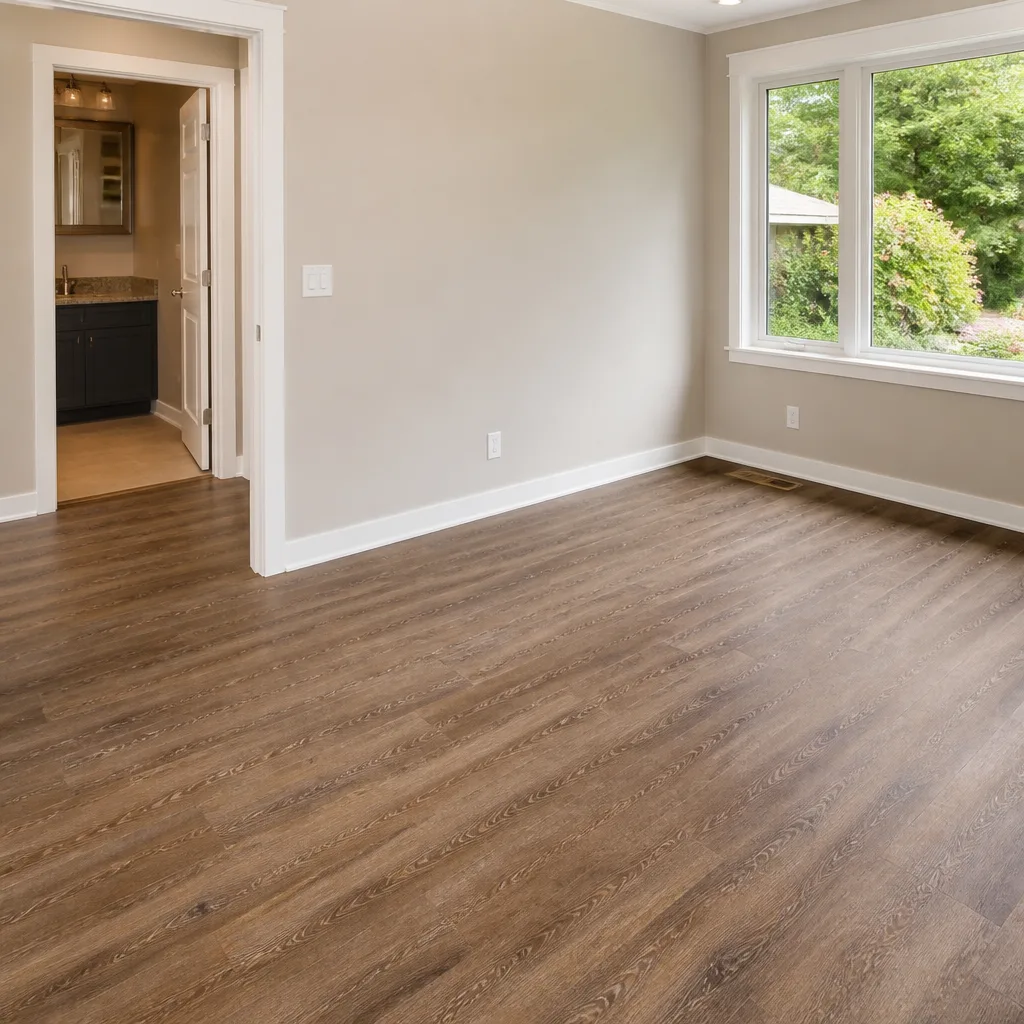
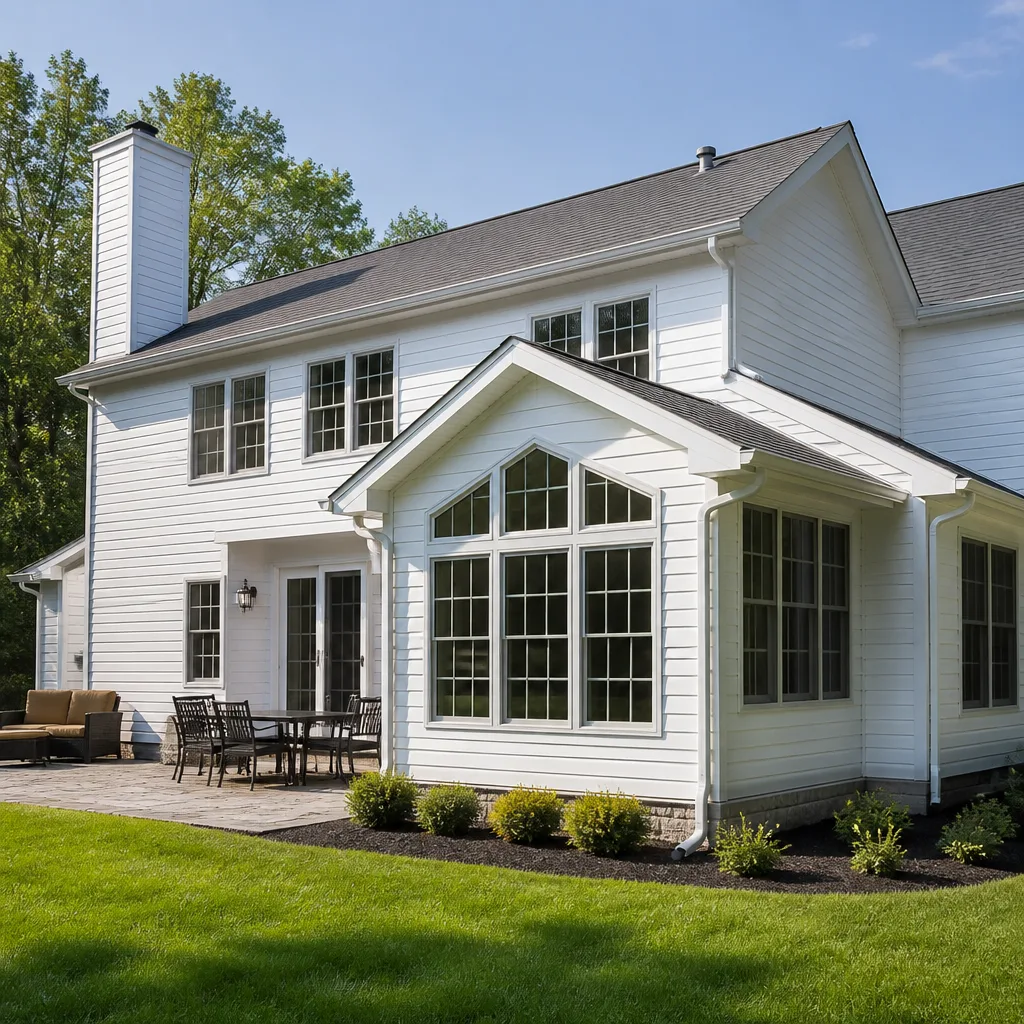
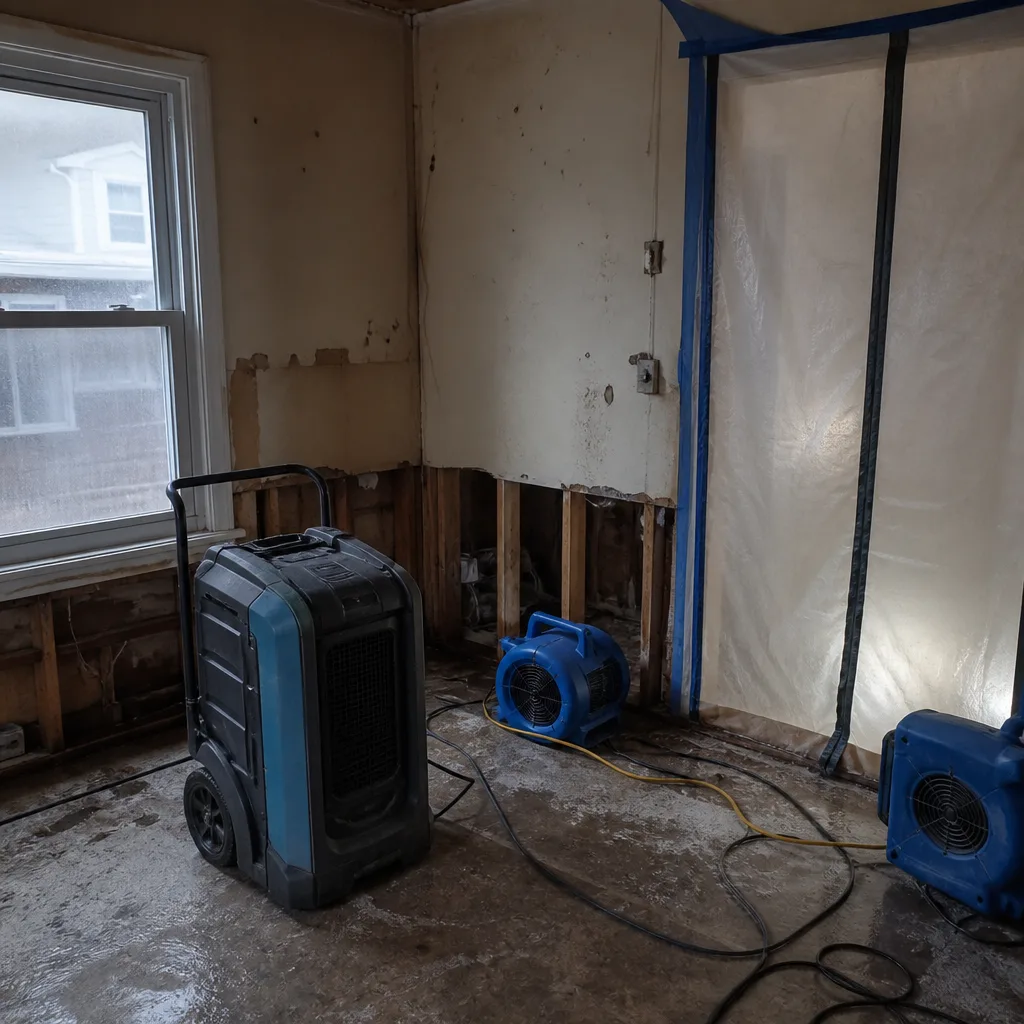 Before
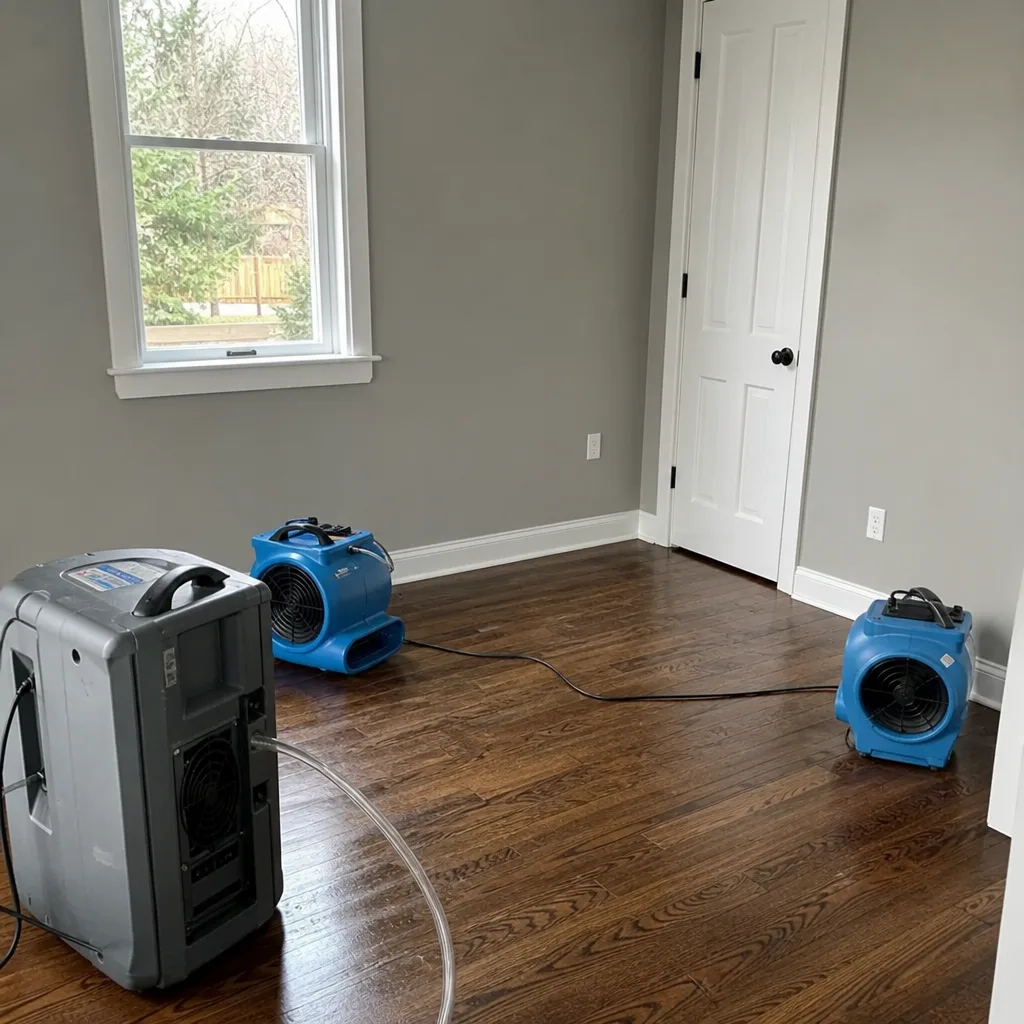 After
After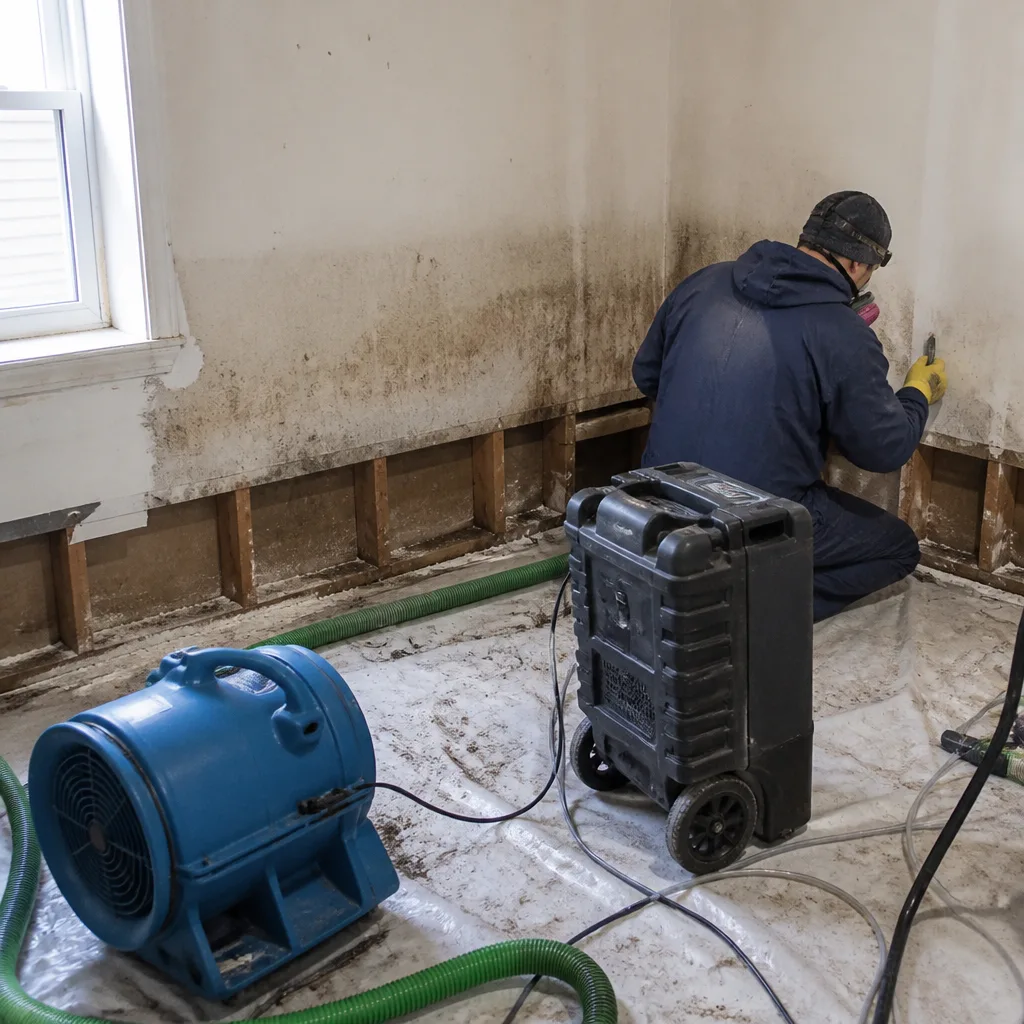 Before
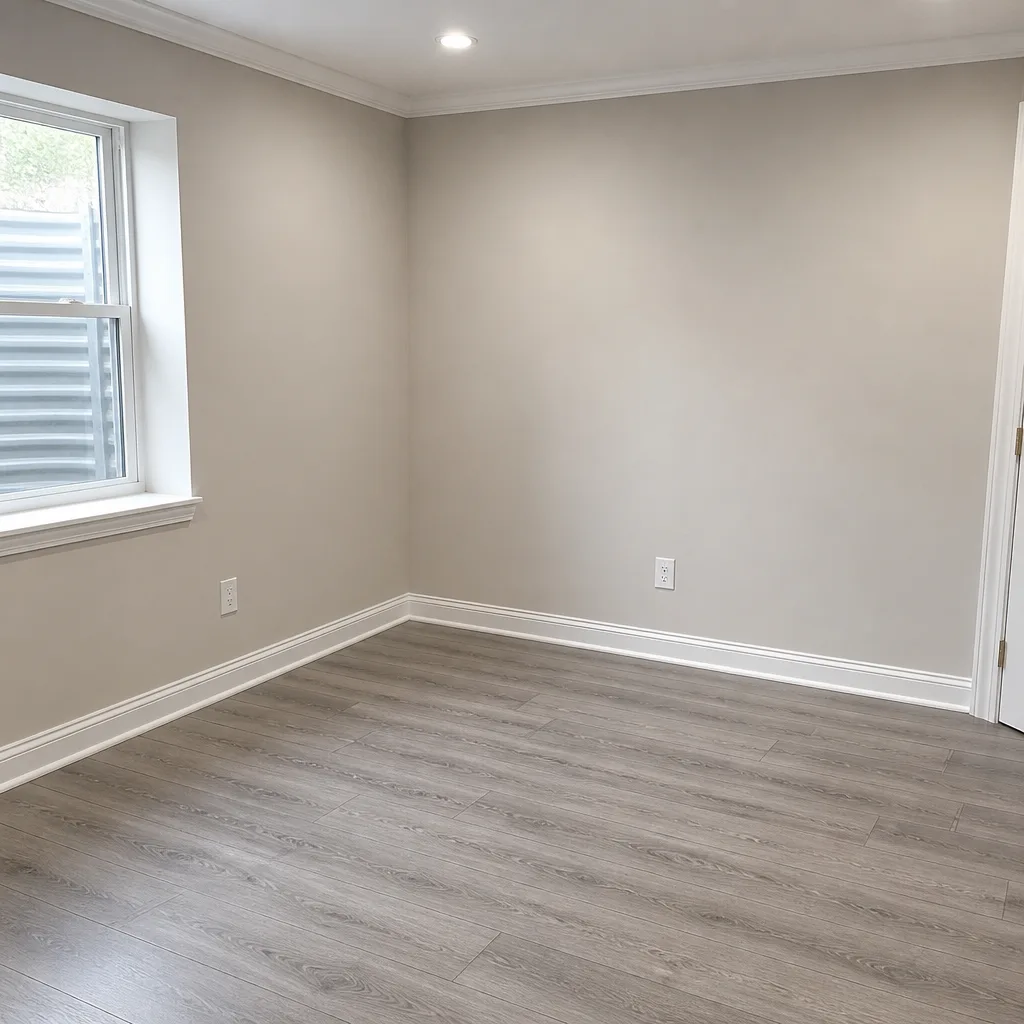 After
After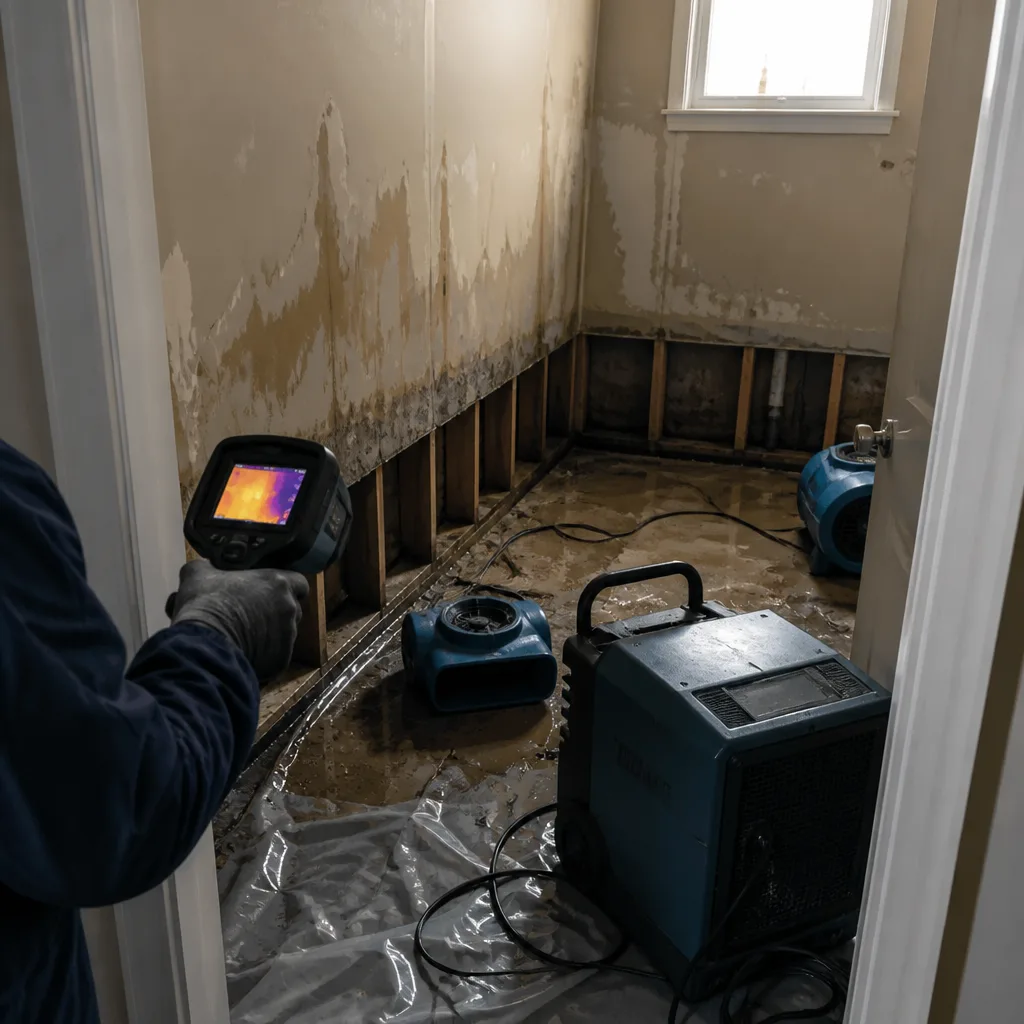 Before
 After
After24/7 Emergency Water Damage Restoration in Hoboken
Water damage restoration in Hoboken typically costs $1,800-$6,500 depending on whether you’re dealing with clean water from a burst pipe or Category 3 black water from sewer backflow, and most jobs can begin within the hour when you call. That’s the honest range, and it’s why speed matters more here than almost anywhere else in New Jersey. Call Wade’s Restoration at (856) 501-6142 the moment you see standing water, hear water moving where it shouldn’t be, or smell that musty damp that means moisture is already wicking into drywall and plaster. We answer the phone live, 24/7, and Wade himself heads out to Hoboken floods, burst pipes, and basement intrusions. The first hour determines whether you’re drying a room or rebuilding it.
Here’s what we know from Hoboken basements: water in a garden-level apartment starts colonizing mold in 24 to 48 hours, and in century-old masonry buildings with shared party walls, it migrates laterally into the neighbor’s unit faster than most people believe. So we don’t wait for “business hours.” We stage equipment before a nor’easter fully clears. We take moisture readings the minute we walk in. And we document everything from hour one, because your insurer is going to ask what was wet and for how long.
Understanding Water Damage Restoration Severity in Hoboken Properties
Water damage gets classified by how contaminated the water is, not just how much of it there is. In Hoboken, that distinction matters more than in most places because of how often the water coming in is dirty. Category 1 is clean water: a burst supply line, a failed water heater tank, an overflow from a tub. Category 2 is gray water: washing machine discharge, dishwasher leaks, sump pump failures. Category 3 is black water: sewage backflow, tidal intrusion, groundwater that has traveled through contaminated soil and into your basement through floor drains or foundation cracks. Hoboken sees all three, but the Category 3 cases are what set this town apart. The Hudson River keeps the water table high year-round. When a coastal storm pushes tidal water into the combined sewer system, it comes back up through floor drains in lower-floor units. That’s not clean water. That’s water carrying bacteria, pathogens, and whatever else was in the sewer line.
The building stock compounds the problem. Most of Hoboken’s housing is brick row houses and brownstones built between 1870 and 1930, much of it subdivided into multi-unit rentals with garden-level and below-grade apartments. Those masonry walls absorb water slowly and release it even more slowly. You can pump out a basement and still have 14% moisture readings in the plaster walls three days later if you’re not running professional-grade drying equipment and checking daily. That’s where moisture mapping changes the game. We map every affected surface, not just the obvious wet spots, because the lower half of a party wall can be saturated while the floor above looks perfectly dry. In Hoboken’s attached housing, the neighboring unit’s wet wall is your wet wall.
Why Hoboken Property Owners Choose Wade’s Restoration
- 45-minute response commitment. From the moment you call, someone is moving. Wade heads out himself for the big ones, and he’s usually on site within the hour for Hoboken addresses.
- 24/7 live answer, a real person. No call center, no recording telling you to press 2. You get a human who knows water damage and can make decisions on the spot.
- IICRC-certified crews, real credentials. Wade’s crew holds WRT and ASD certifications, and the company is IICRC-certified and RIA-affiliated. That means we follow the industry’s actual drying standards, not guesses.
- Free visual inspection, no pressure. We come out, look at the damage, tell you honestly whether you’re looking at a dry-out or a full remediation, and put it in writing.
- Direct insurance billing. We bill your carrier directly, itemize everything, and talk to the adjuster ourselves so you’re not stuck as middleman.
- One team from extraction to reconstruction. We do the water extraction, the structural drying, the mold prevention, and the rebuild. You never have to coordinate three different contractors.
Our Water Damage Restoration Process
Inspection & Assessment
We start with what we can see and then go looking for what we can’t. Thermal imaging shows us moisture inside walls and ceilings. Hygrometers measure relative humidity and moisture content in wood and drywall. We categorize the water, identify the source, and photograph everything before we touch a single surface.
Extraction & Stabilization
Standing water comes out first. We run truck-mounted and portable extraction units to pull water from floors, carpets, and subflooring. In Hoboken basements with Category 3 water, we’re also setting up containment so contaminated air and droplets don’t cross into clean parts of the building.
Drying & Dehumidification
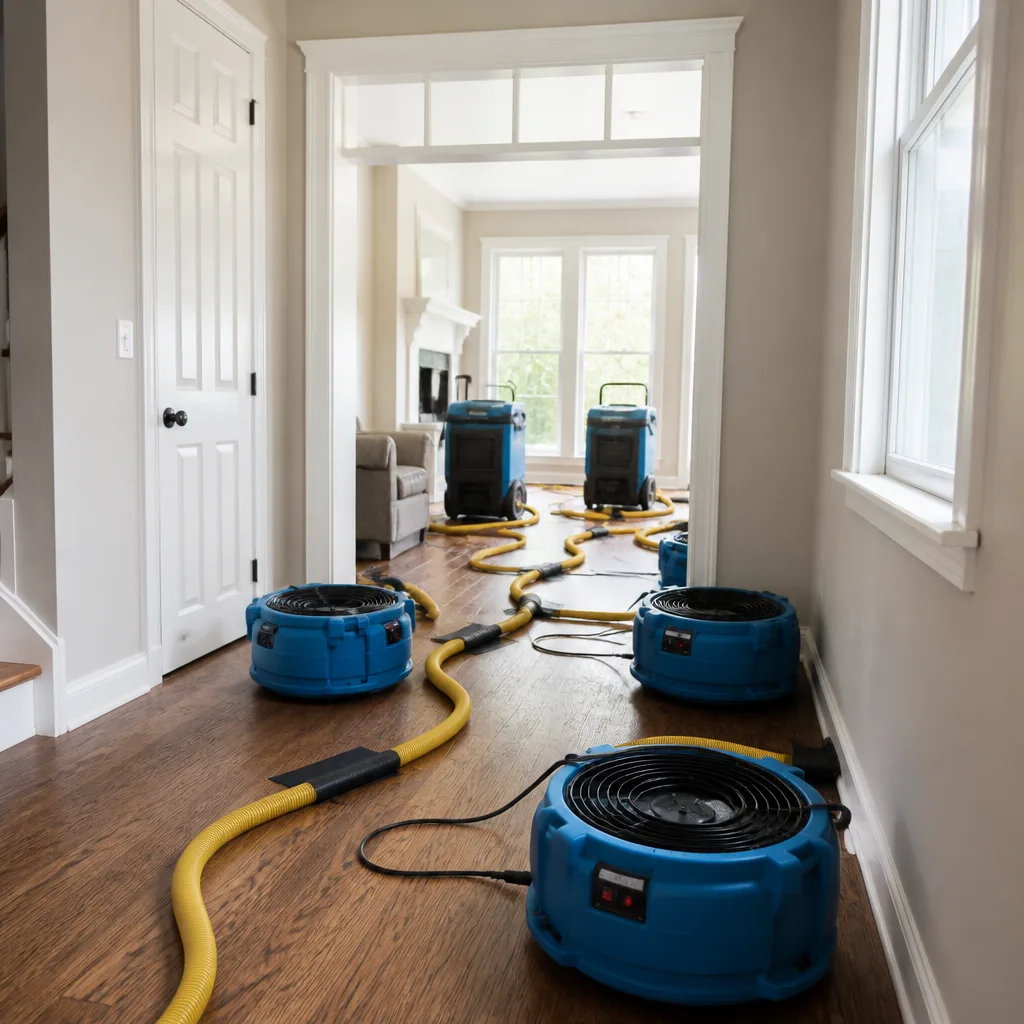
This is where masonry buildings slow everything down. We place XPOWER air movers for aggressive air circulation and Dri-Eaz dehumidifiers to pull moisture out of the air and the structure. We take moisture readings every single day, and you get the full log when we’re done. Nobody else in this trade gives you that log.
Cleaning & Sanitization
After the structure is dry, we clean every affected surface. For Category 3 jobs in Hoboken, that means antimicrobial treatments, HEPA vacuuming, and disposal of saturated porous materials that can’t be safely cleaned.
Mold Prevention & Containment
We run HEPA air scrubbers to capture airborne spores, and we check for hidden moisture pockets behind baseboards, under stair stringers, and in floor cavities. In attached buildings, we check the party wall on both sides, because your neighbor’s moisture is your moisture.
Repairs & Restoration
Once we’re certain the space is dry, we rebuild. Drywall, trim, flooring, paint, whatever was removed goes back in. We do the full scope so you end up with a finished room, not a dried-out shell and a list of phone numbers to call.
Need Emergency Water Damage Restoration in Hoboken Now?
Crews minutes away, answering live 24 hours a day. The sooner we start, the less it costs.
Working With Your Insurance Company
Insurance claims for water damage are won or lost on documentation. We do not hand you a receipt and wish you luck. From the first hour, we photograph every affected room, every wet surface, every piece of equipment we run. We keep daily moisture logs that show exactly what readings we took, where, and when. When your adjuster calls, we talk to them directly. That means the adjuster gets answers from someone who did the work, not from a homeowner trying to recall whether the dehumidifier ran for three days or four. Wade has spent twenty years doing this, and he knows what carriers need to see to approve a claim. You get a detailed, line-item scope of work that matches what your policy covers. No inflated estimates, no games.
What We Provide Your Insurer
- Thorough documentation of the loss
- Photos of all damage, room by room
- Moisture readings and drying logs
- A detailed, line-item scope of work
- Direct coordination with your carrier
Built for Hoboken’s Loss Calendar
Hoboken’s water damage calendar does not look like the rest of New Jersey’s. January brings deep freezes that burst uninsulated supply lines in unheated garden-level hallways and against exterior brick walls. February and March are no better: snowmelt and early spring rains saturate the already-high water table, and basements that have never flooded start weeping through floor slab cracks. Summer is thunderstorm season, and because Hoboken sits in a flat, low-lying bowl where stormwater off the Weehawken and Jersey City heights pools with nowhere to go, a fast downpour can flood a block in 20 minutes. Nor’easter season runs from September through March, and that’s when the sewer backflow cases spike: tidal pressure backs up the combined sewer system and garden units on the western side of town start taking on Category 3 water through floor drains. There is no quiet month in Hoboken for water damage, just different causes on different months. Our crews keep equipment staged and routes planned, because we know the next storm is never far off.
Water Damage Restoration Across Hoboken’s Neighborhoods
Hoboken is one square mile, but the water damage patterns shift block by block. Downtown around Washington Street, we see a lot of brownstone basements with original masonry foundations and cast-iron supply lines that predate the first world war; those lines rust from the inside out and let go without warning. Over by Church Square Park and the blocks around Bloomfield Street, the garden-level units sit close to the water table, so groundwater intrusion and sump pump failures are the recurring story. Southwest Hoboken, through the Observer Highway corridor and down near Willow Avenue, is where the joint call volume during a storm is heaviest: dozens of adjacent 1890s-era brownstones, all with interconnected party walls and below-grade units, all flooding at once. We know that when the rain stops, the phone lines for water damage restoration in Hoboken light up from every one of those blocks simultaneously. Uptown near 14th Street, newer construction shares walls with pre-war masonry, which means lateral moisture migration from one building to the next travels along shared wall cavities in ways that surprise even long-time owners.
Specialized Water Damage Restoration Services We Offer in Hoboken
Emergency Water Extraction
Standing water in a Hoboken garden apartment is a clock. Every hour it sits, the wicking line climbs higher into plaster and insulation. We arrive within the hour, pull the water out with truck-mounted extraction, and have air movers running before the insurance adjuster has even returned your call. The faster extraction starts, the lower the final repair cost. That’s not marketing language; that’s moisture physics.
Structural Drying & Dehumidification
This is the service Hoboken needs most and gets least. Brick and brownstone construction holds water in a way sheetrock-over-wood-frame never will. We use Phoenix and Dri-Eaz dehumidifiers matched to the cubic footage of the affected space, position XPOWER air movers to create cross-flow across saturated walls, and monitor daily with moisture meters. In attached row houses, we’re also checking the wall shared with the neighboring unit, because a dry wall on your side can still be fed by a wet wall next door.
Flood Cleanup
When the nor’easter hits and the Hudson backs up the sewers, the water in Hoboken basements is not clean rainwater. It’s Category 3, and cleaning it up wrong is worse than not cleaning it up. We contain the affected space, remove saturated porous materials, sanitize every surface, and run HEPA air scrubbers until post-remediation verification passes. Wade’s crew is trained in the same standards used for sewage and biohazard cleanup, which is what a flooded Hoboken garden unit actually is.
Burst Pipe Restoration
Cast-iron and galvanized supply lines in century-old Hoboken buildings fail from the inside. The pipe looks fine from the outside right up until it lets go at 2 a.m. We shut off the supply at the street, extract what’s come out, map how far the water traveled through floor cavities and adjacent walls, and dry the full path, not just the visible puddle. Then we repair the pipe so the building has water again, and rebuild whatever the water destroyed.
Basement Water Removal
Hoboken basements are below the water table more often than not, which means hydrostatic pressure is always pushing groundwater through the floor slab and foundation walls. We don’t just remove the water; we track where it came in, measure how much is coming through, and recommend real fixes: interior drain systems, slab sealing, sump pump upgrades, or full exterior waterproofing depending on what the inspection shows. You deserve a basement that stays dry, not one we keep drying out twice a year.
What happens when you call
- 1
A real person answersNo phone trees - you reach a local pro.
- 2
You get an upfront price rangeHonest numbers before anyone is dispatched.
- 3
A background-checked tech heads outLicensed & insured, dispatched right away.
- 4
You approve before work beginsNothing starts until you say go.
Water Damage Restoration Costs in Hoboken, NJ
Here are real numbers for Hoboken’s market. A straightforward Category 1 extraction and drying job in a single garden-level room runs $1,800-$3,200. A full basement flood with Category 3 contamination and a need for containment, demolition of saturated drywall, antimicrobial treatment, and full structural drying runs $4,500-$6,500 in Hoboken’s masonry buildings, and sometimes more when the water has migrated through a party wall into a neighboring unit. Burst pipe jobs average $2,200-$4,800 depending on how far the water traveled through the building before shutdown. Mold remediation after a missed or slow response adds $1,500-$4,000 or more, which is why immediate extraction is the cheapest move you can make. Insurance covers most of these scenarios when the cause is sudden and accidental; gradual seepage or long-standing humidity issues are a different story. Free visual inspection is exactly that: free, no trip charge in our own county, no pressure. Call (856) 501-6142 and we’ll give you a written scope with a firm number before any work starts.
We Also Serve Cities Near Hoboken
Wade’s Restoration serves Hoboken and the surrounding Hudson County cities: Union City, Jersey City, Secaucus, and Kearny. Same crews, same 24/7 live answer, same written scope before any work begins. If you’re just across the county line, call and we’ll head your way. If you’re in Hoboken proper, call and we’re there within the hour.
Serving Hoboken, NJ - Our Local Coverage Area
We’re based in the Hoboken area and know this community well. Use the map below to see our service coverage - if you’re nearby, we can almost certainly help.
Hoboken Water Damage Restoration Questions, Answered
How quickly can you respond to a flood on Observer Highway, given the simultaneous call volume after a storm?
We can usually have a crew on site within 45 to 60 minutes, even during a storm surge when every block in southwest Hoboken is calling at once. Wade stages crews and equipment before a nor’easter clears, so response stays fast when the phones blow up.
Do you handle Category 3 black water from sewer backflow in Hoboken’s lower-floor apartments?
Yes, and it’s one of the most common jobs we see in Hoboken. Category 3 water carries sewage and pathogens, so we contain the affected space, remove saturated porous materials, sanitize everything, and follow IICRC standards for black water jobs from start to finish.
Why does moisture migrate laterally through shared party walls in Hoboken row houses?
Hoboken’s attached brick and brownstone buildings share wall cavities and masonry mass. When one unit floods, the water doesn’t respect the property line. It moves through the brick, mortar, and any connected floor cavities, saturating the neighbor’s side within 24 to 48 hours. That’s why we moisture-map both sides of every party wall on a job.
Can you provide drying logs for insurance claims on water damage in a Hoboken brownstone?
We provide complete daily moisture logs on every single job, handed to you at the end of the project. Your adjuster can see exactly what readings we took, where, and when. Wade has been doing this for twenty years, and the logs are the difference between a claim that gets approved and one that gets second-guessed.
What’s the first step after a burst pipe in a 1920s Hoboken building with cast-iron plumbing?
Shut off the water at the street or the building main, then call us. Cast-iron pipes fail from internal corrosion, and the water travels fast through floor cavities and shared walls in old construction. The sooner we start extraction and mapping, the less demolition the building needs.
How much does water damage restoration cost in Hoboken compared to nearby cities?
Hoboken runs slightly higher than suburban areas because of the building stock. Dense attached masonry structures dry slower, Category 3 contamination is more common, and access is often tighter. A basement flood that runs $4,000 in Kearny might run $5,500 in Hoboken’s brownstone districts. We always give a written scope with a firm number before work starts.
How long does structural drying take in Hoboken’s brick row houses?
Three to five days is standard, but Holmes County masonry can extend that to a week on Category 3 jobs with deep wall saturation. We take daily moisture readings and won’t sign off on a job until the numbers prove the structure is dry, not just guesswork.
What should I do in the first 30 minutes after I find standing water?
Shut off the water source if it’s a plumbing issue. Cut power to the affected area if water is near outlets or wiring. Move anything valuable up off the floor. Then call Wade’s Restoration at (856) 501-6142. You do not need to wait for an adjuster or a property manager to authorize cleanup; minutes matter.
Written by Wade Ferris, Owner at Wade’s Restoration, serving Hoboken and Hudson County since 2007.