
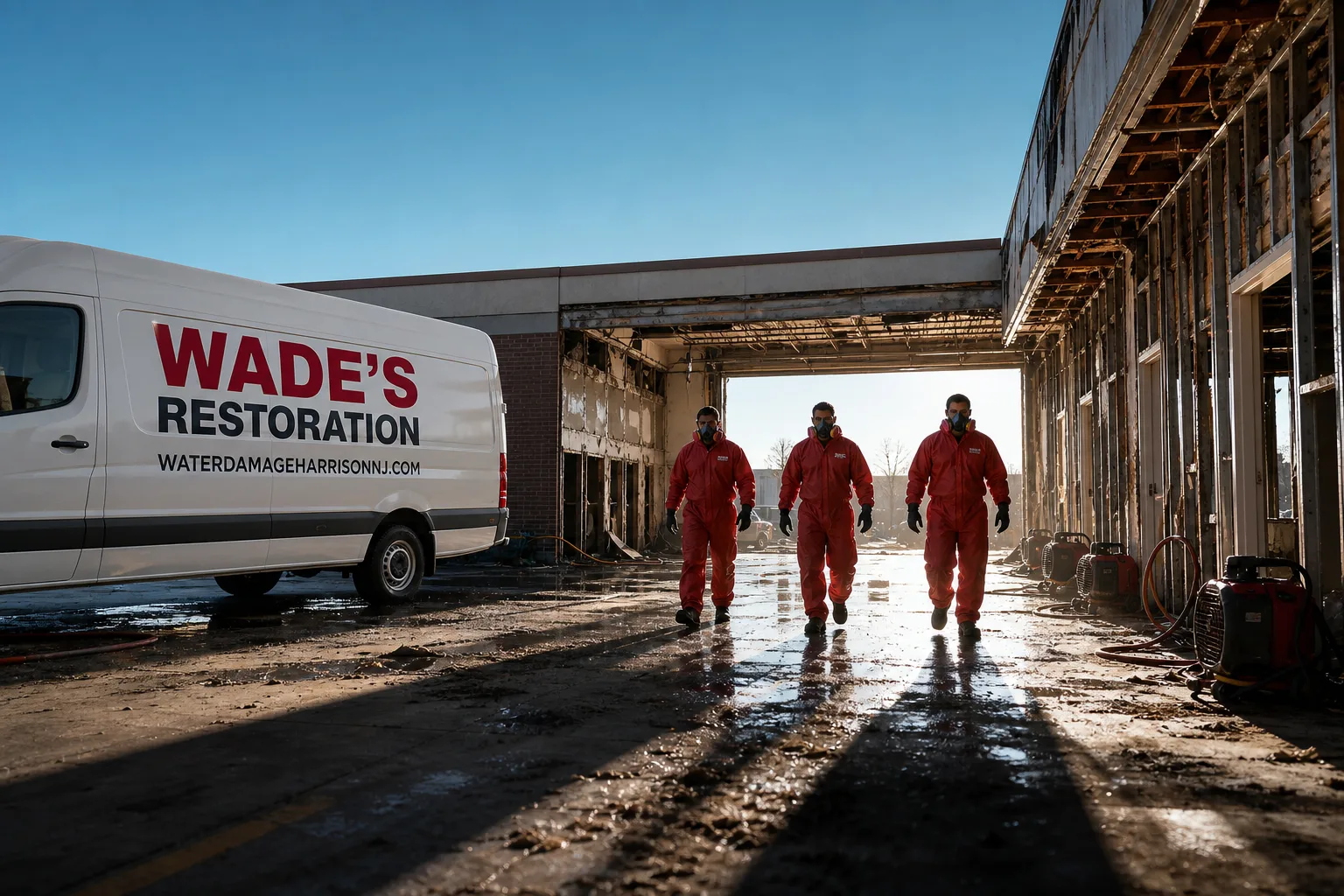
Free visual inspection and a written scope of work before any mitigation begins - photos, moisture readings, and drying logs go in your claim file
The scope we write is the scope we bill. Anything new gets shown to you, in writing, before we touch it.
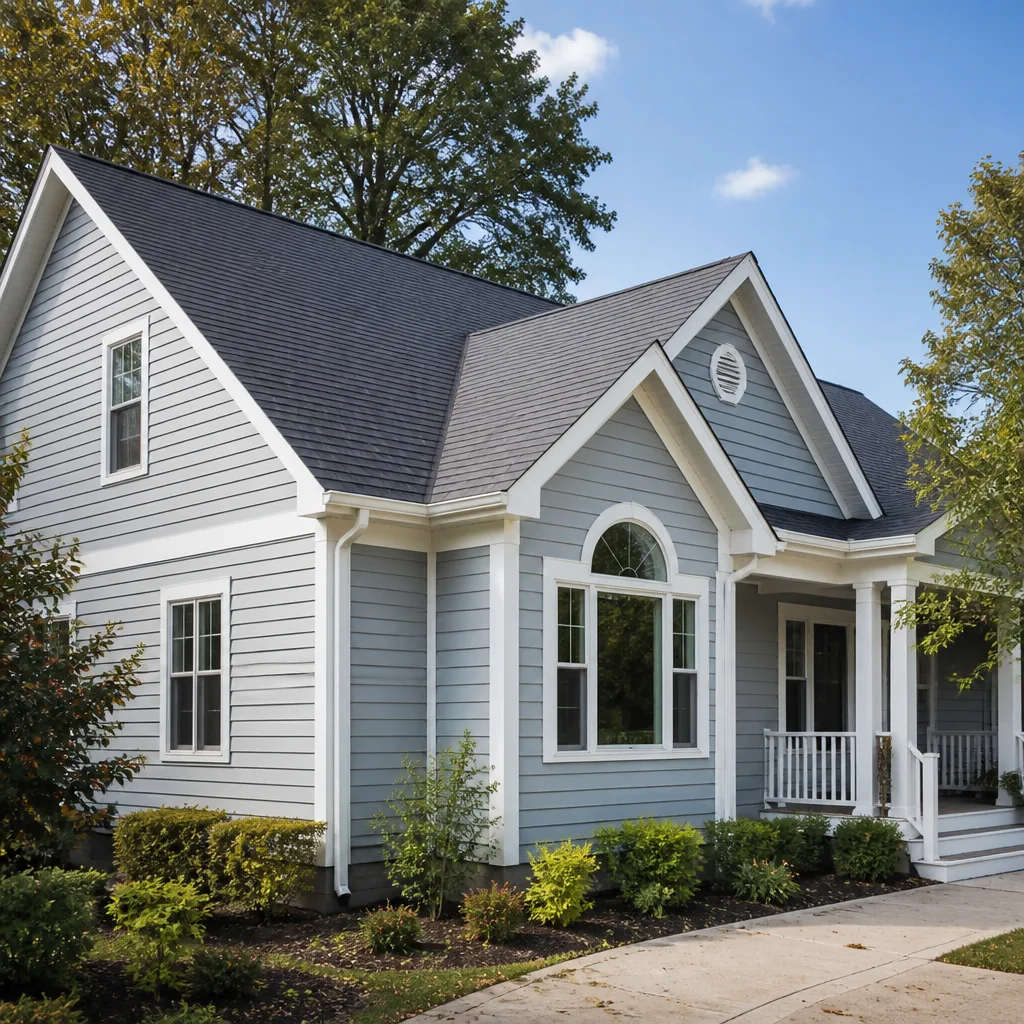
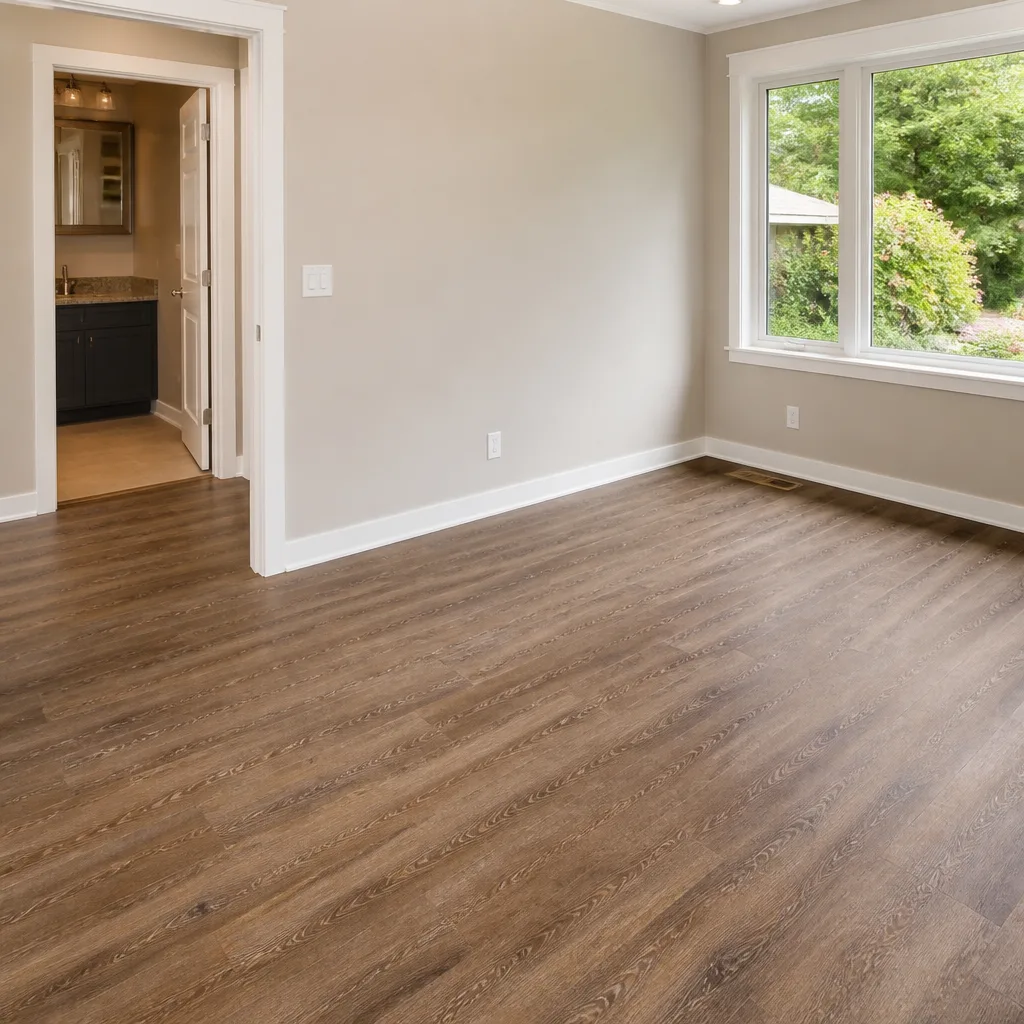
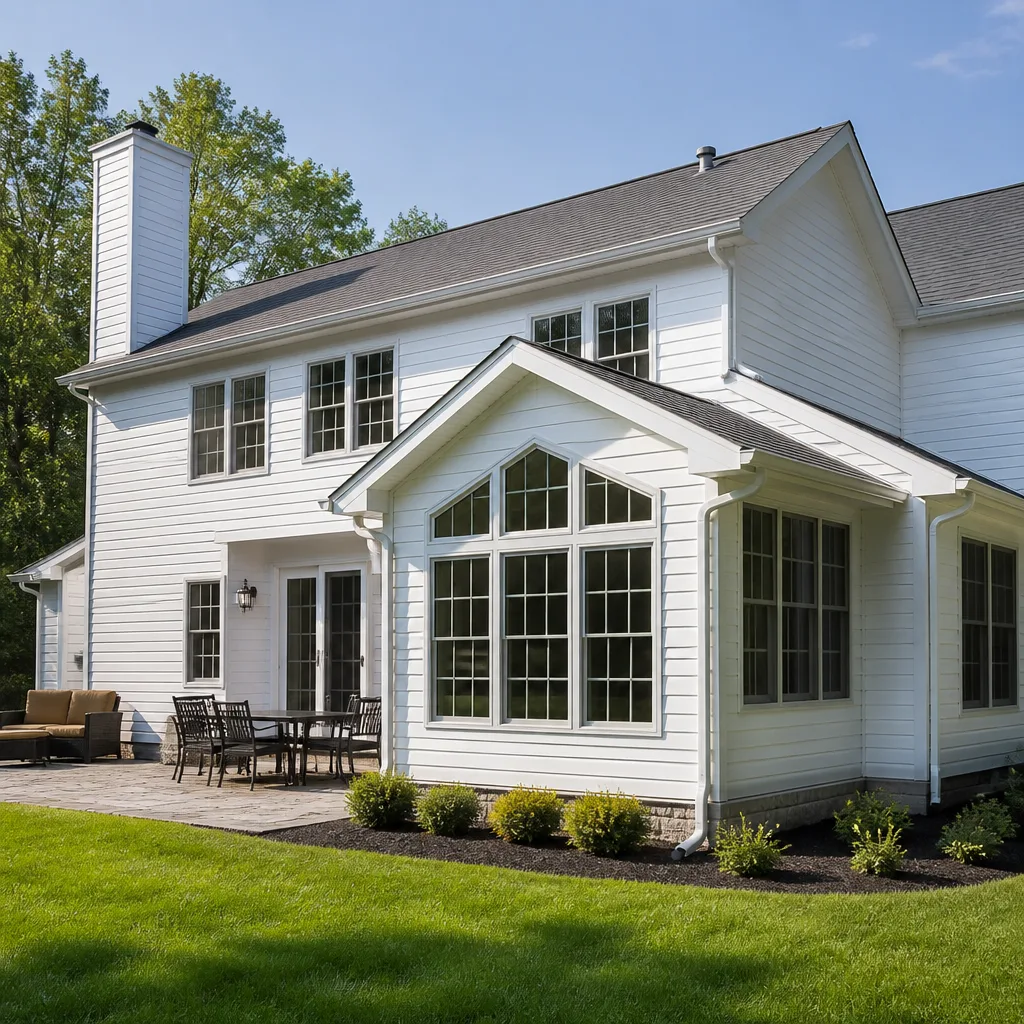
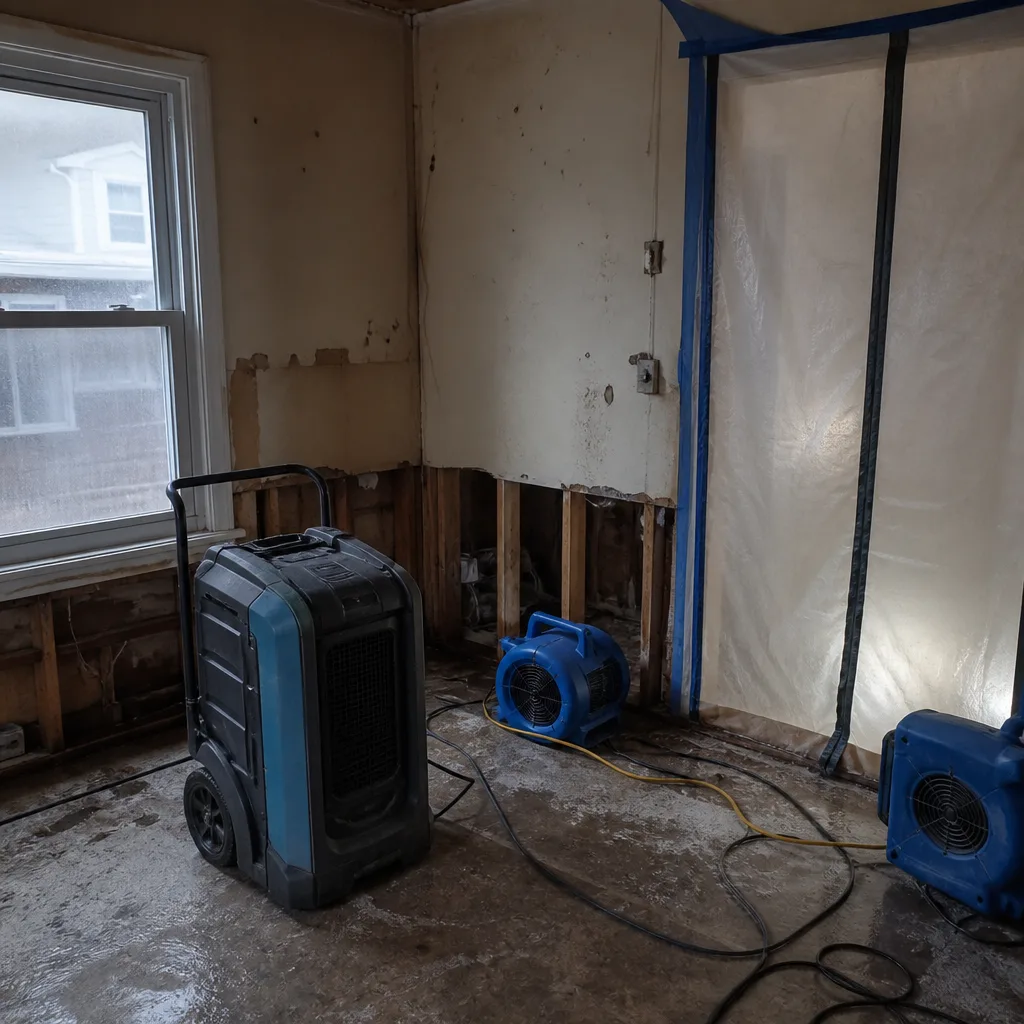 Before
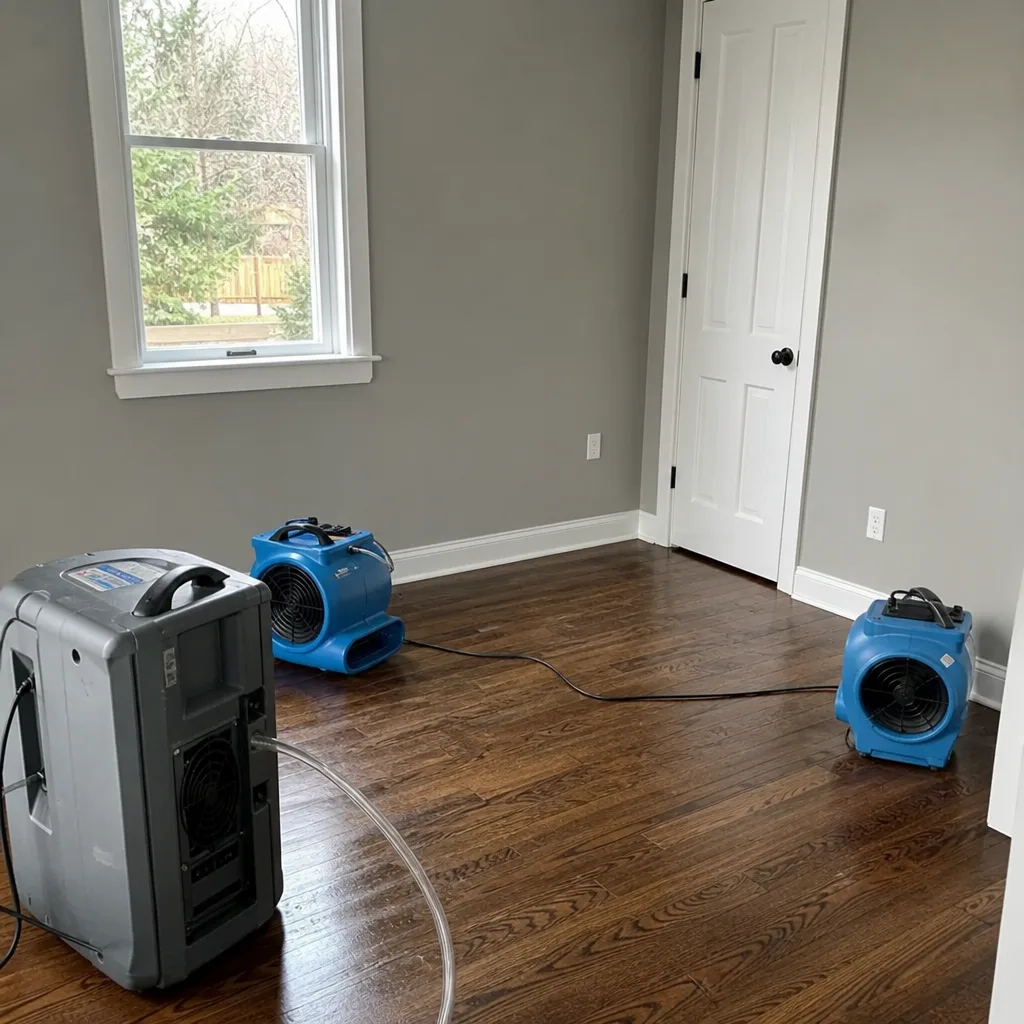 After
After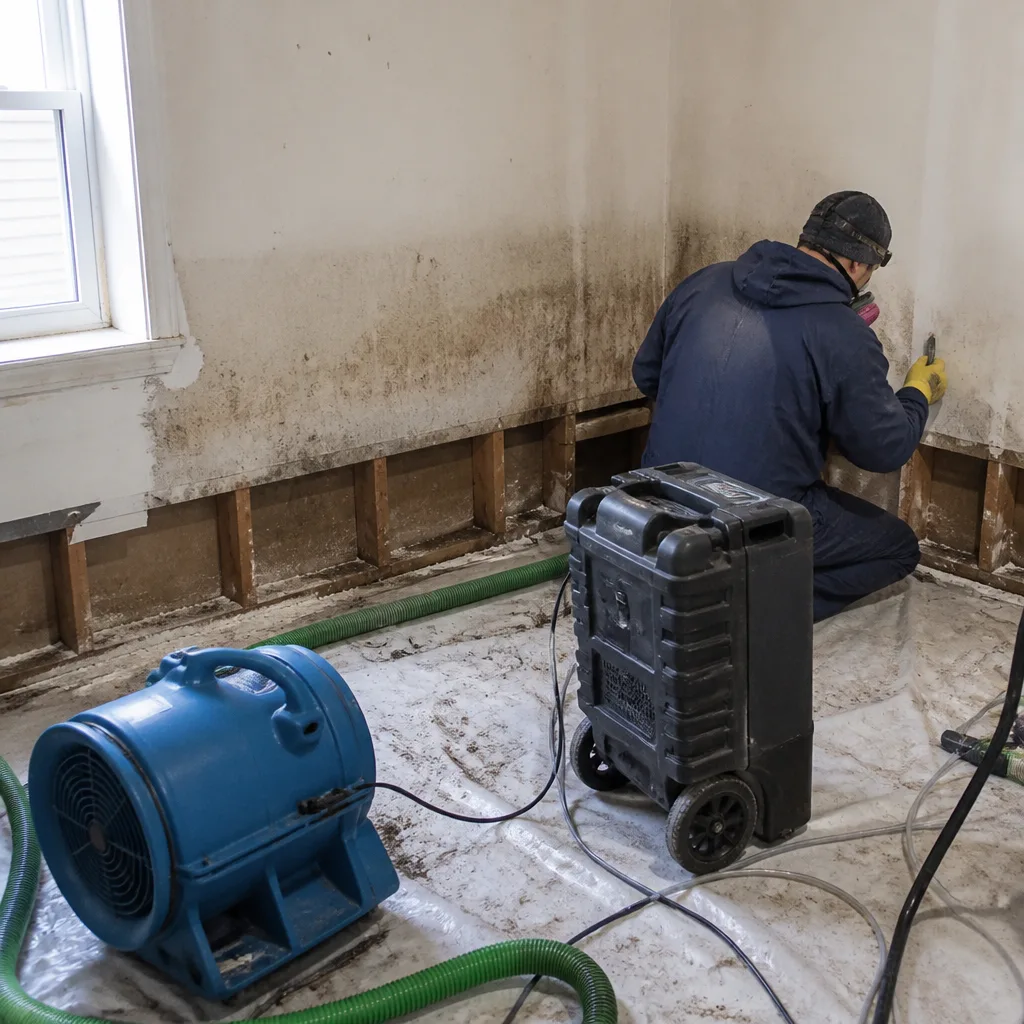 Before
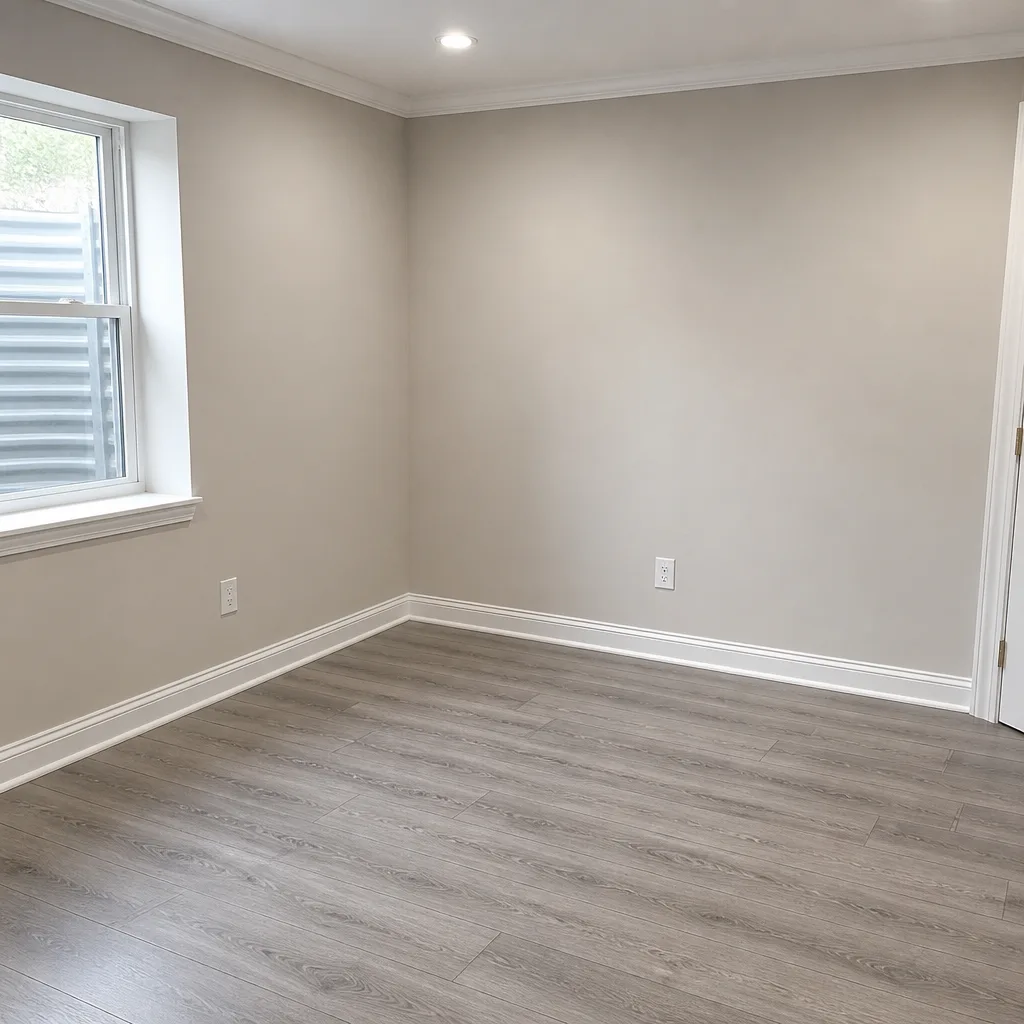 After
After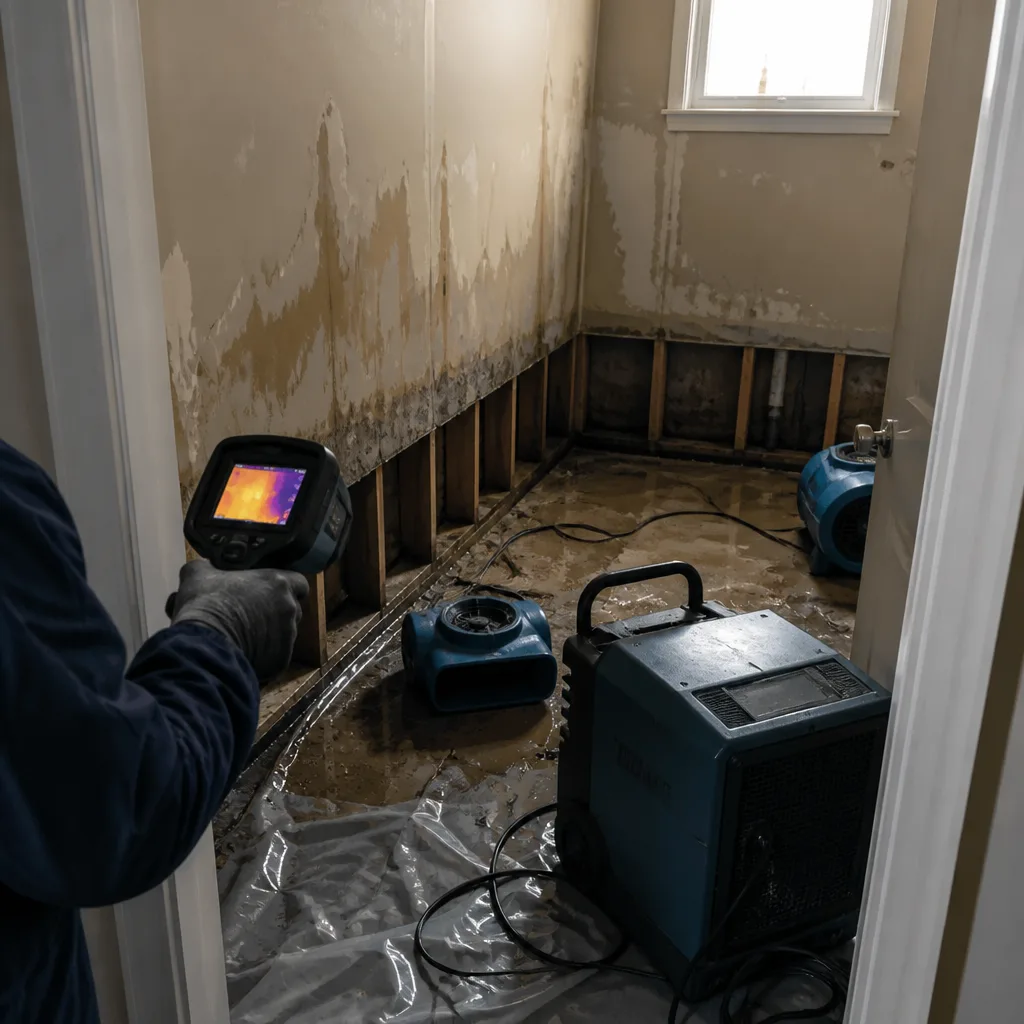 Before
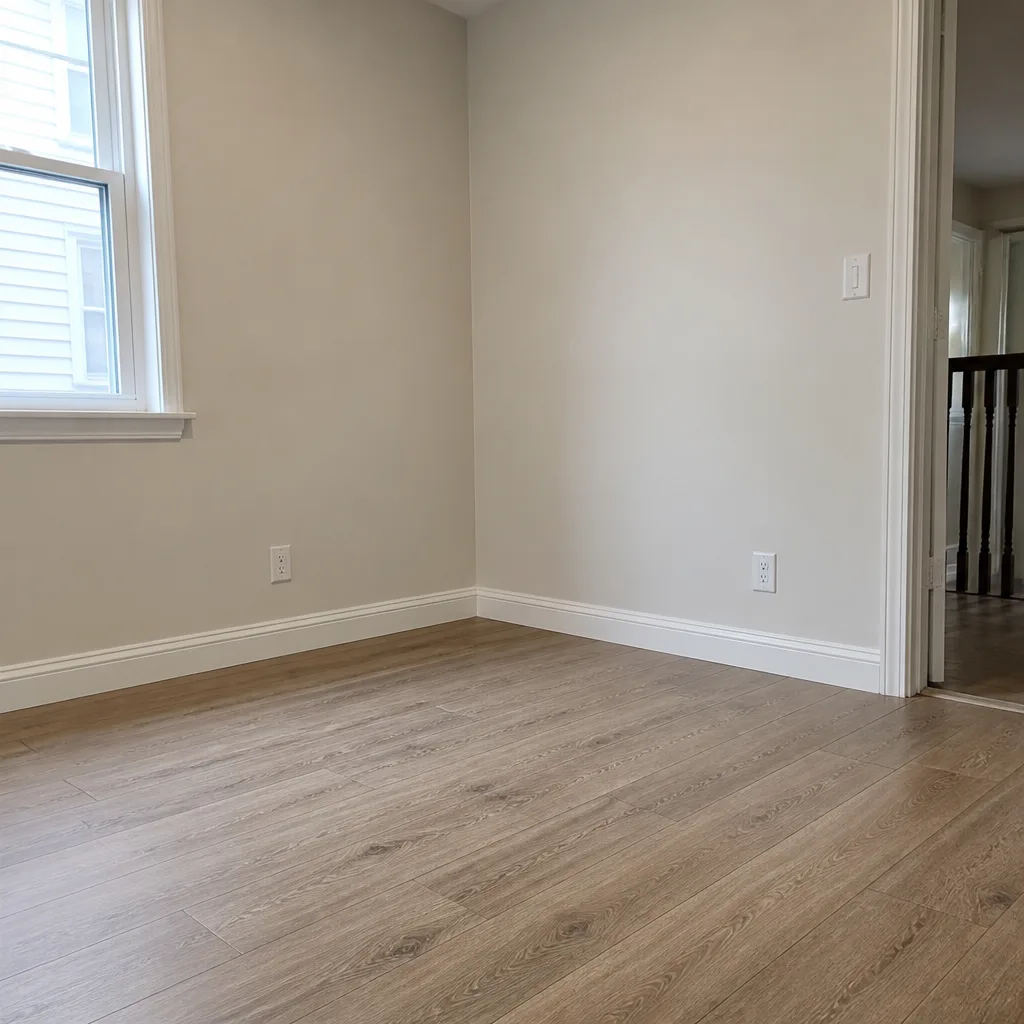 After
After24/7 Emergency Mold Remediation in Kearny
Mold remediation in Kearny typically runs $1,800 to $6,000 depending on how far the growth has spread and whether you’re dealing with the chronic groundwater issues this town is known for. Most jobs can be started within 45 minutes of your call. If you’ve spotted mold or smell that musty basement odor that won’t go away, call (856) 501-6142 and Wade or one of his crew will talk you through what you’re seeing before anyone even shows up.
Here’s the thing about Kearny that most mold companies won’t tell you upfront: this town sits on filled Meadowlands wetland. The water table is high, the soil is saturated, and your basement isn’t having a one-time leak. It’s living in a permanent state of damp. That means the first hour matters more here than almost anywhere else in Hudson County. Mold that gets a foothold in damp rubble-stone or brick foundations spreads fast, often behind walls where you can’t see it until it’s already into the framing. We answer live around the clock. Not a call center, not a voicemail. A person who knows mold in Kearny, who can have a crew on the road immediately.
Understanding Mold Remediation Severity in Kearny Properties
Most of Kearny’s housing stock was built between 1910 and 1940. Two- and three-family homes with rubble-stone or brick-mortar foundations that were never designed to stop hydrostatic pressure. Water doesn’t flood into these basements dramatically. It seeps, constantly, through foundation walls that are sitting inches above the Meadowlands water table. That chronic seepage is the engine behind most mold problems we see, and it changes the remediation approach entirely.
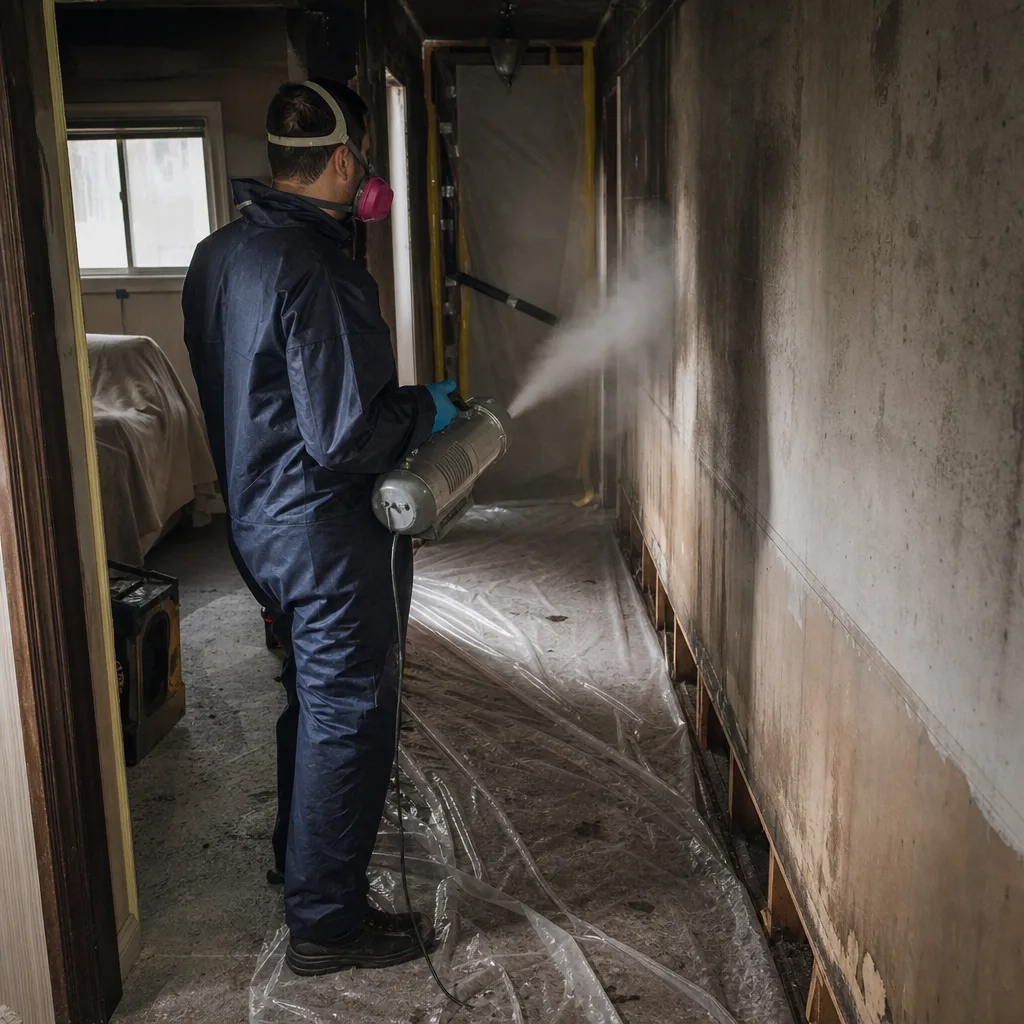
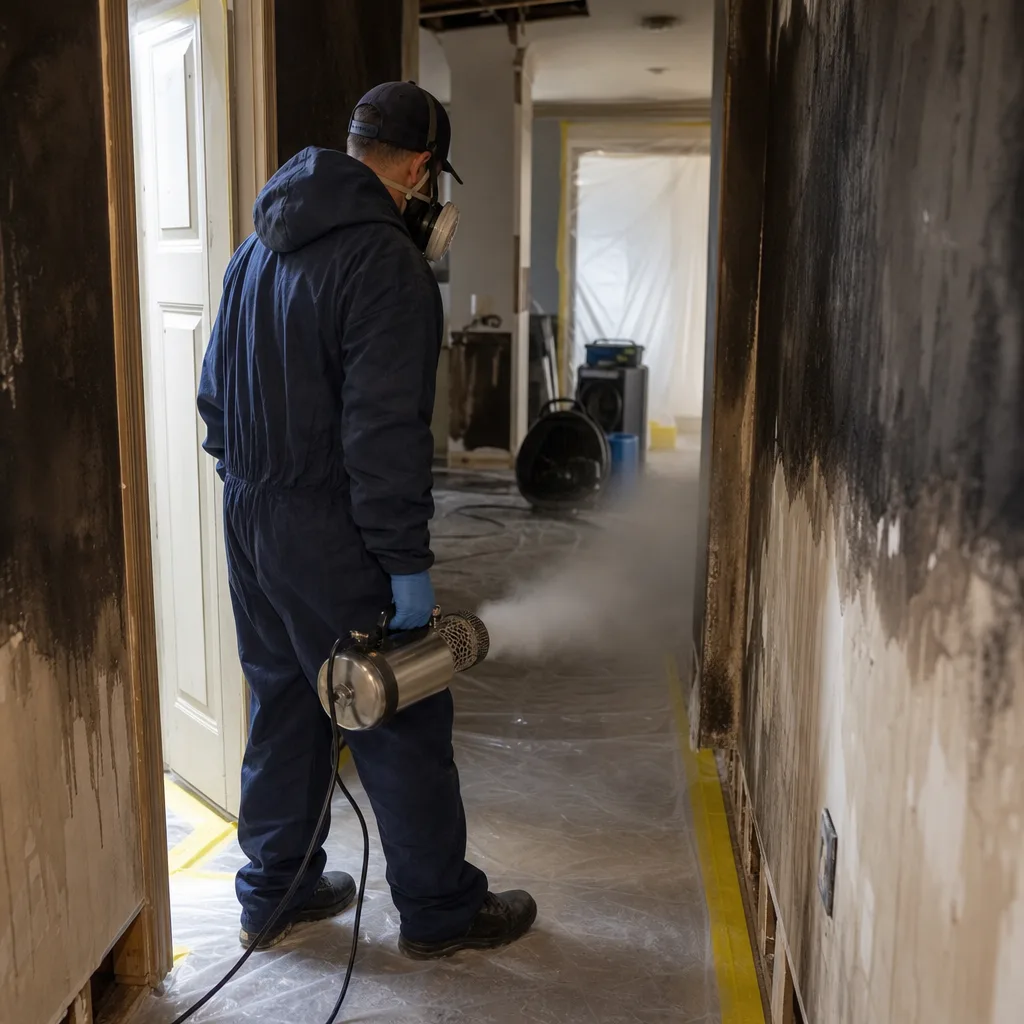
Mold severity breaks down into three practical levels. Level one is surface growth on walls, floor joists, or stored belongings, usually from humidity that never gets below 60% and condensation on cold foundation walls. Level two is colonization behind baseboards, under carpets, or inside wall cavities where the paper face of drywall has become a food source. Level three is structural, where mold has penetrated porous materials like plaster, wood framing, and subflooring, and the air quality itself is compromised. In Kearny, we see a lot of level two and three because the water source never stops. You can’t just kill the mold and repaint. You have to cut off the groundwater pathway first, or the mold comes back within months. We use containment barriers, negative air pressure, and HEPA air scrubbing on every job, not just the big ones. Clearance testing at the end confirms the spore counts are back to normal indoor levels, not just that the visible mold is gone.
Why Kearny Property Owners Choose Wade’s Restoration
- 45-minute response in Kearny: When you call with active mold growth, Wade or his crew is on the road immediately. Not tomorrow, not after a callback. He’s been doing this since 2007 and he still answers his own phone.
- 24/7 live answer, always a real person: You call (856) 501-6142 at 2 a.m. and you get Wade, not a menu. He’ll tell you what to do in the first 30 minutes before the crew even arrives.
- IICRC-certified and asbestos-aware: Our crews carry AMRT (Applied Microbial Remediation Technician) credentials and we know pre-WWII Kearny homes contain asbestos in plaster, floor tiles, and pipe insulation. We set up containment before we disturb anything.
- Free visual inspection: No charge to come out, look at the mold, take moisture readings, and tell you honestly what you’re dealing with. If it’s just surface mildew from humidity, we’ll say so and recommend dehumidification, not a full remediation.
- Direct insurance billing: We document everything from the first hour, handle the adjuster communication, and bill your carrier directly. You’re not the middleman relaying information between two sides.
- One team from first look to rebuild: The same crew that does the mold removal does the repairs after. No handoffs, no new faces showing up mid-job, no finger-pointing if something goes wrong.
Our Mold Remediation Process
Inspection & Assessment
We start with thermal imaging and moisture meters to map the full extent of the water intrusion, not just the visible mold. In Kearny, this almost always reveals a foundation-wide dampness pattern, even if you only see mold in one corner. We check humidity levels, identify the water source, and document everything with photos.
Containment & Source Control
Before anything is disturbed, we seal off the work area with plastic sheeting and set up negative air pressure so spores can’t spread to the rest of your home. If the water source is active groundwater seepage, we address that before remediation starts, because killing mold while water still enters is a waste of your money.
Drying & Dehumidification
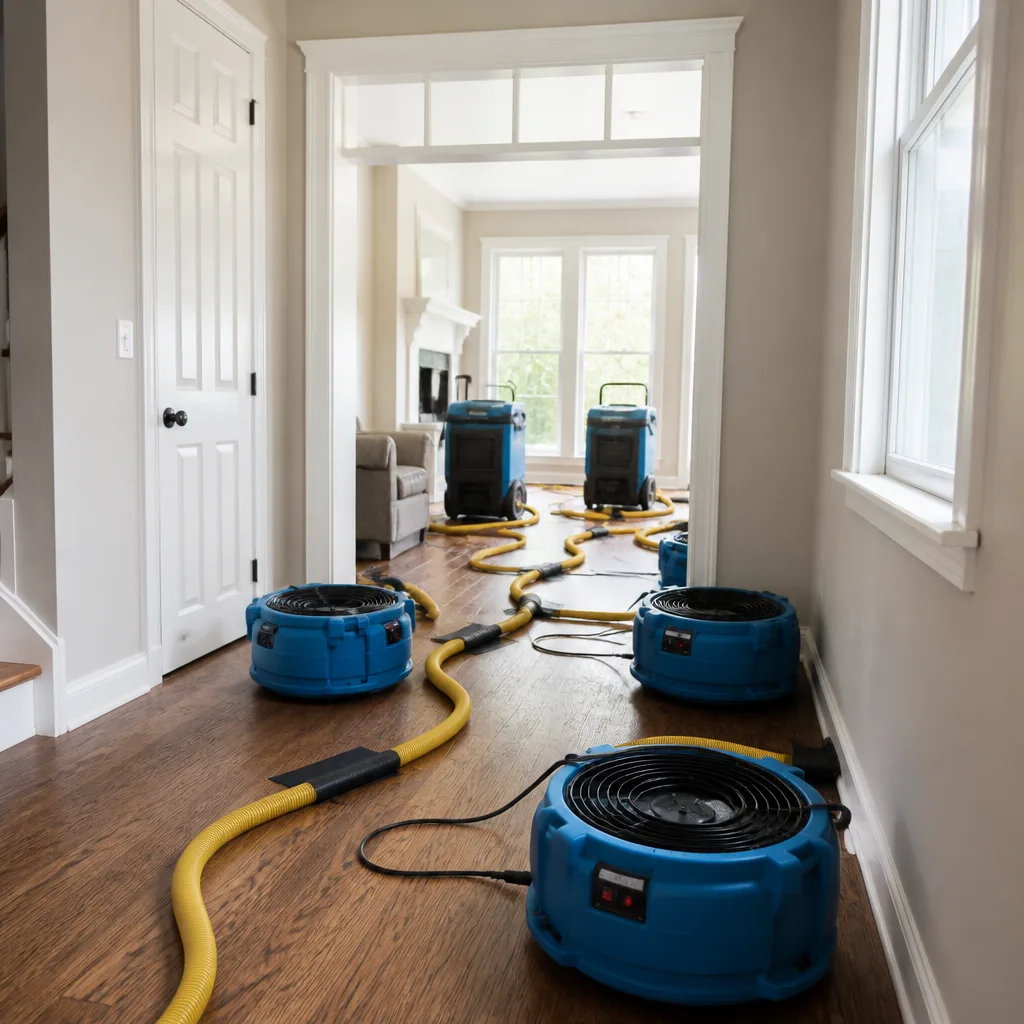
We run commercial dehumidifiers and air movers, typically Phoenix and B-Air units, until moisture readings in foundation walls, framing, and flooring drop below 15%. In Kearny’s saturated soil conditions, this stage often takes longer than inland jobs because the exterior side of the foundation stays wet.
Removal & Cleaning
Mold-contaminated materials get removed under containment. That includes drywall, insulation, carpet, and often plaster from pre-war homes. Porous materials that can’t be fully cleaned are disposed of. Hard surfaces get HEPA-vacuumed and wiped with antimicrobial cleaner. If asbestos is present in the materials we’re removing, we pause and follow proper abatement protocols before continuing.
Air Scrubbing & Clearance Testing
HEPA air scrubbers run continuously during remediation and for at least 24 hours after the last contaminated material leaves the containment zone. We take post-remediation air samples to verify indoor spore counts match normal outdoor background levels. You get the results in writing.
Repairs & Restoration
Once the structure is dry, clean, and verified, we rebuild. Mold-resistant drywall, new insulation, trim, and paint. If we installed an interior drainage system or sump pump, that’s already running. You get the full moisture log from day one to job completion, and the 90-Day Done Right Promise in writing.
Need Emergency Mold Remediation in Kearny Now?
Crews minutes away, answering live 24 hours a day. The sooner we start, the less it costs.
Working With Your Insurance Company
Mold claims are trickier than water or fire claims. Many policies limit mold coverage to a dollar cap, typically $3,000 to $10,000, and only when the mold results from a covered water event, like a burst pipe or storm surge. Chronic groundwater seepage, the kind Kearny basements are famous for, is usually excluded unless you carry specific flood insurance. We know how to document the difference, and we know how to present the claim so your carrier sees the full picture. We photograph everything before, during, and after. We hand you moisture readings and drying logs that show exactly what happened and when. And when the adjuster calls, we talk to them directly so you’re not stuck relaying technical information you shouldn’t have to understand. Every job gets a written scope of work before we start, so there’s no mystery about what’s covered and what isn’t.
What We Provide Your Insurer
- Thorough documentation of the loss
- Photos of all damage, room by room
- Moisture readings and drying logs
- A detailed, line-item scope of work
- Direct coordination with your carrier
Built for Kearny’s Loss Calendar
Mold in Kearny doesn’t follow a single season. It follows the water table, and that stays high all year. Here’s what the year actually looks like.
January and February bring frozen supply lines in pre-war homes with uninsulated crawlspaces and external walls. A pipe bursts, the water saturates flooring and wall cavities, and mold starts growing within 48 hours while the homeowner is still waiting on a plumber.
March through May is thaw season. The saturated Meadowlands fill soil releases water as temperatures rise, and basements that were merely damp all winter start puddling. We get calls for wet carpet pads and moldy baseboards that have been quietly growing for months.
Summer brings thunderstorm flash flooding. Kearny’s dual exposure, with the Passaic River on the east side and the Meadowlands basin on the west, means water funnels in from multiple directions during heavy rain. Sump pumps fail, floor drains back up, and basements that flooded twice a decade now flood twice a summer.
September through November is nor’easter season, and while Kearny doesn’t get the coastal surge that devastates the Shore towns, the wind-driven rain and saturated ground push water into foundations that are already at capacity. Every nor’easter brings a wave of mold calls two to four weeks later, after the water recedes and the spores bloom.
December’s freeze-thaw cycle repeats January’s pipe bursts. The pattern doesn’t stop. That’s why the real fix in Kearny is almost always drainage and moisture control, not just mold removal.
Mold Remediation Across Kearny’s Neighborhoods
We know this town block by block, because the soil conditions change depending on how close you are to the River or the Marsh.
Over near Kearny Marsh, in the western blocks around Belgrove Drive and Schuyler Avenue, the water table sits high enough that basements there stay damp even in dry weather. We’ve done jobs on Elm Street and Chestnut Street where the moisture meter read 25% on foundation walls that hadn’t seen rain in two weeks. Those are chronic intrusion cases. The fix is interior drainage and a sump pump, not just antimicrobial treatment.
Down by the Passaic River, on the east side near Riverbank Park and along Passaic Avenue, we see more acute flood intrusion from storm surge and river pulses. Homes there flood dramatically during nor’easters, then drain, leaving behind mold in wall cavities and under flooring. Those jobs need containment and full removal, often with more structural drying because the water sat longer.
In the dense multi-family blocks around Kearny Avenue, the pre-war two- and three-family homes share foundation walls. Moisture migrates laterally between units. We’ll be called for mold in a first-floor apartment and find the source is a leaking foundation in the unit next door. Those jobs require coordination with multiple owners and sometimes the local health department.
Up near the North Arlington border around Devon Street and the 07032 side of town, we see a mix of aging single-family homes and attached rowhouses. The foundations are slightly higher there, but the crawlspaces are tight and poorly ventilated. Crawl space encapsulation becomes the long-term fix, paired with dehumidification and mold treatment on the subflooring.
Specialized Mold Remediation Services We Offer in Kearny
Mold Inspection & Testing
Not every musty smell is a full remediation job. We start with moisture mapping and air sampling if needed. In Kearny, we’re looking specifically for the chronic dampness signature that says groundwater intrusion rather than a one-time leak. You get honest findings, not a scare tactic. If you have surface mildew from humidity, we’ll recommend a dehumidifier, not a $5,000 remediation.
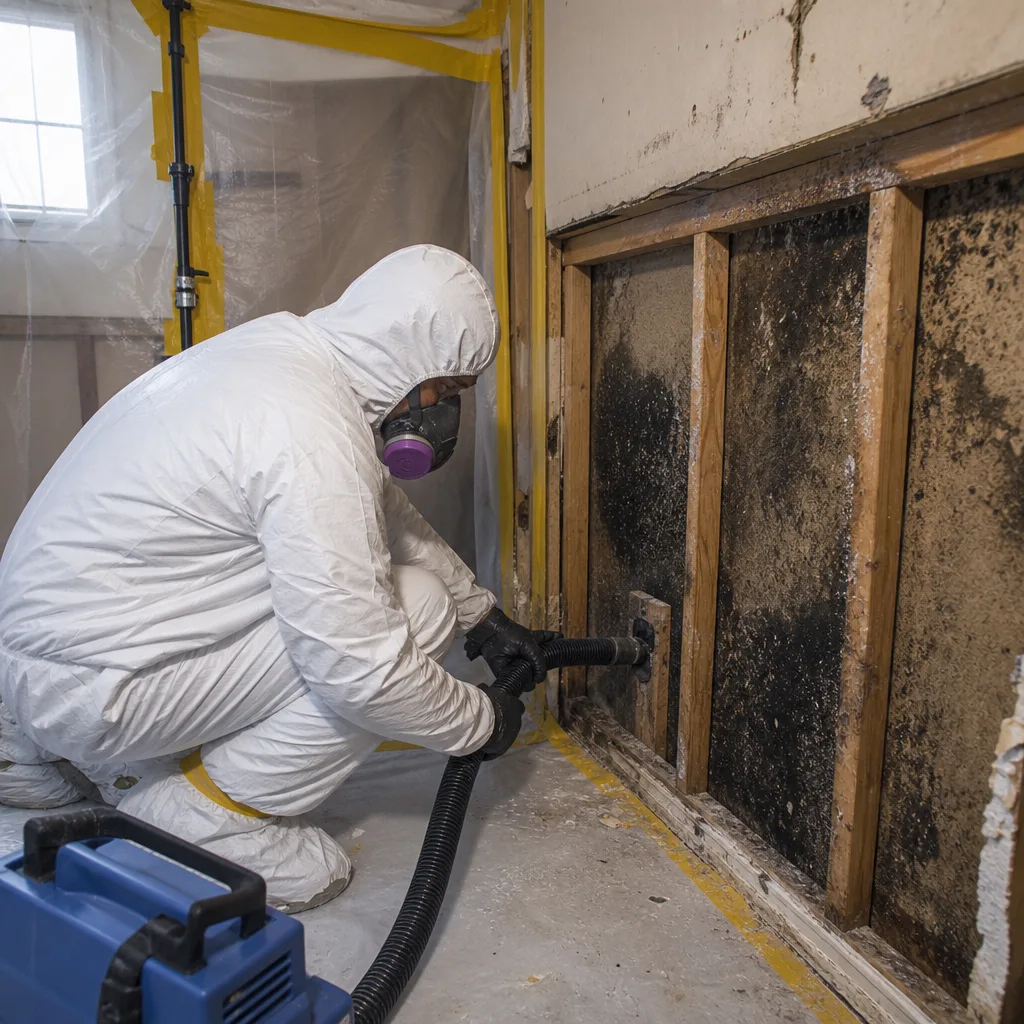
Mold Removal
When mold has colonized drywall, insulation, carpet, or framing, removal is the only real fix. We set up containment, remove the contaminated material, and run HEPA air scrubbers throughout. On pre-war Kearny homes, we’re always watching for asbestos in the materials we’re pulling out. The removal process slows down when abatement is needed, but skipping that step is how you get a health violation and a much bigger problem.
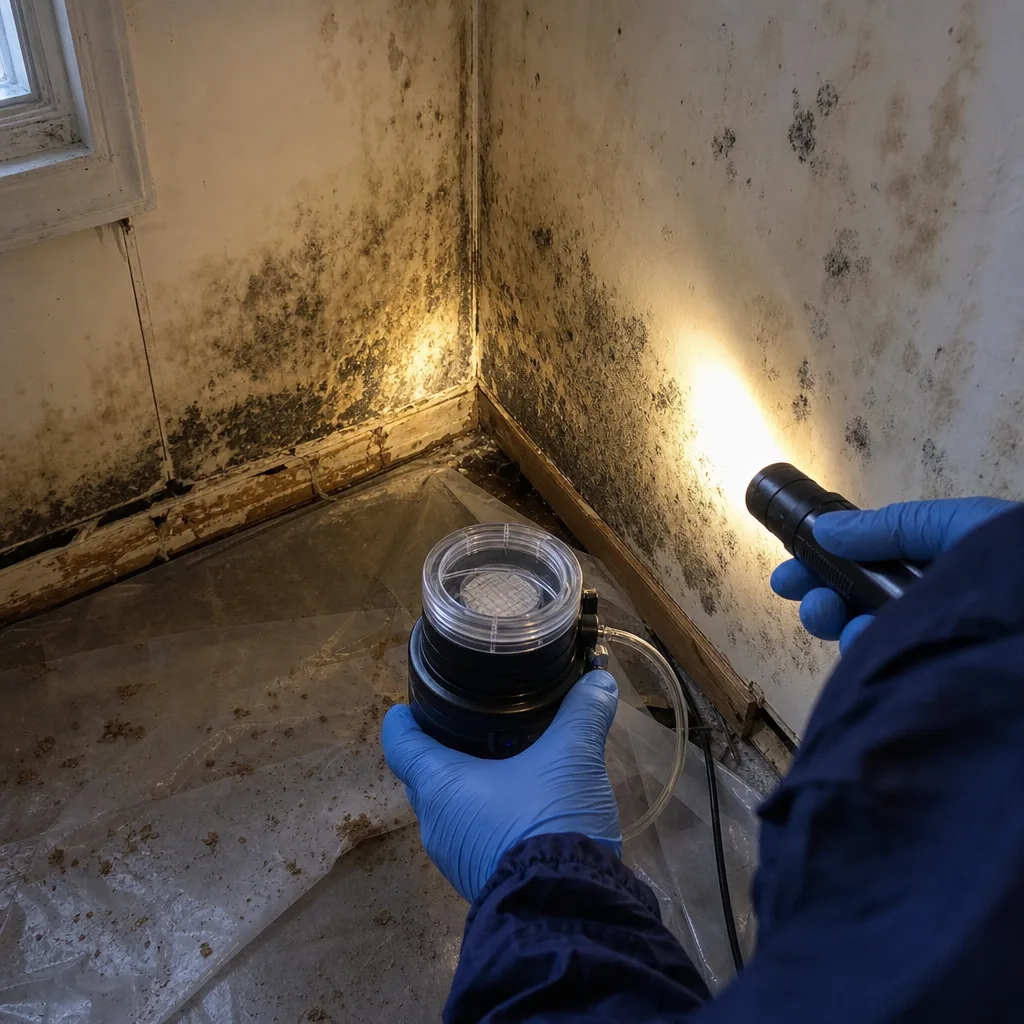
Black Mold Remediation
Stachybotrys chartarum, what most people call black mold, grows on materials that have been wet for extended periods. In Kearny, that means chronically damp basements and crawlspaces where the water source was never addressed. We handle full containment, removal, and clearance testing. Black mold jobs get special attention on air scrubbing and post-remediation verification because the health concerns are real.
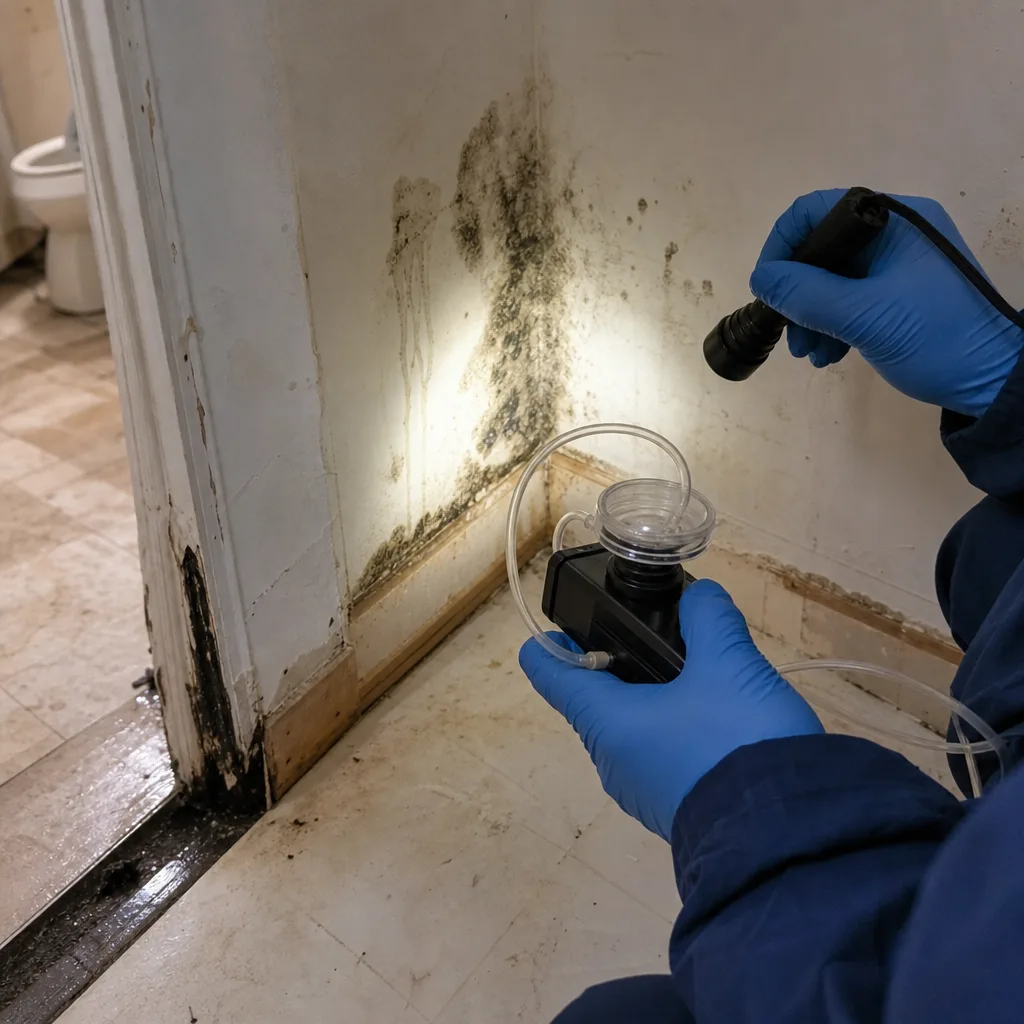
Air Quality Restoration
After any mold removal, the air in your home is carrying elevated spore counts until the scrubbers finish. We run HEPA filtration for at least 24 hours post-remediation, then take clearance samples. If the numbers don’t come back clean, we keep treating until they do. You get the lab results in writing.
Crawl Space Treatment
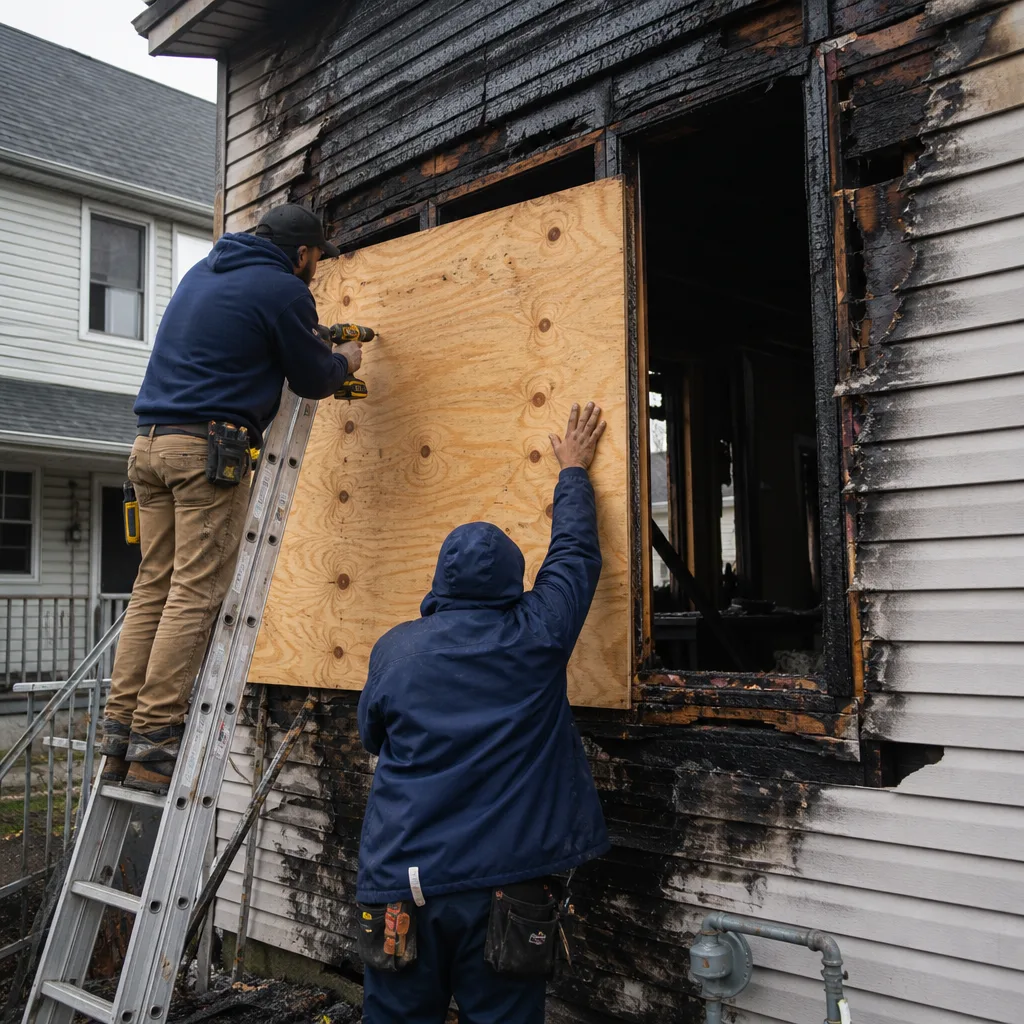
Kearny crawlspaces are tight, damp, and often dirt-floored. That’s mold heaven. We encapsulate with vapor barriers, install dehumidifiers where needed, treat the wood framing, and seal out the moisture that’s rising from the saturated ground. This is one of the services we emphasize for Kearny because the groundwater situation makes standard crawlspace treatment insufficient. Vapor barrier alone won’t do it. You need drainage management and a dehumidifier sized for the constant moisture load.
Moisture & Humidity Control
Mold is a moisture problem, not a mold problem. If your basement humidity stays above 60%, mold will grow no matter how many times you clean it. We install whole-home dehumidifiers, improve ventilation, and where needed, install interior drainage systems that capture groundwater and pump it away before it ever touches your finished space. In a town built on saturated wetland fill, this is the difference between a one-time remediation and a permanent fix.
What happens when you call
- 1
A real person answersNo phone trees - you reach a local pro.
- 2
You get an upfront price rangeHonest numbers before anyone is dispatched.
- 3
A background-checked tech heads outLicensed & insured, dispatched right away.
- 4
You approve before work beginsNothing starts until you say go.
Mold Remediation Costs in Kearny, NJ
What you’ll actually pay depends on how far the mold has spread and whether we’re addressing the water source too. Here’s what we see across Kearny:
- Mold inspection with moisture mapping: $150 to $350, often waived if you move forward with remediation
- Surface mold treatment on a single wall or ceiling section: $600 to $1,200
- Contained remediation of a 10-by-10 basement area: $1,800 to $3,500
- Full basement remediation with asbestos abatement: $4,000 to $8,000
- Crawl space encapsulation with dehumidifier: $3,500 to $7,500
- Interior drainage system with sump pump: $4,000 to $9,000 depending on perimeter length
The groundwater piece is what moves Kearny costs higher than neighboring towns like North Arlington or Lyndhurst. You’re not just paying for mold removal. You’re paying to stop the water that’s been feeding it for years. Skip that part and you’ll be paying for mold removal again in 18 months. Insurance covers the mold cleanup when it traces to a covered water event. Chronic seepage usually falls to you, which is why we give a written scope before any work starts, so you know exactly where you stand. Call (856) 501-6142 and we’ll come out, take moisture readings, and give you the real number in writing. No charge for the inspection.
We Also Serve Cities Near Kearny
Our crews work throughout the Meadowlands corridor. Beyond Kearny, we regularly handle mold remediation in Kearny and the surrounding towns: Harrison, North Arlington, Lyndhurst, and Jersey City. Same live answer, same 45-minute response, same written scope before work starts.
Serving Kearny, NJ - Our Local Coverage Area
We’re based in the Kearny area and know this community well. Use the map below to see our service coverage - if you’re nearby, we can almost certainly help.
Kearny Mold Remediation Questions, Answered
Why does mold keep coming back in my Kearny basement even after I replace the drywall?
Because the water source was never stopped. Your basement sits in saturated Meadowlands fill, so groundwater pushes through the foundation constantly. You replaced drywall about a foot above the floor line, but the moisture in the wall cavity never dried. Within a few months, mold regrew behind the new drywall. You need interior drainage and a dehumidifier before any drywall goes back up, or the cycle just repeats.
Does mold remediation in Kearny always involve asbestos abatement?
Not always, but it’s common in homes built before 1980. Plaster, floor tiles, and pipe insulation in pre-WWII Kearny homes frequently test positive for asbestos. If we’re removing those materials during remediation, we’re legally required to follow abatement protocols. We’ll test before we tear anything out. It adds time and cost, but it keeps your family safe and your home legal.
How fast can mold start growing after water intrusion in my Kearny home?
Mold spores need moisture, a food source, and time. In a damp Kearny basement with drywall and framing, visible mold can appear within 48 to 72 hours after saturation. The airborne spore counts rise before you see anything. That’s why speed matters. Call the moment you spot water intrusion or smell must, and we’ll have the drying equipment running the same day.
Is it safe to stay in my house during mold remediation?
For contained jobs affecting a single room or basement, yes in most cases. We seal the work area with negative air pressure so spores can’t migrate to living spaces. If the mold is extensive, if you have young children, elderly family, or anyone with respiratory conditions, we’ll recommend temporary relocation until air clearance testing comes back clean. Every situation is different, and we’ll give you an honest recommendation, not a blanket answer.
Do I need a separate plumber for the groundwater problem before mold remediation?
No. Groundwater intrusion in Kearny is a foundation drainage problem, not a plumbing problem. It doesn’t involve supply lines or drain pipes. We handle interior drainage installation, sump pumps, and crawl space encapsulation ourselves. If we find a plumbing leak during the inspection, like a failed supply line or a cracked drain, we’ll identify it and coordinate with a licensed plumber while we handle the mold and water damage.
How fast can you get to my Kearny home?
We aim for 45 minutes from your call to our arrival. Sometimes faster if the crew is already nearby. Wade answers the phone himself around the clock, and if he’s not in Kearny already, he’s on the road immediately. If you’re standing in a basement with water coming through the walls, call (856) 501-6142 and someone will be there before the water has time to do more damage.
Will my homeowners insurance cover mold remediation?
It depends entirely on the source of the water that caused the mold. If the water came from a covered event, like a burst pipe or a storm surge that entered through a window, coverage typically applies up to your policy’s mold limit, often $3,000 to $10,000. Chronic groundwater seepage through your foundation is generally excluded unless you have specific flood insurance. We’ll document everything and talk to your adjuster directly to make the strongest case your policy allows.
What should I do in the first 30 minutes after I discover mold?
Don’t touch it. Don’t wipe it with bleach. Don’t run a fan. Disturbing mold releases spores into the air. Close the door to the affected area if possible, turn off any HVAC system that might circulate air through the house, and call us at (856) 501-6142. We’ll walk you through what to do until the crew arrives. If there’s standing water, shut off power to that area if you can do it without stepping in the water.
Written by Wade Ferris, Owner at Wade’s Restoration, serving Kearny since 2007.