
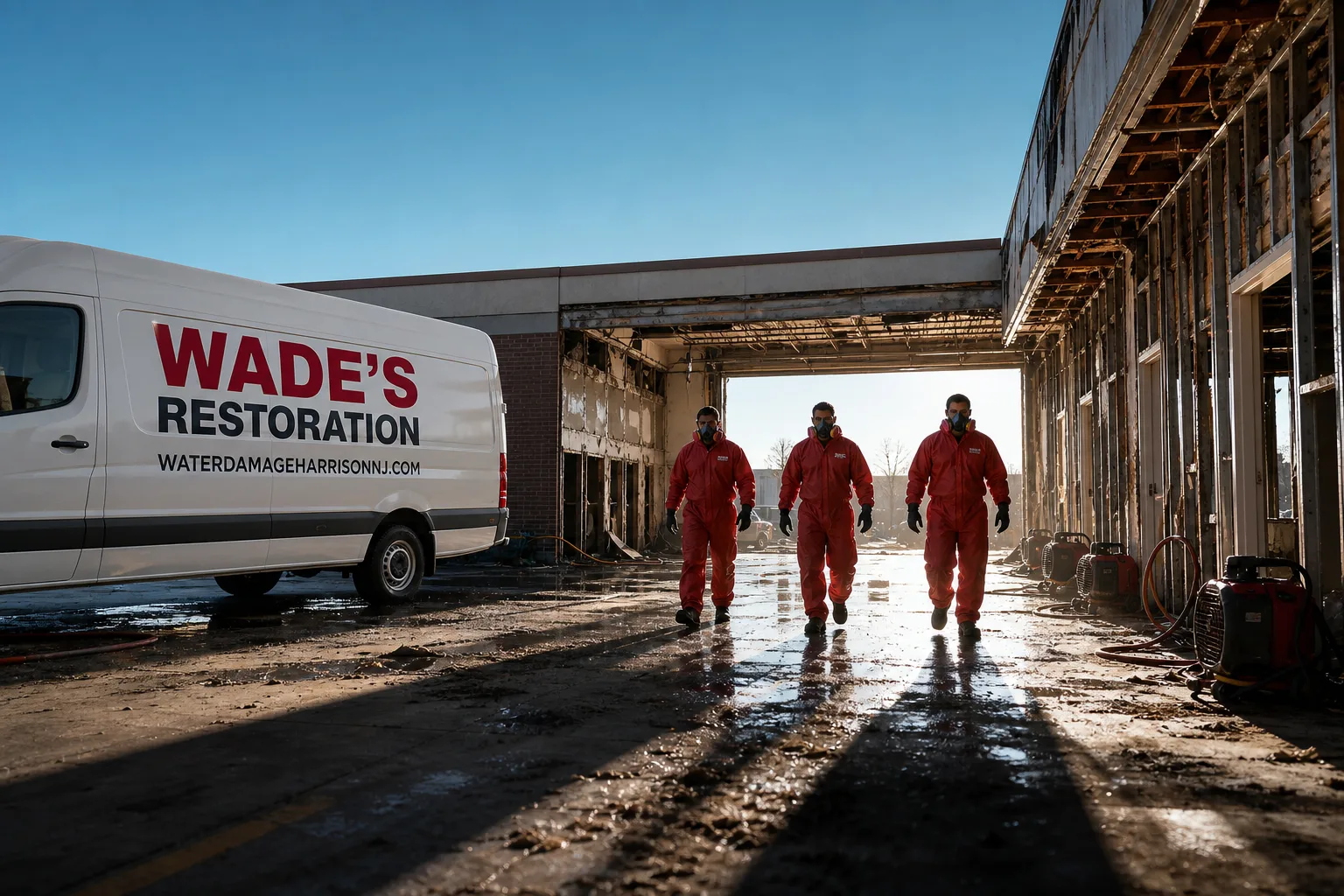
Free visual inspection and a written scope of work before any mitigation begins - photos, moisture readings, and drying logs go in your claim file
The scope we write is the scope we bill. Anything new gets shown to you, in writing, before we touch it.
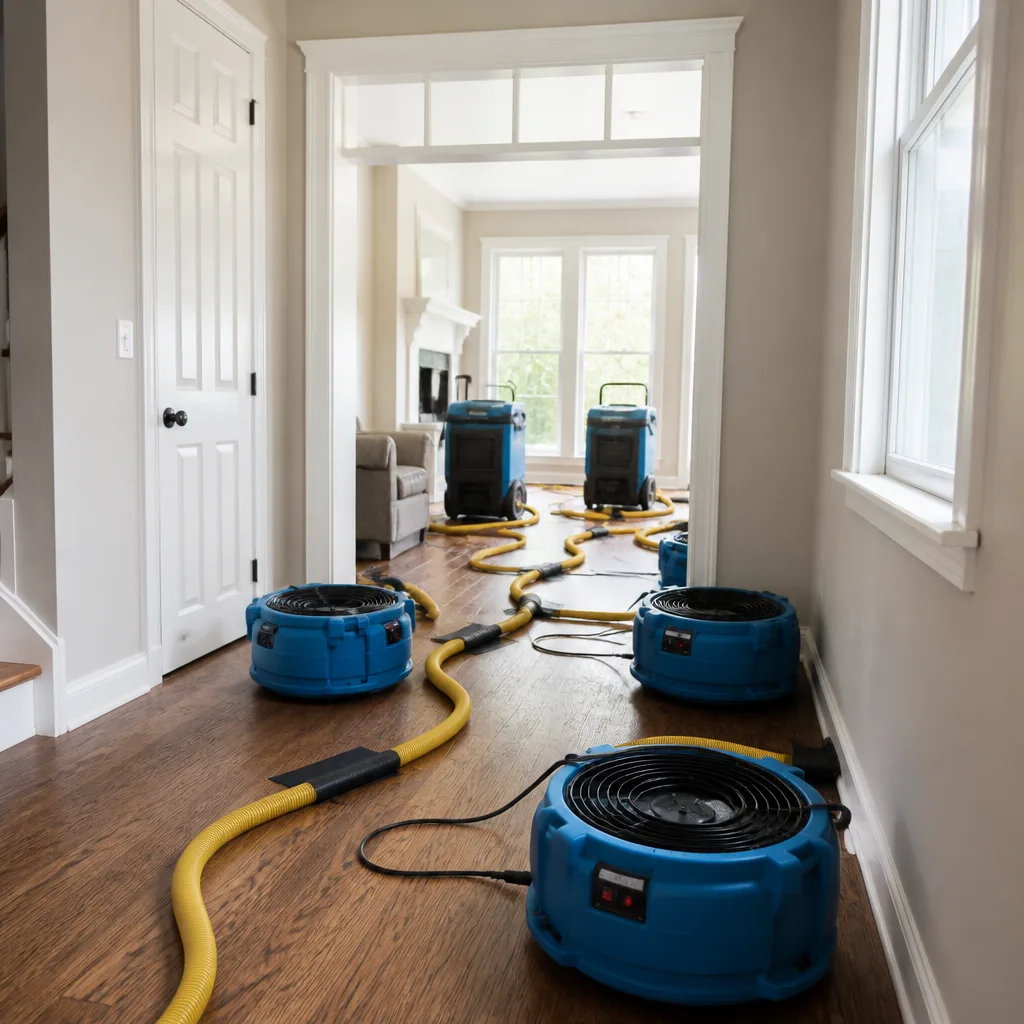
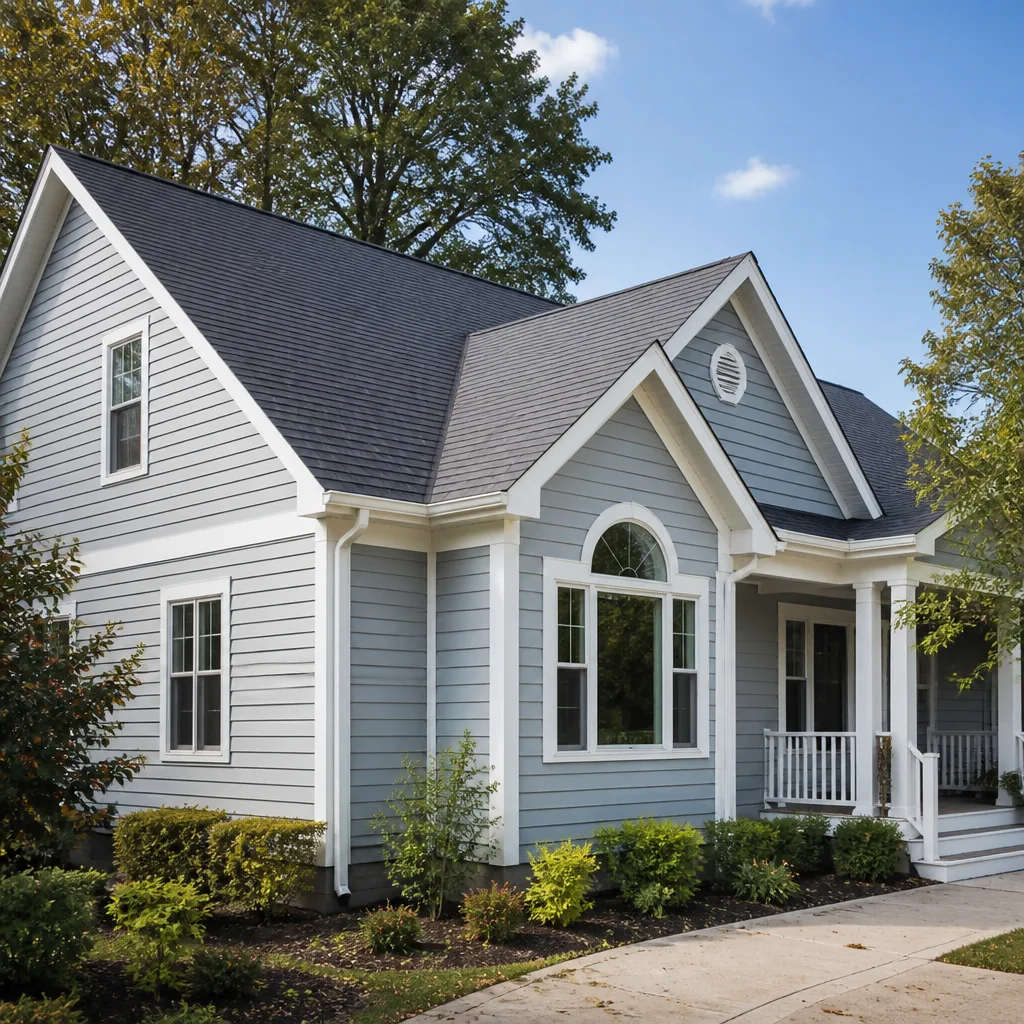
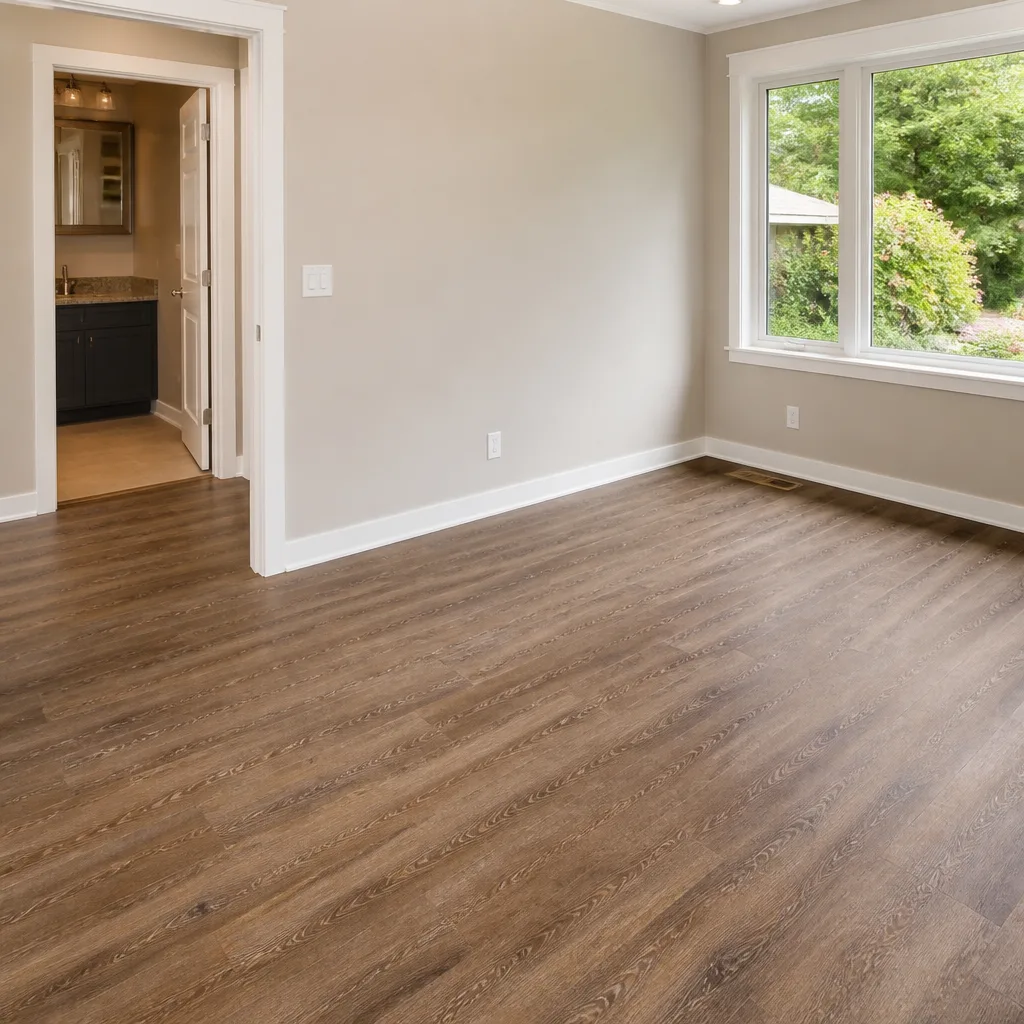
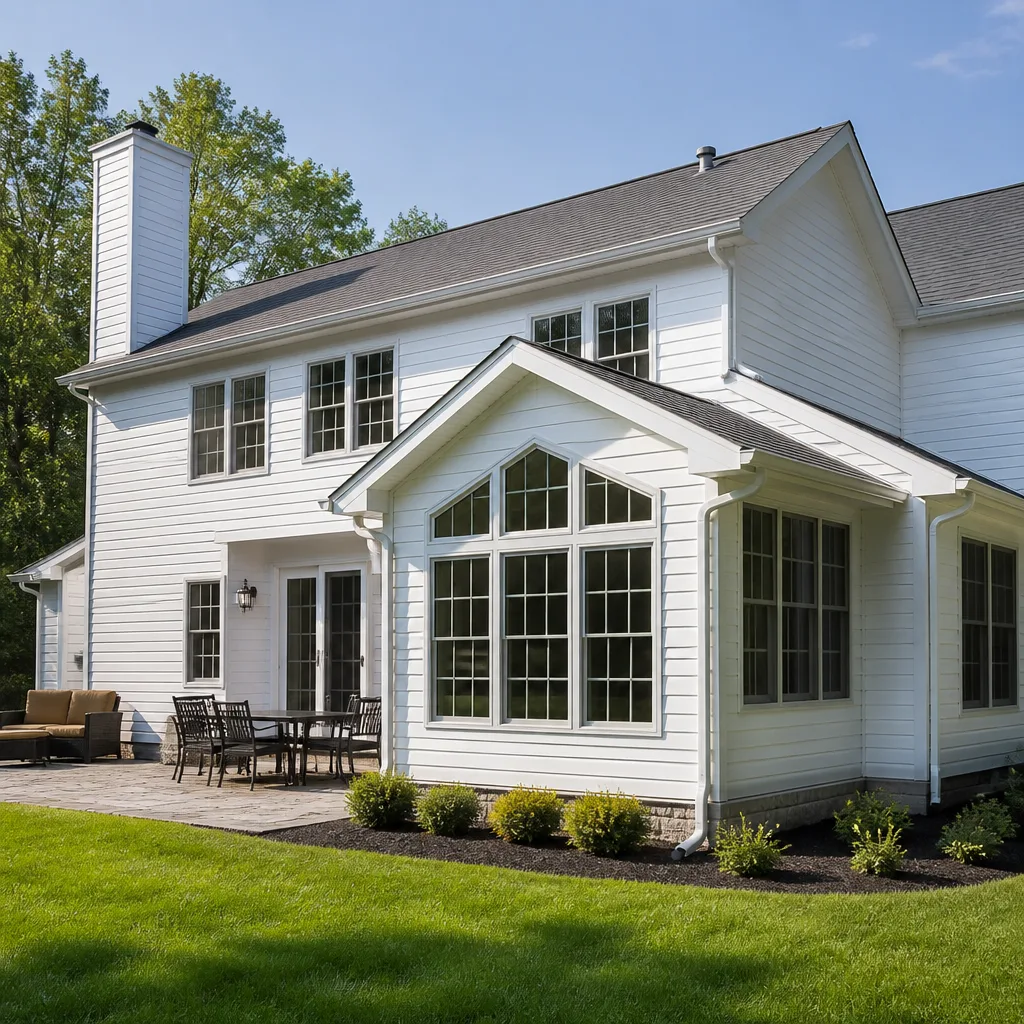
 Before
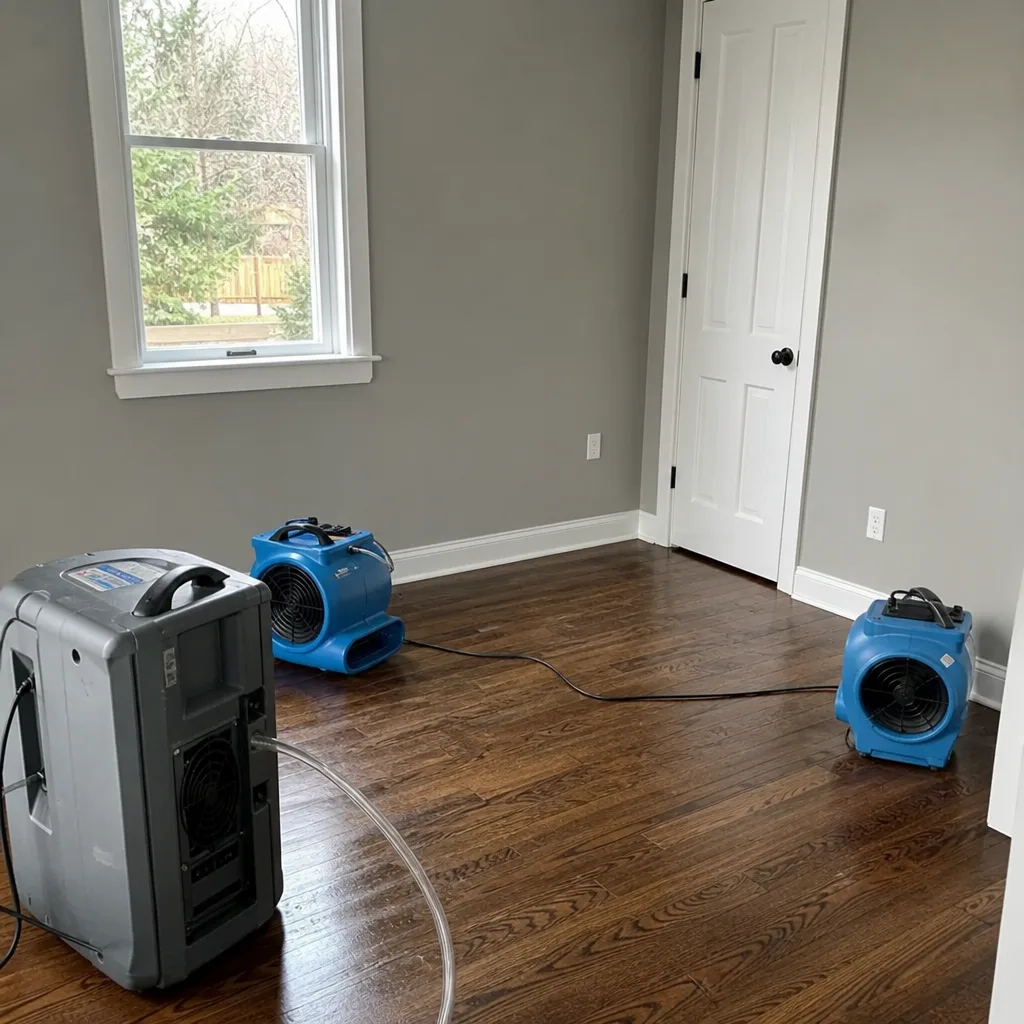 After
After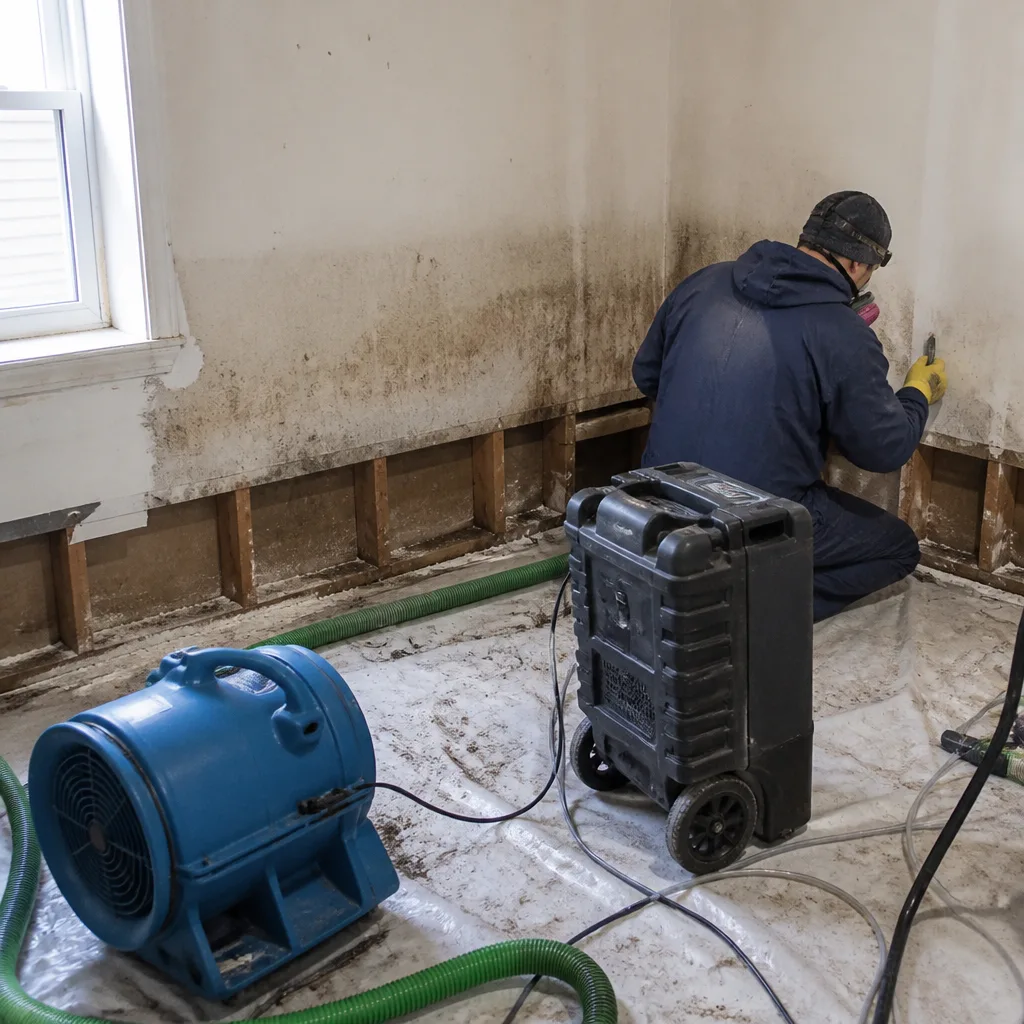 Before
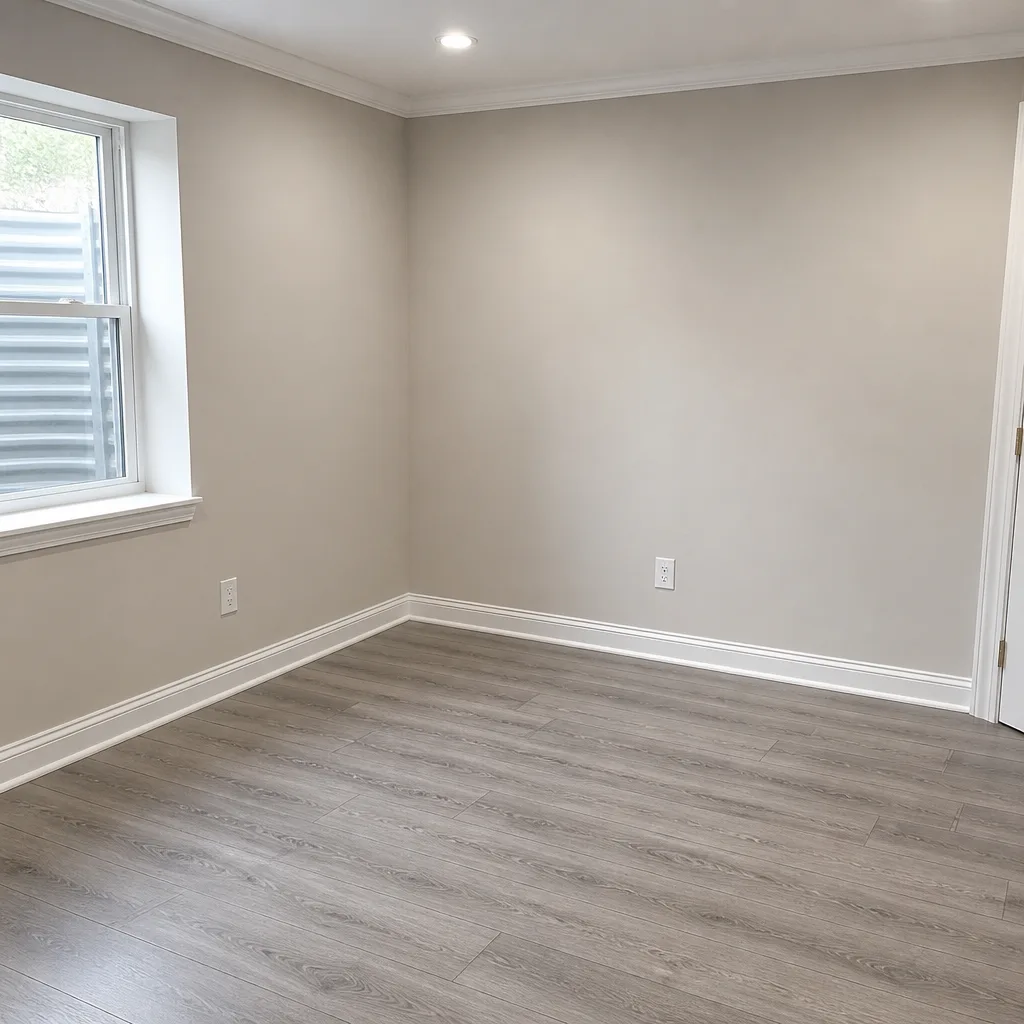 After
After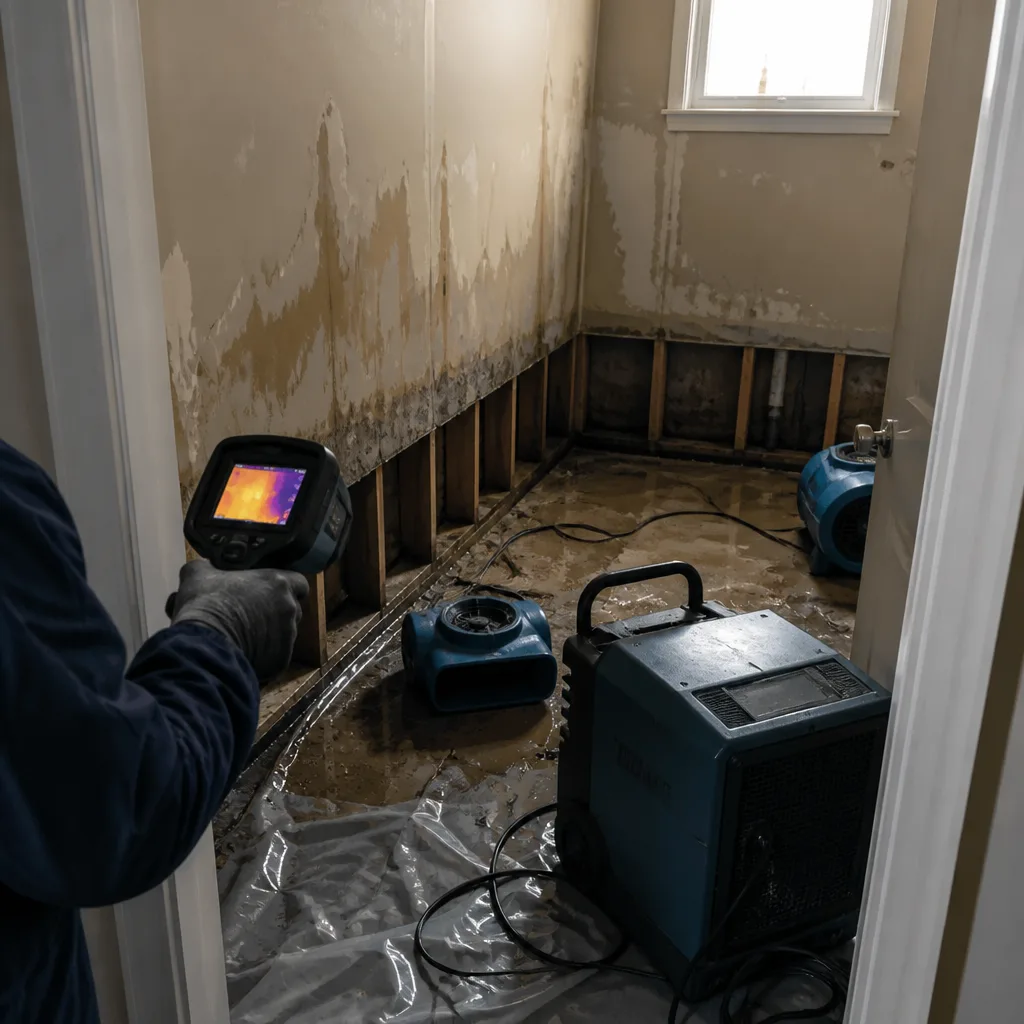 Before
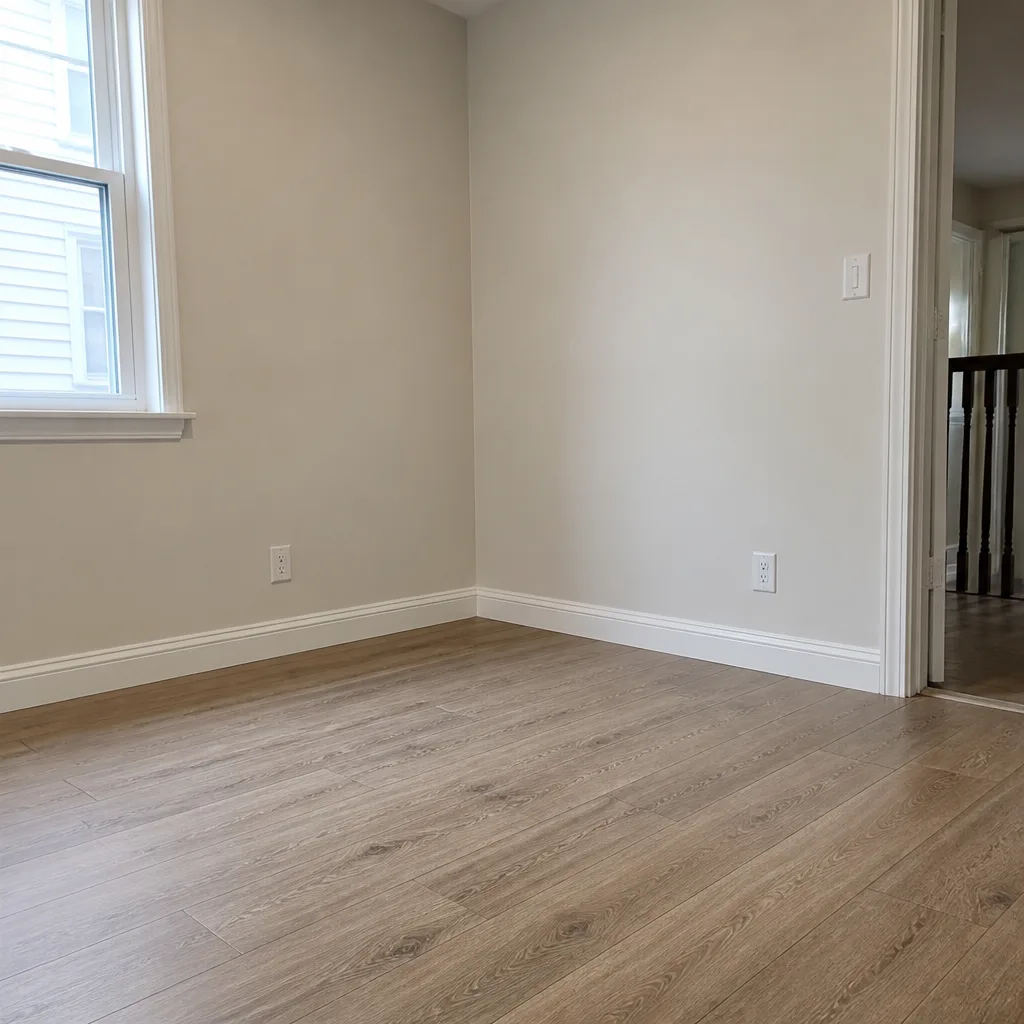 After
After24/7 Emergency Mold Remediation in Hoboken
Mold remediation in Hoboken usually runs $1,800-$6,500 depending on how far the contamination has spread, and the honest answer is that we can be on-site within 45 minutes when you call (856) 501-6142. That speed matters more here than almost anywhere else in New Jersey, because Hoboken’s attached brick row houses share party walls, and mold moves laterally from a flooded unit into a dry neighbor’s walls within 24 to 48 hours. We answer live around the clock, we do a free visual inspection, and Wade Ferris himself will be the one walking your apartment. The first hour isn’t about saving money. It’s about keeping a garden-level problem from becoming a whole-building problem.
Understanding Mold Remediation Severity in Hoboken Properties
When we walk into a Hoboken brownstone or converted row house, we’re rarely dealing with a simple surface mold issue. What we find more often is a chain reaction that starts with water and ends with spores colonizing the original lath and plaster, the floor joists, and the shared masonry party wall. We map the moisture first using thermal imaging and hygrometers, because the visible mold is usually the smallest part of the equation. From there we classify the water source. A burst supply line inside the building is typically Category 1 or 2 water. A sewer backup through a garden-level floor drain is Category 3, and that changes everything about containment, antimicrobial treatment, and disposal. In a 120-year-old attached building, Category 3 water doesn’t stay in one apartment. It follows the shared wall cavities, the plumbing chases, and the gaps around old cast-iron pipes. We build containment before we open a single wall, run HEPA air scrubbers to keep airborne spores from drifting into adjacent units, and don’t remove the barrier until we have moisture readings that show the structure is actually dry. For mold remediation in Hoboken, “dry to the touch” isn’t a standard. A moisture log is.
Why Hoboken Property Owners Choose Wade’s Restoration
- 45-minute response commitment to Hoboken – Wade or one of his senior techs is on the road the moment you hang up, and we know the parking and access realities of brownstone blocks well enough to actually hit that mark.
- 24/7 live answer, always a real person – You call, a person picks up. Not a voicemail tree, not an answering service in another state. Often it’s Wade himself.
- IICRC-certified crews on every job – We hold WRT, FSRT, and AMRT certifications, so the technician in your apartment has proven training in water damage, fire and smoke, and applied microbial remediation.
- Free visual inspection, no trip charge in our county – We’ll come look, tell you honestly what you’re dealing with, and put a written scope in your hand before any work starts. No charge for that.
- Direct insurance billing and adjuster coordination – Wade deals with your carrier directly, sends them the documentation they need, and you’re never stuck relaying information back and forth.
- One team from containment to reconstruction – We don’t remediate and then hand you off to a stranger for drywall and flooring. The same crew that sets up containment is the crew that finishes the job.
Our Mold Remediation Process
1. Inspection & Assessment
We walk the unit with a thermal camera and moisture meter, mapping every affected surface including the party wall facing your neighbor’s apartment. You get a plain-English explanation of what’s wet, what’s contaminated, and what we need to open up. The visual inspection is free.
2. Containment & Stabilization
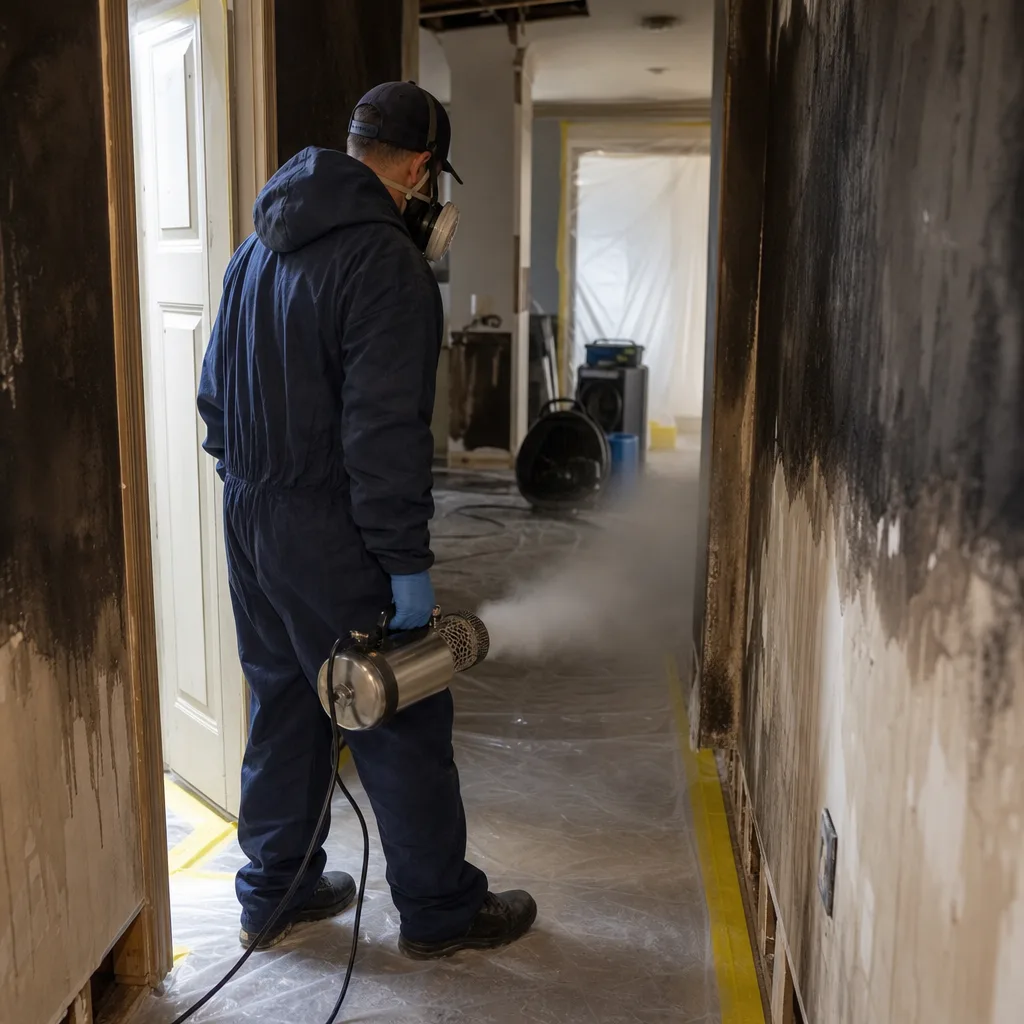
We set up critical containment barriers with negative air pressure so spores don’t migrate into hallways or adjacent units. This is the step that keeps your neighbor from having a mold problem because you had a flood.
3. Water Extraction & Source Correction
Before we treat mold, we stop the water that’s feeding it. That could mean fixing a failed supply line, sealing a foundation seep, or addressing the floor drain that backed up. We extract standing water with truck-mounted or portable extraction units.
4. Drying & Dehumidification
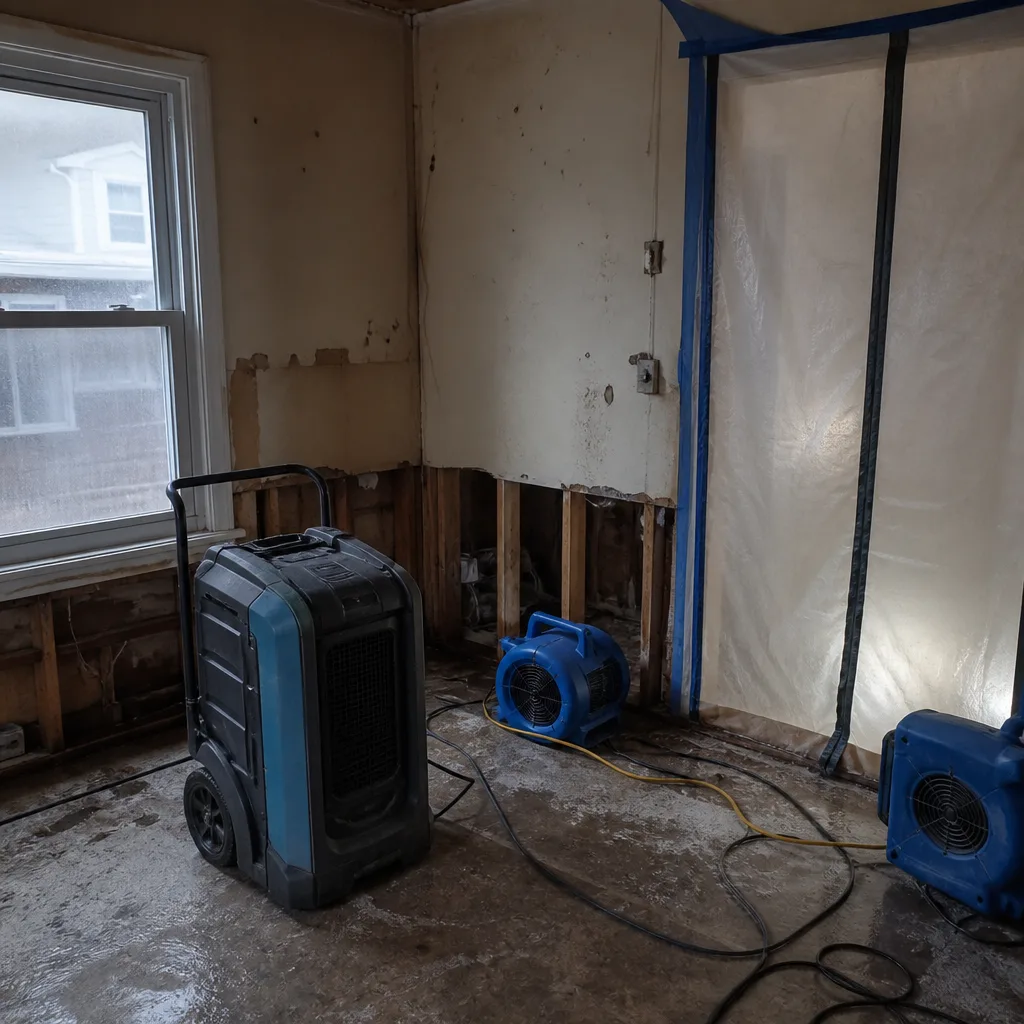
We place Dri-Eaz and Phoenix dehumidifiers plus high-volume air movers sized to your unit’s actual cubic footage. In Hoboken’s old masonry buildings, this phase runs longer than in modern construction because brick and plaster hold moisture. We take readings every day and hand you the log at the end.
5. Cleaning & Antimicrobial Treatment
We remove contaminated drywall, insulation, and flooring, then HEPA-vacuum and treat remaining structural surfaces. For Category 3 water, this includes full antimicrobial application to the affected wall cavities and framing.
6. Repairs & Restoration
We rebuild what we removed: drywall, plaster, flooring, paint. You get one crew from start to finish, and every job is covered by our 90-Day Done Right Promise. If it’s not done right, Wade makes it right, in writing.
Need Emergency Mold Remediation in Hoboken Now?
Crews minutes away, answering live 24 hours a day. The sooner we start, the less it costs.
Working With Your Insurance Company
Mold claims are where insurance companies get careful, and that’s exactly why documentation on day one matters. We photograph every affected surface before we touch it, log moisture readings from the first hour through the final clearance, and produce a line-item scope that speaks the language adjusters expect. Wade talks to your adjuster directly, so you don’t spend your week playing telephone between a claims department and a restoration crew. If your policy covers the loss, we bill your carrier directly. If it doesn’t, you’ll know before work begins, because we put the scope and price in writing first.
What We Provide Your Insurer
- Thorough documentation of the loss
- Photos of all damage, room by room
- Moisture readings and drying logs
- A detailed, line-item scope of work
- Direct coordination with your carrier
Built for Hoboken’s Loss Calendar
Hoboken’s mold season doesn’t follow a tidy calendar. January deep freezes split aging cast-iron supply lines in unheated garden apartments. Spring rains and snowmelt raise the Hudson-adjacent water table until groundwater pushes through unreinforced basement slabs. Summer thunderstorms overwhelm the combined sewer system and send Category 3 water up through floor drains on the low western blocks. And September through November, nor’easters put the whole mile-square city on notice. Every one of those events produces the same follow-on: water in attached masonry buildings, shared party walls holding moisture, and mold colonizing within 48 hours. We keep equipment staged and crews on rotation through storm season because we know a nor’easter in Hoboken means dozens of adjacent brownstones all call at once, not one house in a cul-de-sac. If you’re reading this during a dry week, that’s the right time to get your garden-level apartment or crawl space inspected, before the next storm puts you in the queue behind your neighbors.
Mold Remediation Across Hoboken’s Neighborhoods
The housing stock is remarkably consistent across Hoboken: attached brick and brownstone row houses, most subdivided into two to four units, many with garden-level or below-grade apartments. But the risk patterns shift block by block. Down near Observer Highway and the old rail corridor by Willow Avenue, the land is lowest and the water table sits close to the surface, so garden-level units there take on groundwater even in moderate rain. We stage drying equipment early on those western blocks because call volume spikes across dozens of adjacent 1890s-era buildings the moment a storm clears. Uptown around 14th Street and the viaduct, we see more failures from aging cast-iron supply and drain lines than from surface flooding. Along Washington Street, the commercial ground floors with residential units above create a different problem: a restaurant or storefront leak migrates up through the joist bays into the apartments overhead. And throughout the tight cross-streets between Bloomfield and Park, the shared party walls mean a flood at 315 Willow is a moisture problem at 317 within a day. That lateral spread is the single biggest scope multiplier in Hoboken.
Specialized Mold Remediation Services We Offer in Hoboken
Mold Inspection & Testing
We do more than look for black spots. We check behind baseboards with a moisture meter, pull data from wall cavities with a thermal camera, and take air and surface samples when the situation calls for lab confirmation. The free visual inspection tells us where to dig deeper, and you get a written report that explains what we found and what actually needs to be done.
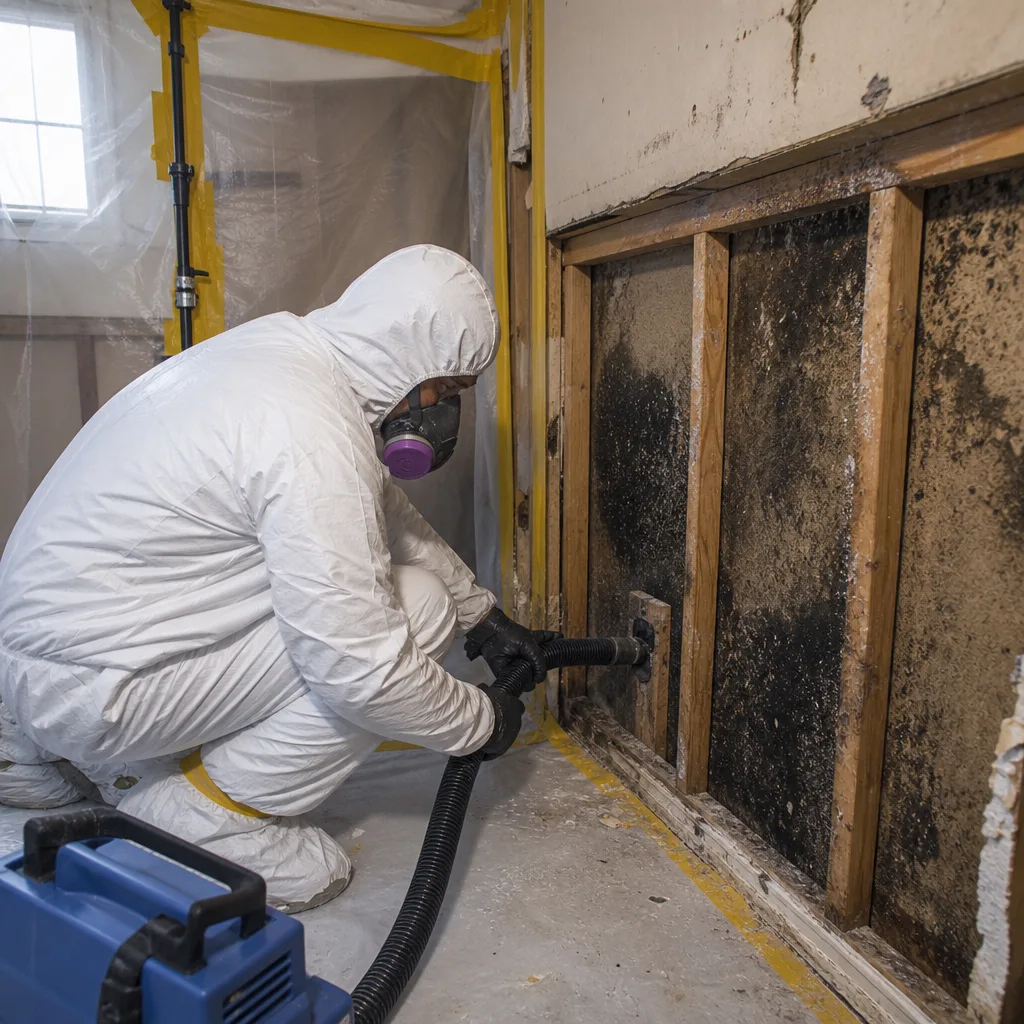
Mold Removal
Visible mold is removed at the source, not painted over. In Hoboken’s plaster-and-lath walls, that usually means cutting out contaminated plaster, treating the framing behind it, and rebuilding with fresh material. We never fog a room and call it done. If the mold is in your walls, the wall is what gets fixed.
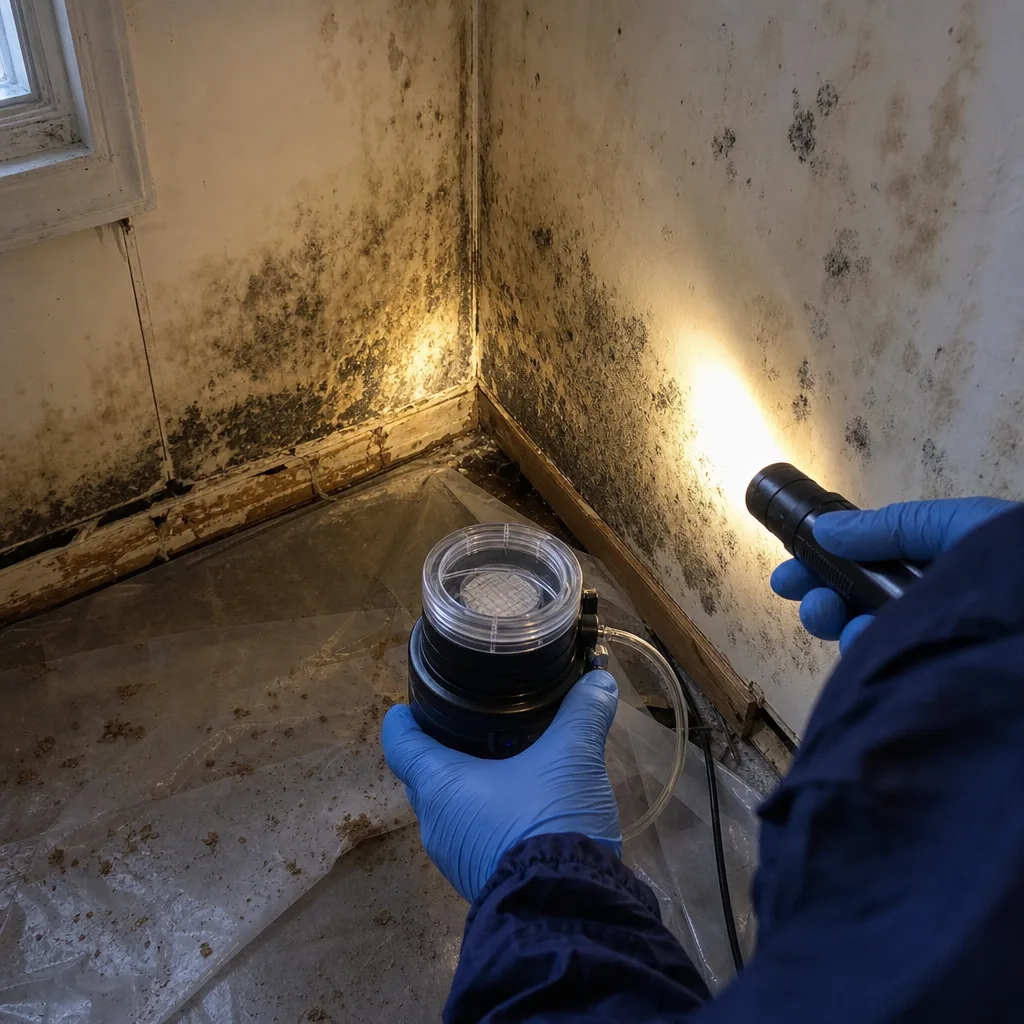
Black Mold Remediation
Stachybotrys gets the headlines, but the honest truth is that any mold colony producing spores in a closed apartment is a health risk. We treat black mold with the same protocol as any indoor fungal contamination: containment, air scrubbing, removal of affected porous material, and clearance testing before anyone sleeps in the room again.
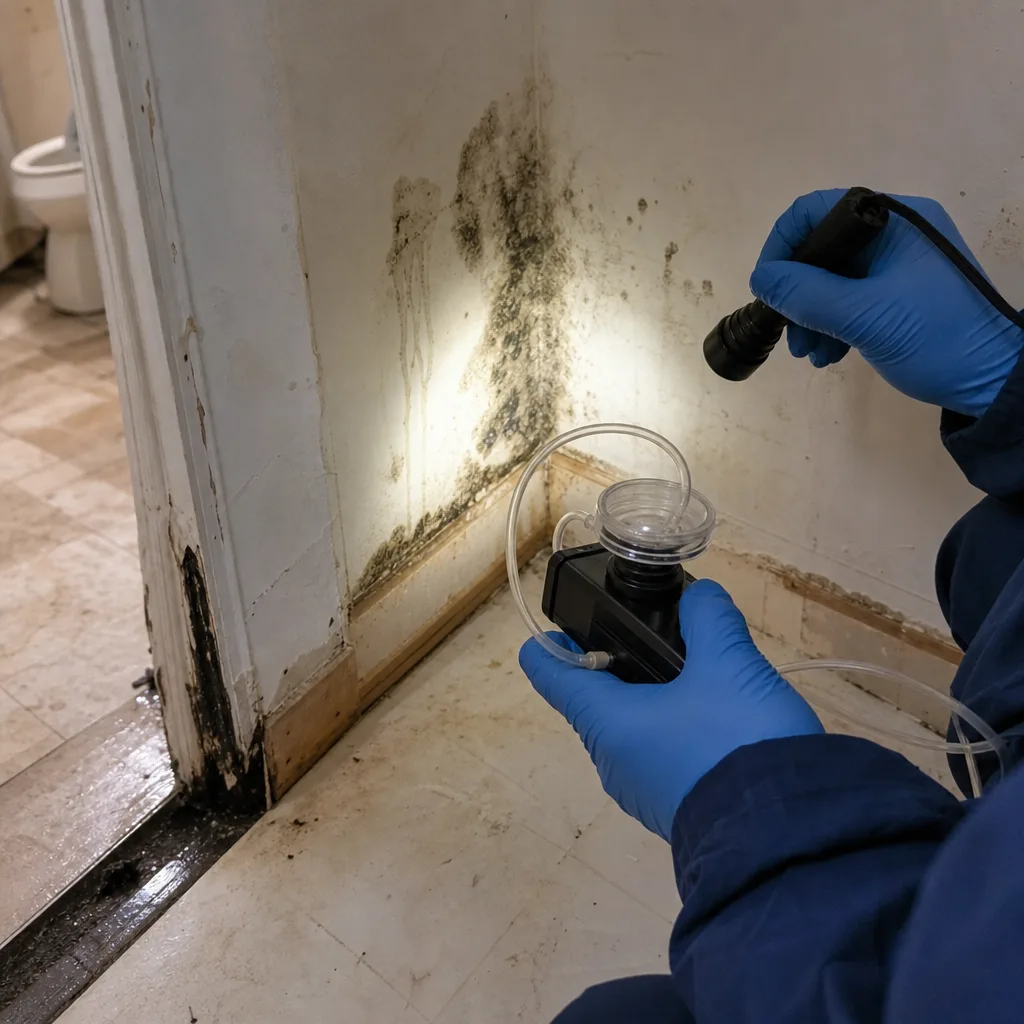
Air Quality Restoration
After we remove the contaminated material, we run HEPA air scrubbers and, where needed, hydroxyl generators to bring the indoor air back to something you can breathe without wondering what’s in it. In attached buildings, this matters with a neighbor an arm’s length away on either side. We post-remediation verify with air sampling so you have a number, not a guess.
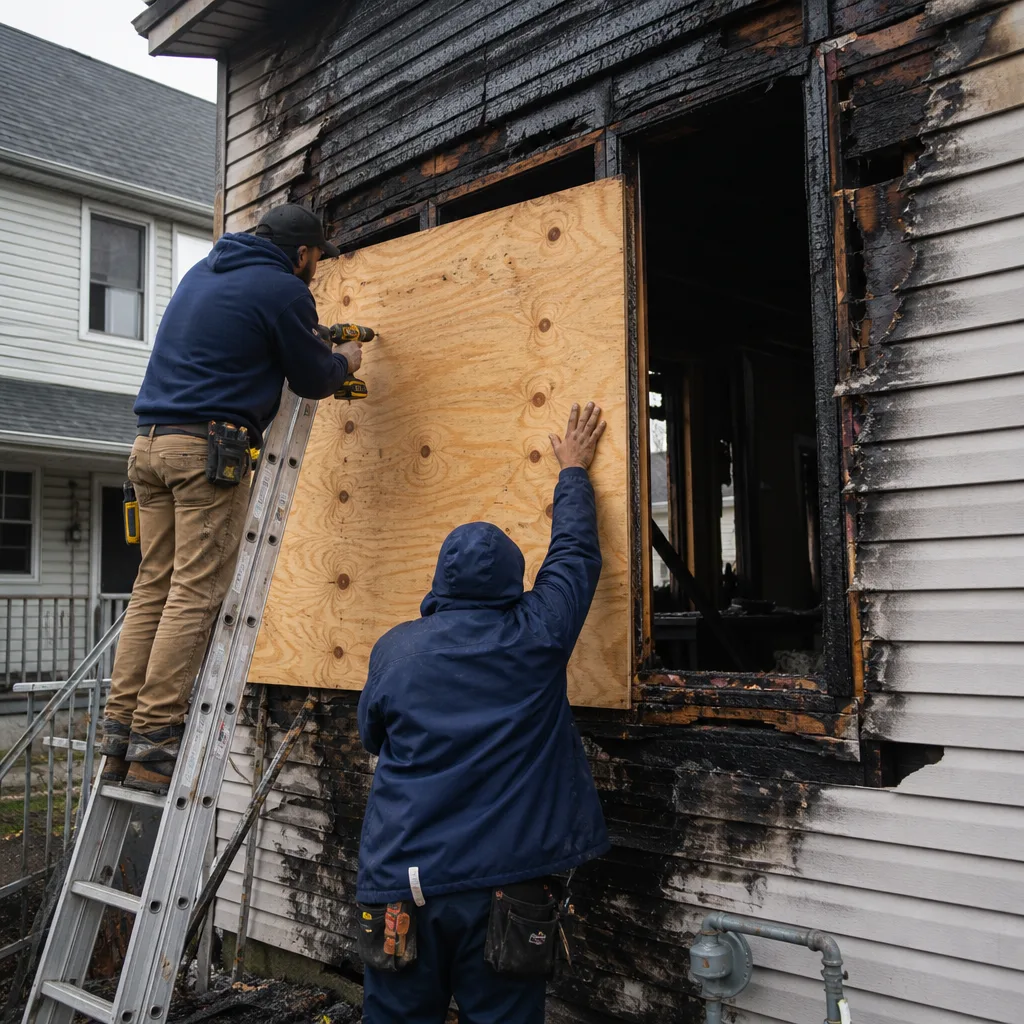
Crawl Space Treatment
Hoboken doesn’t have many true crawl spaces under the newer buildings, but the older brownstones and converted carriage homes do, and they’re often dirt-floored and chronically damp. We seal, dry, and treat those spaces with antimicrobial coatings and vapor barriers so the air rising into your living space isn’t feeding the mold problem you just paid to fix.
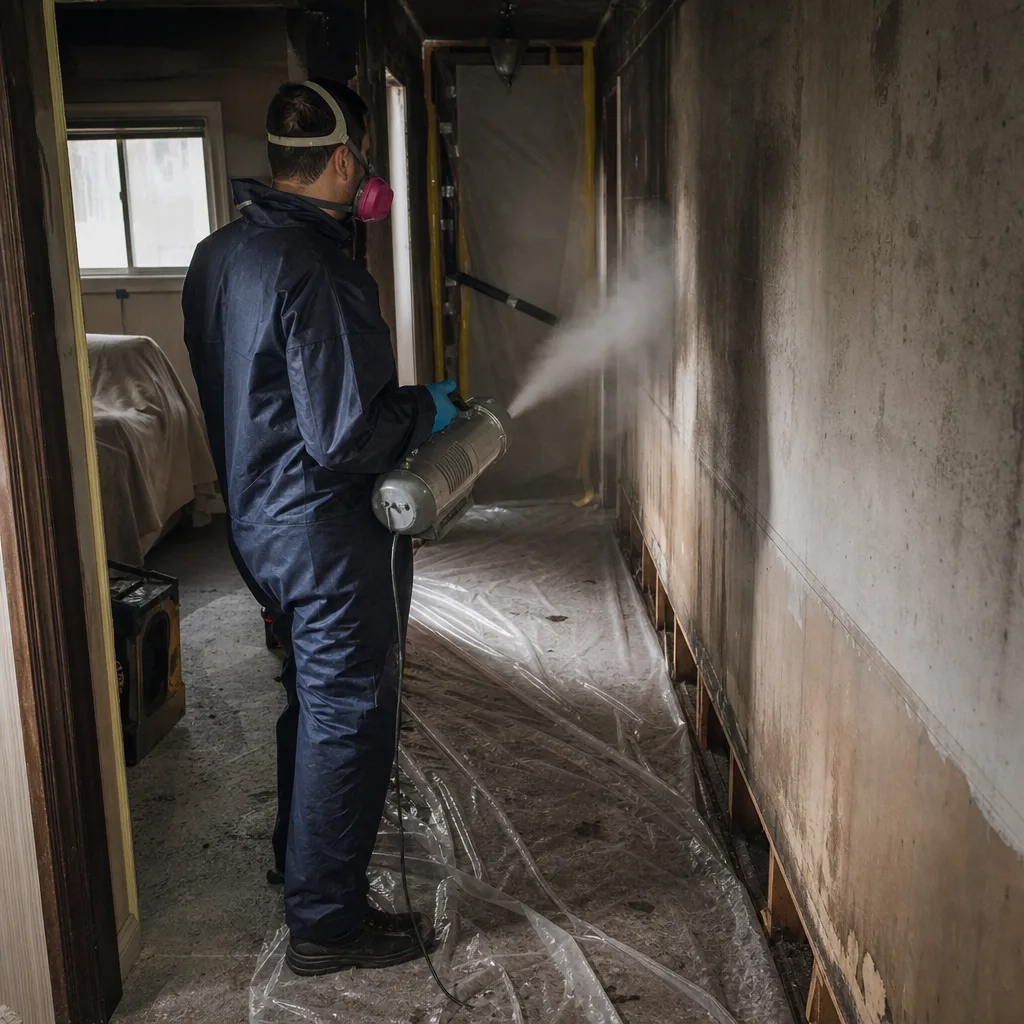
Moisture & Humidity Control
This is the part nobody wants to pay for and the part that keeps mold from coming back. We install dehumidification and moisture-control systems sized to a below-grade Hoboken unit’s specific load, because a garden-level apartment two blocks from the Hudson River doesn’t dry out on its own. Ever. If your last remediation didn’t include a plan for the water source and the ongoing humidity, it wasn’t remediation. It was a cleaning.
What happens when you call
- 1
A real person answersNo phone trees - you reach a local pro.
- 2
You get an upfront price rangeHonest numbers before anyone is dispatched.
- 3
A background-checked tech heads outLicensed & insured, dispatched right away.
- 4
You approve before work beginsNothing starts until you say go.
Mold Remediation Costs in Hoboken, NJ
For a typical Hoboken apartment, a contained mold remediation runs $1,800-$6,500. A small bathroom ceiling with mold from a leak above usually lands between $1,800 and $3,200. A garden-level unit where water sat against a party wall for a week before anyone noticed will push $5,000-$9,000 or more once you account for structural drying and rebuilding. Black mold remediation that requires full containment, air scrubbing, and clearance testing on multiple rooms adds cost because the protocol is different. What moves the number most in Hoboken is lateral spread: the difference between one unit and two units in the same building. The free inspection and written scope are exactly how you avoid the phone-quote-then-door-price problem. Call (856) 501-6142 and we’ll tell you what you’re actually looking at.
We Also Serve Cities Near Hoboken
Wade’s Restoration provides Mold Remediation throughout the Hudson County area. Beyond Mold Remediation in Hoboken, we regularly work in Union City, Jersey City, Secaucus, and Kearny, same 45-minute response standard and same owner on the other end of the phone.
Serving Hoboken, NJ - Our Local Coverage Area
We’re based in the Hoboken area and know this community well. Use the map below to see our service coverage - if you’re nearby, we can almost certainly help.
Hoboken Mold Remediation Questions, Answered
Why does mold spread so fast between attached Hoboken row houses?
Because the party walls between Hoboken’s attached brownstones were built in the late 1800s with no fire blocking, no moisture barrier, and often a shared wall cavity that acts like a hallway for water and air. When one unit floods, moisture moves laterally into the neighboring unit within 24 to 48 hours, and mold follows shortly after. That’s why we always inspect the adjacent units when we remediate a party-wall property.
Is the water in my Hoboken basement from a sump pump failure or a sewer backup, and why does it matter?
It matters enormously. Sump pump failure typically means Category 1 or 2 water, usually from groundwater or a supply line. A sewer backup through a floor drain is Category 3, which means it’s carrying bacteria and contamination that requires full containment, removal of all porous material, and antimicrobial treatment. In Hoboken, where the combined sewer system backs up during heavy rain, we classify the water carefully before we decide how aggressive the remediation needs to be. Skip the classification and you skip the safety.
Can you dry out my 1890s brownstone’s garden-level apartment without ripping out the plaster?
Sometimes, but not often. Original lime-and-horsehair plaster that’s been wet for more than a day rarely survives the drying process, and trying to force it back to life just leaves you with a hidden mold farm behind a wall that looks fine. We save what’s salvageable and replace what isn’t, but we don’t pretend that wet plaster in a 130-year-old building is going to dry clean. The honest answer up front saves you money.
How do you prevent mold from returning in a Hoboken basement that floods every nor’easter?
You have to control the water at the source and the humidity at the same time. That means sealing foundation seepage where possible, installing a sump and backup system, and running a dehumidification system sized for a below-grade space near the river. We handle all three. If the last crew only removed the mold and didn’t address groundwater or humidity, that’s not a mold problem. That’s a repeat customer waiting to happen.
Do I need a mold inspection even if I don’t see any mold after a flood?
Yes, especially in an attached Hoboken building. Mold colonizes inside wall cavities and behind baseboards long before it shows on the surface. If your unit flooded and you dried it with box fans, the moisture readings in the structure likely still show elevated levels. A free visual inspection with a moisture meter tells us whether you actually have a problem or whether you’re genuinely dry. Either way, you’ll know rather than wonder.
How fast can you actually get to my Hoboken apartment?
We commit to 45 minutes for emergency calls in Hoboken, and that’s realistic because we have crews staged locally throughout the area and we know how to get through the streets faster than a crew coming from the suburbs. Wade or a senior tech will be on the road the moment you call (856) 501-6142.
Will my insurance cover mold remediation in Hoboken?
Often it depends on what caused the mold. If the mold resulted from a covered peril like a burst pipe or storm damage and you reported it promptly, your carrier will likely cover the remediation and repair. If it’s from long-term neglect or a pre-existing condition, they may not. We document everything from the first hour so your claim has the best possible chance. Wade coordinates with your adjuster directly.
Do I have to leave my apartment during mold remediation?
It depends on the size of the affected area and whether it’s contained. For a small contained job in a single room, you can usually stay. For a Category 3 sewer backup or a multi-room remediation with air scrubbers running, you’ll want to be somewhere else for a few days. We’ll tell you straight before we start, and we’ll give you a realistic timeline.
Written by Wade Ferris, Owner at Wade’s Restoration, serving Hoboken since the company’s founding in 2007. Wade answers his own phone.