
Quick Summary
Basement flood cleanup in Harrison, NJ requires rapid, calculated intervention to mitigate severe structural hazards, contaminated water risks, and rapid mold growth following heavy storms or plumbing failures. Wade's Restoration delivers critical local emergency response, utilizing professional water extraction, strategic porous material removal, and specialized structural drying tailored to local foundations. Homeowners will understand immediate safety protocols, key restoration pricing factors, and how to contact Wade's Restoration 24/7 for rapid emergency dispatch and a free on-site moisture inspection.
Basement Flood Cleanup Harrison NJ
When heavy rains occur or a plumbing line fails, basement flooding in Harrison demands immediate, calculated action. Harrison records an average annual precipitation total of 50.42 inches based on 1991-2020 climate normals from the Rutgers New Jersey State Climate Office and NOAA. NOAA identifies Harrison climate station USC00283704. Addressing electrical and structural hazards, avoiding contaminated water, removing standing water, cleaning affected areas, and drying wet materials within 24 to 48 hours when safe can reduce the risk of mold growth.[1]
As Wade’s Restoration notes, remediating a flooded basement requires addressing electrical and structural hazards, avoiding contaminated water, removing standing water, cleaning affected areas, and thoroughly drying wet building materials.[4]
Emergency Dispatch: Response Across Harrison, NJ
Actual response times vary with availability, traffic, weather, safety conditions, and the scope of the emergency.[5]
What to Do While Help Is on the Way
Taking immediate safety precautions protects your household:
- Address electrical hazards: Shut off the main breaker only if you can reach the panel safely without stepping into standing water. If the panel is in a submerged basement, contact the local utility to disconnect power at the meter.
- Evacuate the flooded area: Keep children, pets, and family members away from flooded zones to avoid electric shock hazards and contact with contaminated water.
- Document visible damage: Take photos and videos of high-water lines, submerged utilities, and damaged belongings for insurance purposes.
- Avoid standard vacuum equipment: Never attempt to remove floodwater with a household vacuum or standard shop vac. Doing so poses a direct electrocution hazard and can ruin the equipment.
- Check for structural hazards: If you see basement walls bulging or bowing inward, evacuate the building immediately and alert emergency services.
Local Rainfall and Flood Risk Context
During Hurricane Ida, Harrison recorded 8.72 inches of rain. The 2025 Hudson County Hazard Mitigation Plan identifies 7.0% and 11.8% exposure figures across separate flood-hazard categories analyzed for Harrison. FEMA records show the Town of Harrison has participated in the National Flood Insurance Program (NFIP) since September 30, 1977. Flood risk varies widely by property, meaning broad statistics cannot substitute for an on-site property assessment.[2]
What Does Basement Flood Cleanup in Harrison, NJ Cost?
Because every water loss involves unique structural conditions and contamination levels, Wade’s Restoration explains that exact pricing is determined through an on-site inspection. A minor clean-water pipe break contained within a utility room requires significantly less equipment and labor than a multi-room sewage backup soaking finished living spaces.
Key Factors That Drive Cleanup and Restoration Pricing
- Water Contamination Level: Clean supply water requires basic extraction and drying, while contaminated water or sewage backups require intensive cleaning, disinfection, and proper disposal protocols.
- Affected Square Footage and Materials: Unfinished concrete dries differently than finished basements containing flooring, insulation, and drywall.
- Drying Equipment Demand: The amount of dehumidification and air-moving equipment required to thoroughly dry structural materials.
Navigating Insurance Claims and NFIP Coverage
An independent summary of historical Harrison NFIP data reports 42 claims with payment data totaling approximately $5.5 million in building, contents, and Increased Cost of Compliance payments, for an average of approximately $132,000.[3]
Coverage depends on the policy and the cause of the water. FEMA states that NFIP basement coverage is limited, and eligible cleanup expenses may include pumping, extraction, mold or mildew treatment, and structural drying. Check the policy and contact the insurer.
Drywall, Framing, and Insulation: Repair vs. Replace Decisions
Need basement flood cleanup harrison nj?
We’re available now - call for a fast, free estimate.
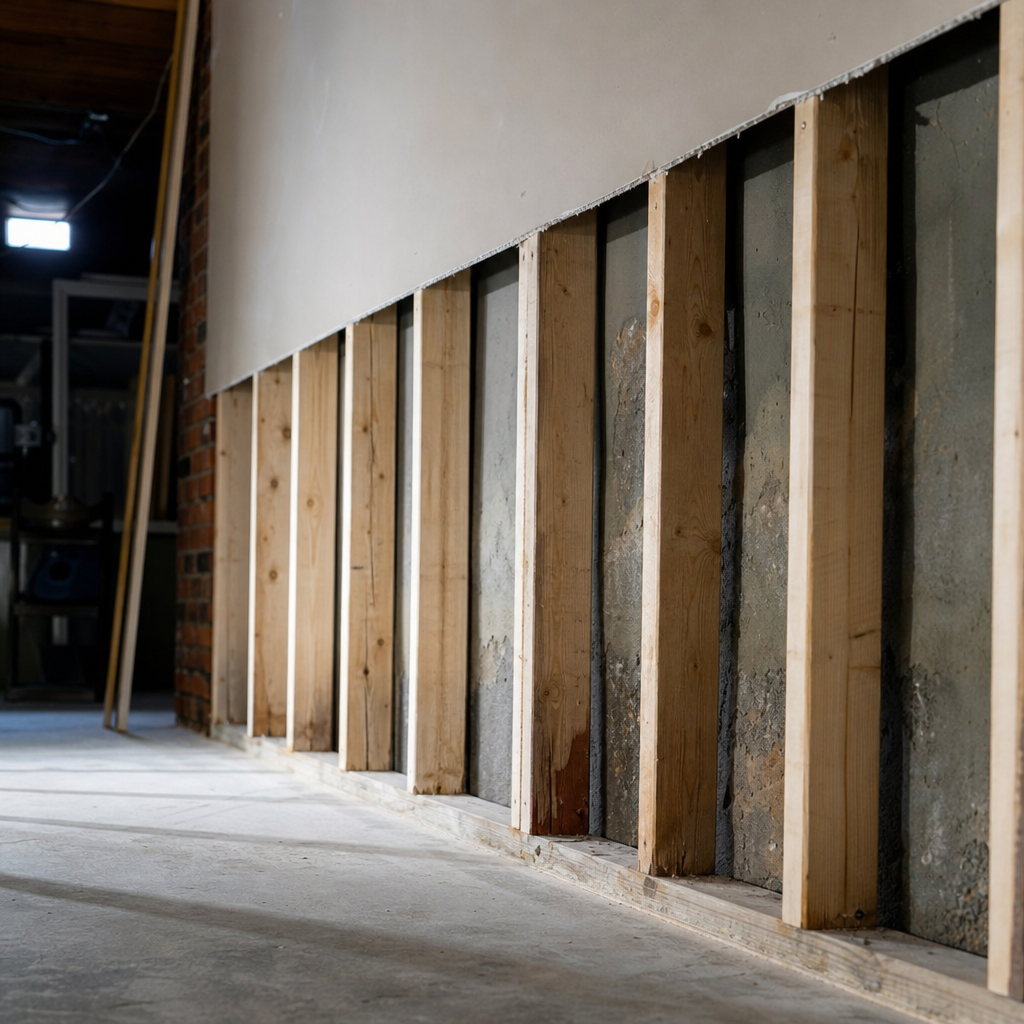
A central part of basement flood cleanup, according to Wade’s Restoration, is determining what building materials can be saved and what must be removed. Porous materials like drywall and batt insulation can absorb moisture and contaminated water.
Finished Walls and Framing
When water contacts finished walls, damaged drywall and saturated insulation may need to be removed to allow trapped water to drain and help wall cavities dry thoroughly. Prompt drying of structural framing can reduce the risk of mold growth.
Insulation Removal
Wet insulation traps moisture against framing. Saturated insulation should be removed and disposed of to allow building materials to dry completely.
Basement Flooring, Concrete, and Subfloor Restoration
Flooring materials in below-grade spaces face moisture pressures. Trapped water under finished surfaces creates conditions that favor mold growth if not addressed promptly.
Tile, Vinyl Plank, and Laminate Considerations
Water can penetrate joints, trapping moisture between finished flooring and the concrete slab below. Removing standing water and drying the substrate thoroughly helps protect the installation.
Concrete Slab Moisture and Efflorescence
Porous concrete slabs can absorb standing water and release moisture over time. This moisture movement carries dissolved salts that can crystallize on the surface as efflorescence. Thorough drying of concrete surfaces is necessary before replacing floor coverings.
Step-by-Step Subfloor Remediation
- Removal of Non-Salvageable Coverings: Discarding saturated carpets, padding, and damaged flooring.
- Cleaning and Sanitation: Cleaning the bare concrete surface to remove residues and contaminants.
- Drying and Monitoring: Drying wet materials and monitoring moisture levels until structural surfaces are dry.
How Professional Water Extraction and Mold Remediation Works
Professional water damage restoration follows a systematic process designed to stabilize the building, mitigate losses, and prepare the space for drying and repair.
-
Step 1: Moisture Assessment
Technicians from Wade’s Restoration assess the extent of moisture migration behind walls, under subfloors, and into building materials.
-
Step 2: Water Extraction
Pumps and extraction equipment remove standing water from the basement before structural drying begins.
-
Step 3: Controlled Demolition and Cleaning
Non-salvageable drywall, trim, and insulation are removed. Exposed framing, concrete slabs, and other surfaces are cleaned and treated.
-
Step 4: Structural Drying
Dehumidifiers and air movers draw moisture out of the air and deep structural elements. Prompt drying can reduce the risk of mold growth.
Frequently Asked Questions About Basement Flood Cleanup in Harrison, NJ
How much does basement flood cleanup cost in Harrison, NJ?
Costs depend on water contamination level, the volume of standing water, total square footage, and whether materials like drywall and insulation need removal. An on-site visual inspection by Wade’s Restoration provides a detailed estimate tailored to the property.
Does homeowner insurance cover basement flooding and water extraction?
Coverage depends on the policy and the cause of the water. FEMA states that NFIP basement coverage is limited, and eligible cleanup expenses may include pumping, extraction, mold or mildew treatment, and structural drying. Check the policy and contact the insurer.
Can sewage backup in my basement be cleaned safely?
Yes. Sewage backups present biological hazards. Safety guidance requires addressing electrical and structural hazards, avoiding contaminated water, removing standing water, cleaning affected areas, and drying wet materials within 24 to 48 hours when safe.
What is the response time for emergency basement flood cleanup in Harrison?
Actual response times vary with availability, traffic, weather, safety conditions, and the scope of the emergency.
Need basement flood cleanup harrison nj?
We’re available now - call for a fast, free estimate.
Sources
- Examining Precipitation Across the Garden State From 1900-2020 – dep.nj.gov (2020)
- Storm Events Database – ncei.noaa.gov (2021)
- Flood Insurance Data – Agents Floodsmart – agents.floodsmart.gov
- Microsoft Word – NJ HMP2_Final Full Document_061208_FD! – nj.gov
- Harrison, NJ Water Safety Report – zipcheckup.com
Related reading: Commercial Water Damage Restoration | Call Now-10% Off | Same-Day Service | Free Estimate
Related reading: Flood Restoration Near Me | 10% Off & Free Estimate | Same-Day Service
Related reading: Water Damage Restoration Service – Call Now-10% Off – Same-Day Service – Free Estimate
Frequently Asked Questions
How are older or pre-war basement foundations in Harrison dried after a flood?
Older masonry and concrete foundations absorb significant moisture, which can cause efflorescence and structural decay if not properly mitigated. Wade's Restoration deploys specialized commercial dehumidifiers and high-velocity air movers calibrated specifically for Harrison's older foundations to extract trapped moisture deep within the masonry.
How quickly does mold develop in a flooded basement, and how is it prevented?
Mold spores can begin colonizing damp drywall, framing, and insulation within 24 to 48 hours of initial water contact. Wade's Restoration mitigates this risk by performing rapid water extraction, strategically cutting away wet porous materials, and treating exposed framing with professional antimicrobial solutions.
How do I schedule emergency basement flood extraction and an inspection in Harrison?
You can contact Wade's Restoration 24/7 for immediate emergency dispatch with an average 45-minute local arrival time. Their team provides a free on-site visual moisture inspection, documents structural damage for your insurance claim, and begins water extraction immediately.
About the author
 |
Sarah Higgins Sarah is a seasoned restoration specialist with over eight years of experience managing complex property recovery projects. Holding a B.S. in Construction Management from Rutgers University, she combines technical expertise with a compassionate approach to guide homeowners through stressful emergencies. Her writing focuses on practical advice for water damage mitigation, mold remediation, and navigating the insurance claims process. |
Water damage, flood, or mold emergency?
We’re available now - call for a fast, free estimate.
Call Now - Free Estimate