
Quick Summary
Flooded basement cleanup requires immediate water extraction and controlled structural drying to prevent foundational compromise, drywall saturation, and rapid mold colonization. Wade's Restoration provides 24/7 emergency response to safely isolate hazards, extract standing water using commercial pumps, and sanitize framing with EPA-registered antimicrobials. Readers will learn the essential six-step remediation protocol, realistic mitigation costs, and how to contact Wade's Restoration for a rapid on-site inspection and insurance claim support.
Flooded Basement Cleanup: Fast Water Removal & Drying
When you walk down the basement stairs and step into several inches of cold water, every hour you wait makes recovery harder. Water immediately begins wicking upward through drywall, soaking into framing, and seeping deep into masonry joints. Getting standing water out quickly and setting up controlled structural drying protects your foundation, saves salvageable materials, and prevents mold from colonizing your home.
Professional restoration technicians, such as the team at Wade’s Restoration, locate moisture, extract standing water, and document damage for insurance claims to help manage recovery effectively.
What You Need for Safe Flooded Basement Cleanup
Cleaning up a flooded basement safely requires heavy-duty personal protection, industrial extraction pumps, and calibrated moisture diagnostics. In older properties with brick masonry and rubble-stone foundations, drying must be managed carefully to avoid damaging materials while drawing water out from foundation walls.
Essential Safety Gear
Never enter a flooded basement until you know the electrical power is isolated. If it is safe to enter, use the right gear before touching anything:
- Respiratory Protection: P100 or N95 respirators to filter out bioaerosols, bacteria, and active fungal spores stirred up by floodwaters.
- Protective Footwear: Heavy rubber boots with steel toes and puncture-resistant soles to protect against hidden glass, nails, and contaminated water.
- Skin Protection: Heavy nitrile or neoprene gloves, eye protection, and waterproof coveralls to prevent contact with pathogens.
Required Extraction, Drying, and Detection Tools
Professional water extraction requires equipment capable of running continuously:
- Submersible Trash Pumps: Pumps built to move water containing silt, mud, and debris.
- Dehumidifiers: Heavy-duty units that pull moisture from the air and building materials.
- Axial Air Movers: Air movers positioned to promote air circulation across wet floors and walls.
- Moisture Meters: Pin and pinless meters or infrared tools that detect trapped moisture behind finished walls, subfloors, and building substrates.
Step 1: Shut Off Power and Assess Initial Hazards
Your first move must always be safety. Stepping into standing water that touches live extension cords, floor outlets, or submerged appliances creates an immediate shock hazard. If your electrical panel is down in the flooded area, stay out and contact your local utility company or an electrician to disconnect power from the outside meter.
Electrical, Gas, and Structural Checks
- Isolate power safely: Switch off circuit breakers only if the panel is located on a completely dry upper floor. If you smell natural gas or suspect a damaged line, leave the building immediately and call your utility provider.
- Document water levels: Snap clear photos and videos of high-water lines, submerged mechanical systems (furnace, water heater), and affected personal belongings before anything is shifted.
Identifying the Water Contamination Level
The source of the water dictates how cleanup must be handled:
- Category 1 (Clean Water): Originates from broken freshwater supply pipes or failing water heater tanks. If left untreated for more than 48 hours, it can degrade into Category 2.
- Category 2 (Gray Water): Comes from washing machine overflows, dishwasher discharges, or failed sump pumps. It carries biological nutrients and dissolved contaminants.
- Category 3 (Black Water): Highly hazardous water containing sewage backups, river floodwaters, or ground surface runoff. It requires full sanitization and removal of porous materials.
Step 2: Emergency Basement Water Extraction and Pumping
Need flooded basement cleanup?
We’re available now - call for a fast, free estimate.
Bulk water extraction is the foundation of the recovery process. Pumping out standing water relieves physical weight on flooring and stops water from continuing to wick up wall cavities.
Pumping Standing Water
Submersible and commercial pumps are used to remove standing water. Pumping is often managed carefully when surrounding exterior soils are saturated to reduce hydrostatic pressure against foundation walls.
Water Extraction from Concrete and Slab Surfaces
Once bulk water disappears, concrete floors still hold trapped liquid within their pores:
- Deep extraction passes: Extraction tools help draw residual moisture out of the slab surface.
- Cove joint extraction: Vacuum attachments clear out residual water pooling along the joint where the floor meets the foundation perimeter.
Step 3: Remove Saturated Drywall, Carpeting, and Subflooring
Finished basements face severe secondary damage when wet building materials remain in place. Porous materials trapped against framing prevent structural drying and can become breeding grounds for mold within 24 to 48 hours.
Making Flood Cuts
Technicians, including specialists from Wade’s Restoration, cut drywall above the highest moisture reading to expose wall cavities for ventilation. Wet fiberglass batt insulation must be removed because it loses its effectiveness and holds moisture directly against wood studs.
Checking Subflooring and Framing
Plywood, particleboard, and oriented strand board (OSB) swell quickly when submerged. Framing timbers and subfloors are evaluated with moisture meters to verify whether materials can be dried in place or require removal.
Carpet and Pad Removal
Carpet padding absorbs water readily and cannot be effectively disinfected after a contaminated flood. While some carpet exposed to clean Category 1 water may be salvageable, exposure to sewage or muddy ground runoff demands complete removal and disposal.
Step 4: Drying Masonry and Foundation Materials
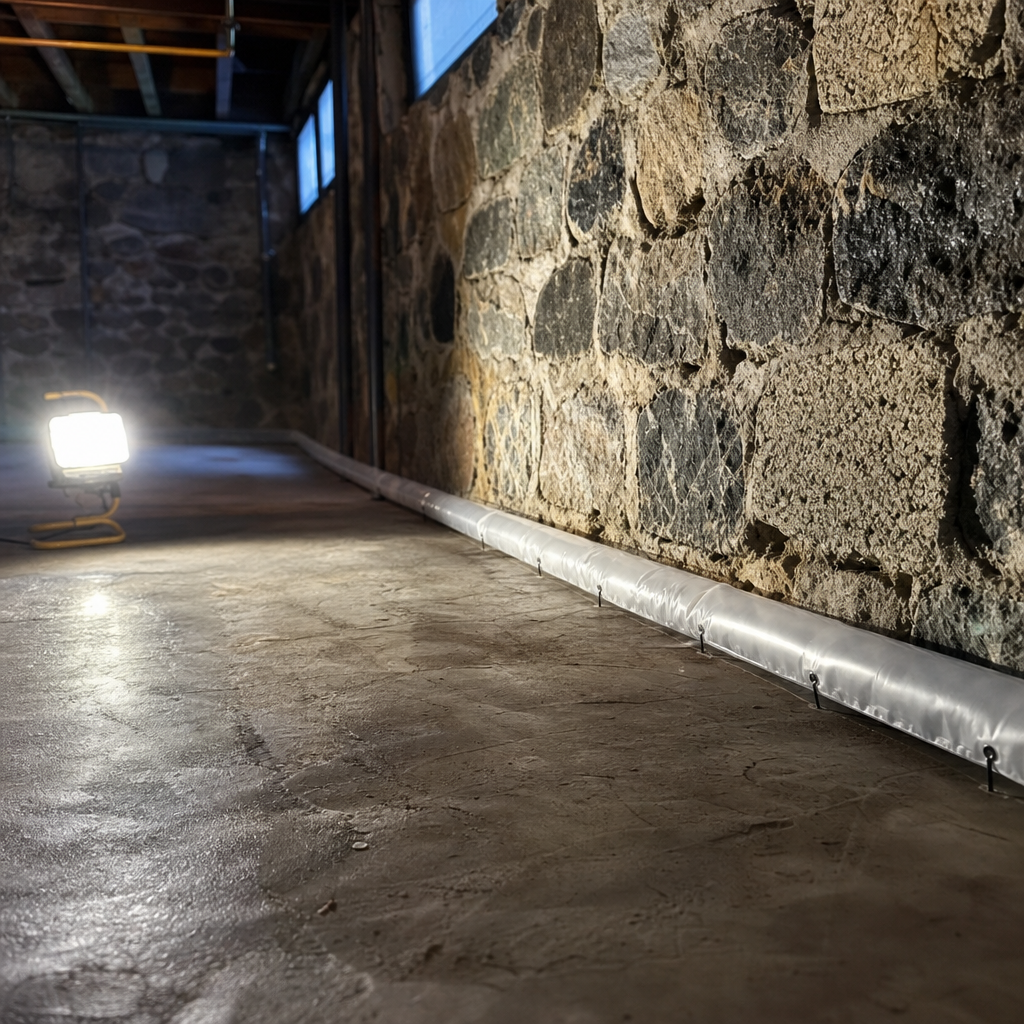
Older rubble-stone, fieldstone, or brick foundations require balanced drying approaches to ensure deep moisture is drawn out safely without damaging aging mortar joints.
Vapor Pressure Control and Steady Airflow
Commercial dehumidification paired with air movers helps steadily lift moisture out of walls and concrete slabs while controlling ambient humidity levels.
Step 5: Antimicrobial Sanitization and Mold Prevention
Need flooded basement cleanup?
We’re available now - call for a fast, free estimate.
Water intrusion leaves behind bacteria, organic residues, and fungal spores. Disinfection should take place after water extraction and demolition to help prevent mold growth on framing timber.
Applying Antimicrobial Treatments
Technicians at Wade’s Restoration apply EPA-registered antimicrobials to affected structural framing, concrete slabs, and masonry surfaces to help inhibit microbial growth.
Air Filtration and Containment
Demolition and drying can disturb airborne dust and fungal fragments. Air management strategies include:
- Containment Barriers: Plastic sheeting helps isolate the work area from upper living spaces.
- Air Scrubbing: Commercial air filtration units equipped with HEPA filters capture airborne particulate matter.
- Surface Sealants: In damp areas, breathable sealers may help inhibit future surface mold development once surfaces are dry.
Step 6: Structural Reconstruction and Insurance Claim Support
Reconstruction should not begin until moisture meters confirm that framing timbers and masonry have returned to acceptable moisture levels. Installing new drywall or insulation over damp studs traps water inside wall cavities, which can lead to hidden mold growth.
Documentation for Insurance Claims
Insurance adjusters require detailed documentation to review mitigation and reconstruction costs, including:
- Photographic records showing initial water lines and damaged areas.
- Moisture logs documenting drying progress and equipment usage.
- Itemized scopes of work outlining required repairs.
Reconstruction Work
Once structural drying is complete, reconstruction repairs can begin, including framing repairs, drywall hanging and finishing, trim carpentry, and floor installation.
What Does Flooded Basement Cleanup Cost?
The total cost to clean up and restore a flooded basement depends on water depth, the contamination category, whether the basement is finished or unfinished, and the duration of drying required.
Average Price Ranges by Service Type
| Service Type | Typical Cost Range |
|---|---|
| Visual inspection & moisture mapping | $150 – $450 |
| Emergency water extraction & drying (per affected area) | $1,200 – $4,500 |
| Antimicrobial sanitization & mold prevention | $1,500 – $5,500 |
| Sewage backup decontamination | $2,000 – $8,500 |
| Full basement flood restoration (finished basement) | $3,500 – $14,000+ |
What Determines Your Final Price?
Clean water from a ruptured supply line in an unfinished basement requires less labor and demolition than a sewage backup soaking into carpet and drywall. Restoration professionals such as Wade’s Restoration typically provide written scopes of work before starting extraction so property owners understand the process and estimated costs.
Frequently Asked Questions About Flooded Basement Cleanup
How much does flooded basement cleanup cost?
Most basement flood cleanup projects range from $2,000 to $7,000, with an average around $4,000. Minor clean water extraction in an unfinished space may cost less, while severe sewage backups or extensive flood damage in finished basements requiring selective demolition can run higher.[1]
What should I do immediately after my basement floods?
First, protect your safety by shutting off power from a dry location. Keep children and pets away from the water. Take detailed photos and videos of the damage, contact your insurance company to start a claim, and call a restoration professional like Wade’s Restoration to begin water extraction.
Does homeowner insurance cover flooded basement cleanup?
Coverage depends on policy terms and the cause of the water intrusion. It is important to note that flood insurance coverage is limited in basements, and many basement items are excluded from standard coverage.
How do professionals pump water out of a flooded basement?
Crews use submersible trash pumps connected to discharge hoses to pump bulk water outside away from the foundation. Once pooling water is removed, technicians use extraction wands and floor tools to pull moisture from concrete surfaces and slab joints.
How long does it take to dry out a basement after a flood?
According to FEMA and EPA guidance, drying out a flooded basement may take at least a week or longer. Porous building materials, masonry foundations, and spaces with deep moisture saturation often require extended drying time under monitored dehumidification.
How can I prevent mold growth after basement flooding?
Extract water within the first 24 to 48 hours, remove wet porous items like carpet padding and waterlogged drywall, apply EPA-registered antimicrobials, and maintain continuous airflow using commercial dehumidifiers and air movers until all structural framing reaches safe moisture levels.
Need flooded basement cleanup?
We’re available now - call for a fast, free estimate.
Sources
- Water Damage By the Numbers – waterdamagedefense.com
Related reading: Water Damage Insurance Claims | Call Now-10% Off | Same-Day Service | Free Estimate
Related reading: Commercial Water Damage Restoration | Call Now-10% Off | Same-Day Service | Free Estimate
Related reading: Flood Restoration Near Me | 10% Off & Free Estimate | Same-Day Service
Frequently Asked Questions
How quickly can emergency crews arrive to pump out a flooded basement?
Wade's Restoration provides 24/7 emergency dispatch with an average 45-minute on-site response time to evaluate hazards and initiate water extraction. Fast dispatch stops water from wicking deeper into structural framing and masonry, preventing mold colonization within the critical 24-to-48-hour window.
Can submerged basement appliances like water heaters and furnaces be salvaged?
Submerged gas and electrical equipment must be inspected by licensed mechanical technicians before reactivation to prevent fire and shock hazards. Wade's Restoration documents all submerged equipment and utility damage during the visual inspection to support your homeowner insurance claim.
How do technicians verify that a flooded basement is completely dry before repairs begin?
Specialists track structural moisture using calibrated pin meters, pinless sensors, and infrared thermal imaging to compare wet materials against dry baseline standards. Wade's Restoration maintains daily moisture logs throughout structural drying to guarantee framing and masonry are safe for reconstruction.
About the author
 |
Sarah Higgins Sarah is a seasoned restoration specialist with over eight years of experience managing complex property recovery projects. Holding a B.S. in Construction Management from Rutgers University, she combines technical expertise with a compassionate approach to guide homeowners through stressful emergencies. Her writing focuses on practical advice for water damage mitigation, mold remediation, and navigating the insurance claims process. |
Water damage, flood, or mold emergency?
We’re available now - call for a fast, free estimate.
Call Now - Free Estimate