
Quick Summary
When hazardous Category-3 black water infiltrates a property, hiring certified sewer backup cleanup companies within 24 hours is critical to stop structural decay, eliminate dangerous pathogens, and protect indoor air quality. Unlike standard franchises that rely on surface-level drying, Wade's Restoration provides comprehensive biohazard decontamination, specialized deep-drying protocols for complex masonry, and complete reconstruction to fully restore compromised structures. Property owners dealing with an active drain or sewer failure can call Wade's Restoration 24/7 at their live dispatch line to secure immediate emergency extraction, direct insurance assistance, and a free on-site inspection.
Sewer Backup Cleanup Companies: Fast 24/7 Local Relief
When raw black water backs up through your drains, professional sewer backup cleanup companies provide the fast extraction, disinfection, and deep structural drying needed to make your property safe again. Getting certified technicians on-site within hours stops contaminated water from traveling deeper into structural framing, which protects your indoor air quality and caps repair costs.[3]
According to the EPA, CSOs occur when sewer systems cannot handle wet weather flows and untreated stormwater and wastewater enter nearby waterbodies.[2]
What Should You Expect from Professional Sewer Backup Cleanup Companies?
Sewage backups are hazardous and require urgent professional cleanup. Reputable sewer backup cleanup companies treat these emergencies with strict containment protocols to protect building occupants and preserve structural materials.[4]
Immediate Response, Containment, and Regulatory Realities
Immediate containment is required to isolate contaminated zones. Technicians seal off entryways with heavy plastic barriers and set up air scrubbers under negative pressure. This keeps foul odors and contaminants from circulating into occupied living spaces or upper commercial floors.
Aging infrastructure plays a major role in these sudden failures. EPA notes that its National Combined Sewer Overflow Inventory was first published to ECHO in May 2023 and is updated weekly. Under the Clean Water Act, combined sewer overflows remain subject to the National Pollutant Discharge Elimination System permitting program. Furthermore, federal reporting rules require noncompliance reports for combined sewer overflows, sanitary sewer overflows, and bypass events to include the event type, overflow structure type, discharge volumes, and human health and environmental impacts. When municipal overflow events push back into private lines, professional remediation from specialists like Wade’s Restoration is the only safe path forward.[1]
Step-by-Step Sewage Cleanup Protocols
Proper remediation requires disciplined execution rather than simple surface vacuuming:
- Stop the Source: Identify and stop the source of the backup.
- Remove Sewage and Contaminated Water: Extract standing wastewater and bulk contaminants.
- Discard Unsalvageable Porous Materials: Remove and dispose of saturated porous items that cannot be safely restored.
- Clean and Disinfect: Wash and sanitize affected structural framing and hard surfaces.
- Dry the Structure: Dehumidify and thoroughly dry structural materials.
- Repair Damaged Areas: Reconstruct and restore damaged sections of the property.
What Does Sewer Backup Cleanup Cost?
Professional sewer backup cleanup typically ranges between $2,000 and $10,000. Minor backups contained strictly to an unfinished concrete slab on the lower end ($2,000 to $3,500) cost significantly less than extensive flooding across finished basements, commercial retail spaces, or multi-family properties ($7,000 to $15,000+).[5]
Key Cost Factors
- Square Footage and Depth: Larger square footage and deeper standing water require more extraction capacity, equipment days, and disposal volume.
- Porosity of Materials: Saturated drywall, subfloors, and finished trim demand labor-intensive flood cuts and replacement, whereas unfinished concrete requires less demolition.
- Sub-structure Masonry: Pre-war brick and rubble-stone foundations absorb sewage through capillary action, requiring specialized biocides and extended drying periods.
- Hazard Level: Biohazard safety gear (PPE), hazardous waste hauling, and strict disposal compliance add to project costs.
Navigating Insurance Claims and Endorsement Coverage
Standard homeowners insurance usually does not cover sewer backup or drain backup damage, and coverage is typically available only with a separate water backup or sewer backup endorsement.
Step-by-Step Professional Sewage Remediation and Decontamination Process
Need sewer backup cleanup companies?
We’re available now - call for a fast, free estimate.
Restoring a property after a sewage intrusion follows a precise remediation lifecycle to ensure structural safety.
-
Step 1: Stop the Source
Technicians ensure the source of the backup is identified and stopped before remediation proceeds.
-
Step 2: Remove Sewage and Contaminated Water
Technicians clear all pooling wastewater, sludge, and contaminated liquids from the affected areas.
-
Step 3: Discard Unsalvageable Porous Materials
Porous materials exposed to sewage cannot be fully sanitized and are bagged and removed from the property.
-
Step 4: Clean and Disinfect
Technicians thoroughly wash, clean, and disinfect structural framing, concrete slabs, and other affected surfaces.
-
Step 5: Dry the Structure
Crews deploy drying equipment to extract moisture from framing and structural elements until materials reach dry standards.
-
Step 6: Repair Damaged Areas
Technicians and contractors rebuild and restore affected walls, flooring, and finishes.
Restoring Basements and Crawl Spaces: Historic Masonry Challenges
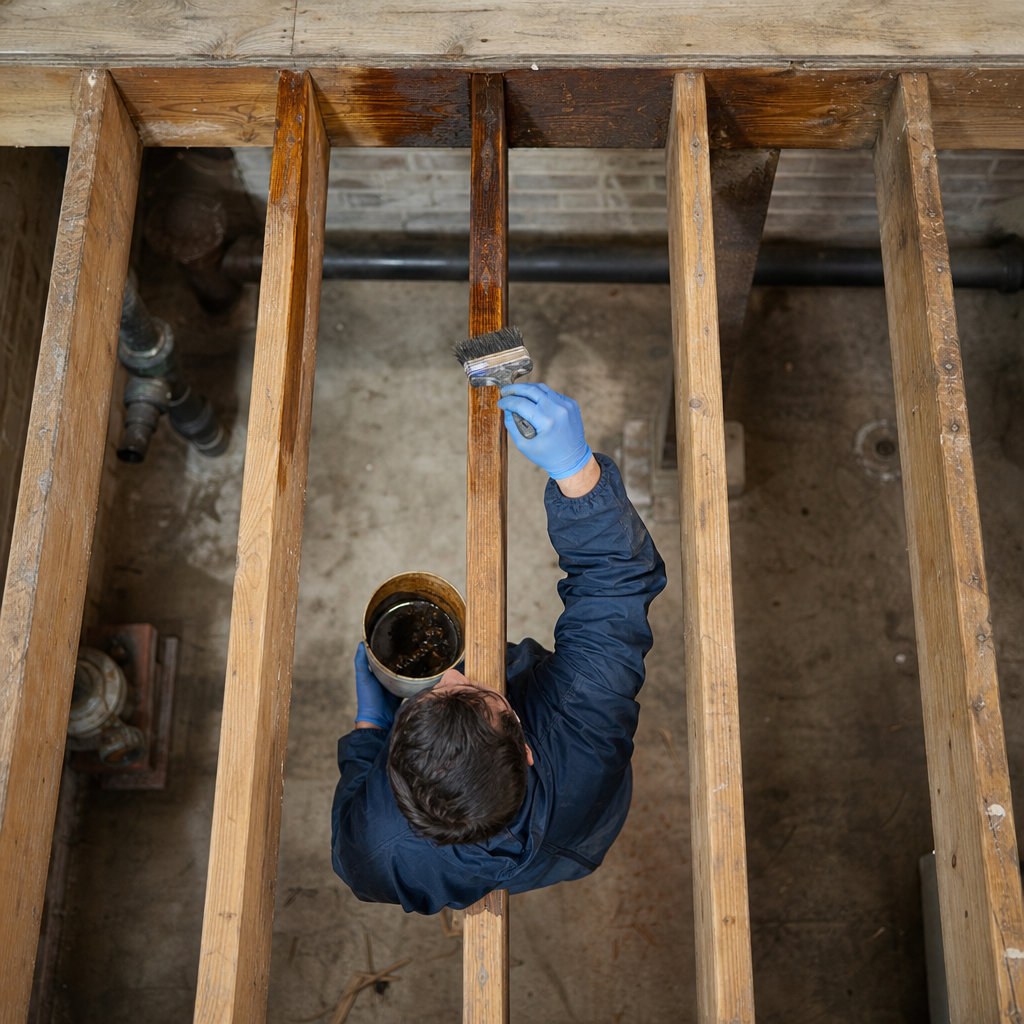
Standard franchise water-extraction protocols often fail in pre-war rubble-stone foundations and historic brick row homes common in older Northeast neighborhoods. Franchises typically treat basements like modern poured-concrete slabs, placing a few air movers and assuming the job is done once the floor looks dry.
In older buildings, historic lime mortar, soft pre-war brick, and rubble-stone foundations act like giant sponges. When sewage fills the basement, wastewater wicks deep into the porous mortar joints and stone cavities via capillary suction. Simply blowing air across the surface traps moisture deep inside the wall, leading to long-term structural decay and persistent foul odors.
Symptoms of Deep Masonry Contamination
- Efflorescence: White, powdery mineral salts leaching out of brick faces as moisture evaporates outward.
- Spalling and Crumbling Mortar: Lime mortar that turns powdery or breaks down under light contact due to decay.
- Recurrent Odors: Musty, organic sewage smells that return whenever outdoor humidity rises.
- Sub-Grade Dampness: High pinless moisture meter readings behind stone foundations days after the surface has dried.
Proper Drying Protocols for Older Masonry
As recommended by Wade’s Restoration, remediating historic masonry requires deep-penetrating disinfectant washes, vapor-permeable drying techniques, and high-capacity dehumidification run over extended cycles. This gradual, deep moisture extraction pulls contaminants out from the core of the wall without shocking and crumbling historic lime binders.
Salvaging Subfloors and Joists After a Sewer Line Failure
When sewage floods a basement or crawls into intermediate floor structures, structural framing is immediately at risk. How technicians handle these elements determines whether you face simple drying costs or expensive floor replacements.
Assessing Framing and Subflooring
- Solid Dimensional Lumber Joists: Old-growth floor joists are dense and can frequently be saved if remediated quickly through cleaning, biocidal washing, and controlled drying.
- Plywood and OSB Subfloors: Engineered woods delaminate quickly when exposed to sewage. Swollen edges, soft spots, and persistent contamination usually require surgical removal.
- Hardwood Flooring: Hardwood installed over flooded subfloors traps water underneath. Cupping, crowning, and dark stains along seams indicate the subfloor must be exposed and sanitized from above.
When to Call an Expert
If you notice springy floor sections, dark liquid bleeding up through floorboards, or elevated moisture readings in floor assemblies, call a certified remediation company like Wade’s Restoration immediately.
Drywall, Insulation, and Wall Cavity Decontamination Standards
Need sewer backup cleanup companies?
We’re available now - call for a fast, free estimate.
Raw sewage should be cleaned up as quickly as possible, ideally within 24 hours. Proper decontamination requires deliberate structural opening and thorough sanitization.
Executing Proper Flood Cuts
- Precision Flood Cuts: Technicians cut drywall neatly 12 to 24 inches above the highest water line to access the cavity, inspect studs, and promote airflow.
- Insulation Stripping: Fiberglass and cellulose insulation act like wicks and must be completely removed, bagged, and disposed of.
- Stud Sanitization: Exposed wood framing is thoroughly wire-brushed, cleaned with biocides, and treated with an antimicrobial sealant if necessary.
- Cavity Airflow: Targeted air movers channel dry air directly into the wall bays to ensure studs dry below 15% moisture content.
How to Choose a Sewage Cleanup Professional
Hiring the right restoration company during an emergency protects your property value, your family’s health, and your insurance settlement.
| Service Feature | Full-Service Restoration Company | Mitigation-Only Franchise |
|---|---|---|
| Response & Dispatch | 24/7 live call answering with rapid local arrival | Central call centers with variable franchise dispatch |
| Historic Masonry Protocols | Specialized deep-wall drying for pre-war brick and rubble stone | Standard surface drying designed for modern concrete |
| Mitigation to Rebuild | Complete cleanup, sanitization, and full structural reconstruction | Cleanup only; property owner must find a general contractor |
| Insurance Documentation | Direct coordination with adjusters using itemized line items | Basic invoices with limited moisture tracking logs |
Frequently Asked Questions About Sewer Backup Cleanup Services
How much does professional sewer backup cleanup cost?
Most residential jobs run between $2,000 and $10,000. Unfinished slab cleanups sit on the lower end of the range, while finished basements or properties with rubble-stone foundation issues requiring extensive material removal sit higher.
Does homeowners insurance cover sewer backup cleanup services?
Standard homeowners insurance usually does not cover sewer backup or drain backup damage, and coverage is typically available only with a separate water backup or sewer backup endorsement.
What steps do sewer backup cleanup companies take to restore a property?
Professional cleanup steps include stopping the source, removing sewage and contaminated water, discarding unsalvageable porous materials, cleaning and disinfecting, drying the structure, and repairing damaged areas.
How quickly should raw sewage be cleaned up after a backup?
Raw sewage should be cleaned up as quickly as possible, ideally within 24 hours.
Is it safe to stay in a home during sewer cleanup?
Sewage backups are hazardous and require urgent professional cleanup. It is generally unsafe to stay in affected living areas until the space has been properly remediated, sanitized, and dried.
How do professionals disinfect and sanitize areas contaminated by sewage?
Technicians remove bulk waste and contaminated materials, thoroughly clean and disinfect structural surfaces and framing, and dry the structure completely.
Need emergency help with a sewage backup? Contact a professional restoration company like Wade’s Restoration for immediate 24/7 emergency sewage extraction, complete structural drying, and end-to-end property repairs.
Need sewer backup cleanup companies?
We’re available now - call for a fast, free estimate.
Sources
- April 2024 – epa.gov (2041)
- Wastewater Infrastructure Funding: Background and … – congress.gov (2025)
- CLEAN WATER ACT – gao.gov (2004)
- EPA CSO SSO REPORT TO CONGRESS: COVER & TABLE OF … – 19january2021snapshot.epa.gov (2004)
- Sanitary Sewer Overflow Solutions – www3.epa.gov (2001)
Related reading: Water Damage Restoration Services Near Me – 10% Off & Free Estimate – Same-Day Service
Related reading: Flood Restoration Near Me | 10% Off & Free Estimate | Same-Day Service
Related reading: Water Damage Restoration Service – Call Now-10% Off – Same-Day Service – Free Estimate
Frequently Asked Questions
How do technicians determine if sewage has seeped into brick or stone foundations?
Restoration specialists utilize pinless moisture meters, thermal imaging, and visual checks for efflorescence or crumbling lime mortar to detect hidden contamination. Because porous masonry absorbs black water through capillary action, Wade's Restoration deploys deep-penetrating biocides and vapor-permeable drying systems to extract trapped pathogens from the wall core.
Can structural joists and subflooring be salvaged after a raw sewage backup?
Dense, solid lumber floor joists can frequently be sanitized and preserved if remediation begins within 24 hours. Conversely, engineered materials like plywood and OSB subfloors delaminate rapidly from contaminated water and usually require removal, which Wade's Restoration handles alongside complete structural rebuilds.
What is the advantage of choosing a full-service sewage restoration company over a mitigation franchise?
Mitigation-only franchises perform basic water extraction and leave property owners to find separate reconstruction contractors. Full-service providers like Wade's Restoration handle the entire lifecycle – from 24/7 biohazard containment and specialized masonry drying to direct insurance claim documentation and total structural reconstruction.
About the author
 |
Sarah Higgins Sarah is a seasoned restoration specialist with over eight years of experience managing complex property recovery projects. Holding a B.S. in Construction Management from Rutgers University, she combines technical expertise with a compassionate approach to guide homeowners through stressful emergencies. Her writing focuses on practical advice for water damage mitigation, mold remediation, and navigating the insurance claims process. |
Water damage, flood, or mold emergency?
We’re available now - call for a fast, free estimate.
Call Now - Free Estimate