
Quick Summary
This guide details the biological hazards of sewer line backups beneath foundations and explains why professional sewage cleanup under house structures is vital to protect indoor living spaces from toxic pathogens. As a certified specialist, Wade's Restoration resolves Category-3 contamination by extracting wastewater, removing hazardous topsoil, sanitizing subfloor framing, and documenting structural drying for insurance claims. Readers will learn essential crawlspace safety protocols and can contact Wade's Restoration 24/7 for immediate emergency dispatch and a free visual crawlspace inspection.
Sewage Cleanup Under House: Safety and Remediation
A sewer line break or municipal backup under your home is a serious situation. Raw sewage is a serious biological hazard and may contain bacteria, viruses, protozoa, intestinal worms, molds, and fungi. If you discover wastewater under your home, taking the correct steps will protect your property and health.[2]
As Wade’s Restoration points out, cleaning up wastewater from beneath a foundation requires proper safety precautions and thorough sanitation. Contaminated areas should be isolated, direct contact should be avoided, and affected spaces must be properly cleaned and dried.[4]
Immediate Safety Steps for Property Owners
When wastewater backs up under your foundation, take these precautions:
- Isolate the area: Contaminated areas should be isolated to prevent spreading hazards to other parts of the property.
- Keep vulnerable individuals away: Children, older adults, immunocompromised people, and pets should be kept away from the affected area.
- Avoid direct contact: Do not enter standing wastewater or handle contaminated items without appropriate protection.
- Follow safety and hygiene guidance: Use protective clothing, wash contaminated equipment and clothing, disinfect exposed areas, and dry the area completely before reuse.
Health Hazards of Raw Sewage
Raw sewage is a serious biological hazard and may contain bacteria, viruses, protozoa, intestinal worms, molds, and fungi. Exposure can lead to illnesses such as gastroenteritis, cholera, dysentery, hepatitis, and severe gastroenteritis.[3]
According to the U.S. Environmental Protection Agency (EPA), effective remediation requires active crawl space ventilation, specialized air scrubbers, and antimicrobial treatments to eliminate airborne pathogens and persistent structural dampness. In addition, as specialists at Wade’s Restoration note, combined sewer flows exceeding capacity can cause stormwater and untreated sewage to back up into basements and other below-grade areas connected to sewer pipes.[1]
Handling Contaminated Materials
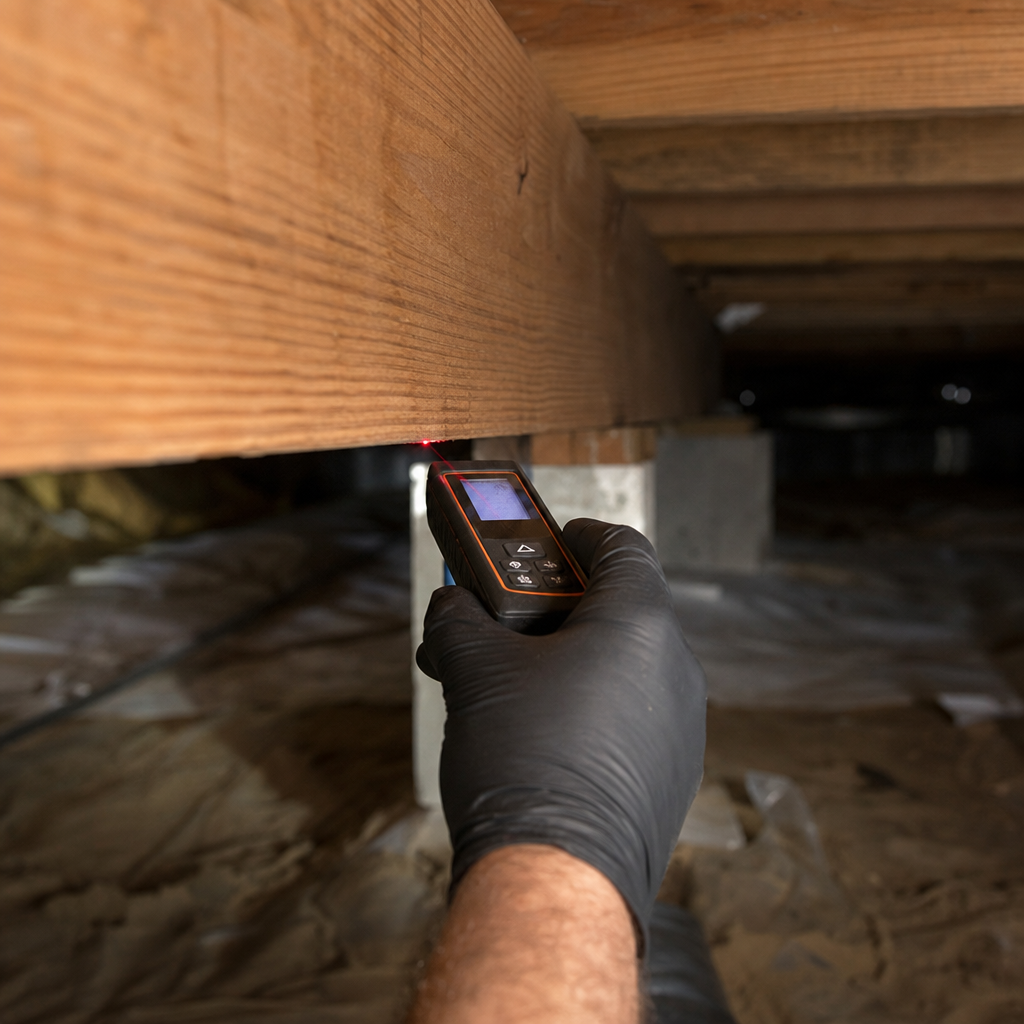
According to Wade’s Restoration, contaminated items may need disinfection or disposal, depending on the material and contamination. Proper sewage cleanup under house crawl spaces involves extracting standing wastewater, removing contaminated topsoil, replacing damaged vapor barriers, setting up industrial dehumidifiers, and sanitizing subfloor framing.
What Does Sewage Cleanup Under a House Cost?
No reliable neutral standard price is established in the available evidence for cleaning sewage under a house. The actual cost depends on the extent of the damage, access conditions, and the specific materials affected. Property owners should obtain a site-specific written estimate from professionals like Wade’s Restoration.
Insurance Coverage Considerations
Insurance coverage depends on the policy and cause of the damage. Standard policies may not cover all sewer incidents, and sewer-backup coverage or an endorsement may be required. The policy and insurer should be consulted before non-emergency work.
Frequently Asked Questions
How dangerous is raw sewage under a house?
Untreated wastewater carries toxic pathogens and biohazards that can migrate upward into indoor living spaces through floor penetrations, creating serious respiratory, dermatological, and gastrointestinal health risks for occupants.
How much does professional sewage cleanup under a house cost?
No reliable neutral standard price is established in the available evidence. Costs vary based on the specific property and extent of contamination, so a site-specific written estimate is recommended.
Does homeowners insurance cover sewage cleanup in a crawl space?
Coverage depends on the policy and cause. Sewer-backup coverage or an endorsement may be required, and the policy and insurer should be consulted before non-emergency work.
Can I clean up sewage under my house myself or do I need a professional?
Minor accessible incidents may be manageable with appropriate protective equipment and hygiene, but raw sewage in a crawl space generally warrants professional assessment by teams like Wade’s Restoration because of disease, confined-space, contaminated-material, and disinfection risks.[5]
Need sewage cleanup under house?
We’re available now - call for a fast, free estimate.
Sources
- New York City Council Committee on Environmental Protection … – nyc.gov (2080)
- Recurrent Home Flooding in Detroit, MI 2012-2020 – ouci.dntb.gov.ua (2085)
- Sewage intrusion into drinking water distribution systems – PMC – pmc.ncbi.nlm.nih.gov (2024)
- Recurrent Home Flooding in Detroit, MI 2012-2020 – PubMed Central – pmc.ncbi.nlm.nih.gov (2021)
- Sewage or Flood Clean-Up – NYC311 – portal.311.nyc.gov
Related reading: Basement Flood Cleanup Cost – Call Now-10% Off – Same-Day Service – Free Estimate
Related reading: Insurance Restoration Contractors | Call Now-10% Off | Same-Day Service | Free Estimate
Related reading: Iicrc Mold Standard – Call Now-10% Off – Same-Day Service – Free Estimate
Frequently Asked Questions
How long does the sewage cleanup process under a house typically take?
Complete Category-3 sewage cleanup under a house generally takes between two to five days depending on water volume, contaminated topsoil depth, and structural drying requirements. Wade's Restoration accelerates recovery by deploying high-capacity extraction units, HEPA air scrubbers, and rapid commercial dehumidifiers immediately upon arrival.
How do you eliminate sewage odors and airborne contaminants inside living spaces above a crawlspace?
Odors and airborne pathogens penetrate living areas through subfloor gaps and the stack effect, requiring specialized containment, negative air pressure, and antimicrobial treatments. The certified team at Wade's Restoration removes soiled insulation, replaces contaminated vapor barriers, and applies hospital-grade disinfectants to eliminate lingering biohazard odors at the source.
What documentation is needed to file an insurance claim for subfloor sewage damage?
Insurers typically require detailed photographic evidence of the Category-3 contamination, psychrometric moisture logs, an itemized scope of work, and proof of proper disposal of biohazardous materials. Wade's Restoration thoroughly documents every phase of the structural drying and sanitation process to ensure smooth coordination with your insurance adjuster.
About the author
 |
Sarah Higgins Sarah is a seasoned restoration specialist with over eight years of experience managing complex property recovery projects. Holding a B.S. in Construction Management from Rutgers University, she combines technical expertise with a compassionate approach to guide homeowners through stressful emergencies. Her writing focuses on practical advice for water damage mitigation, mold remediation, and navigating the insurance claims process. |
Water damage, flood, or mold emergency?
We’re available now - call for a fast, free estimate.
Call Now - Free Estimate