
Quick Summary
The ANSI/IICRC S520 standard establishes the authoritative procedural benchmark for professional mold remediation across residential, commercial, and institutional structures. Certified specialists like Wade's Restoration strictly follow these standardized guidelines to manage structural moisture, implement proper controls, and conduct post-remediation verification for thorough fungal removal. Readers will understand the critical protocols governing professional mold removal and how partnering with certified experts ensures long-term property protection.
ANSI/IICRC S520 Standard for Professional Mold Remediation
When dealing with indoor mold, property owners encounter various restoration approaches. Rather than acting as a chemical product guide or universal exposure limit, the IICRC S520 standard serves as a procedural benchmark for professional mold remediation.[4]
Published by the Institute of Inspection, Cleaning and Restoration Certification, the ANSI/IICRC S520:2024 is the current standard referenced by firms like Wade’s Restoration for residential, commercial, and institutional projects. It establishes procedures for mold remediation involving structures, systems, and contents, and supports the evaluation and verification of remediation work.[3]
What Is the IICRC S520 Standard for Mold Remediation?
The ANSI/IICRC S520 standard establishes a procedural framework for professional mold remediation involving structures, systems, and contents in residential, commercial, and institutional settings. It is relevant to remediation professionals, indoor environmental professionals (IEPs), property managers, insurance adjusters, and other stakeholders.[2]
IICRC S500 vs. S520: Key Differences
Property owners frequently encounter both the IICRC S500 and the IICRC S520 standards, which address different aspects of property restoration.
| Standard | Primary Scope | Primary Focus |
|---|---|---|
| IICRC S500 | Water Damage Restoration | Water damage restoration procedures and drying management. |
| IICRC S520 | Professional Mold Remediation | Procedural framework for mold remediation involving structures, systems, and contents, including post-remediation verification. |
Remediation Considerations in Older Structures
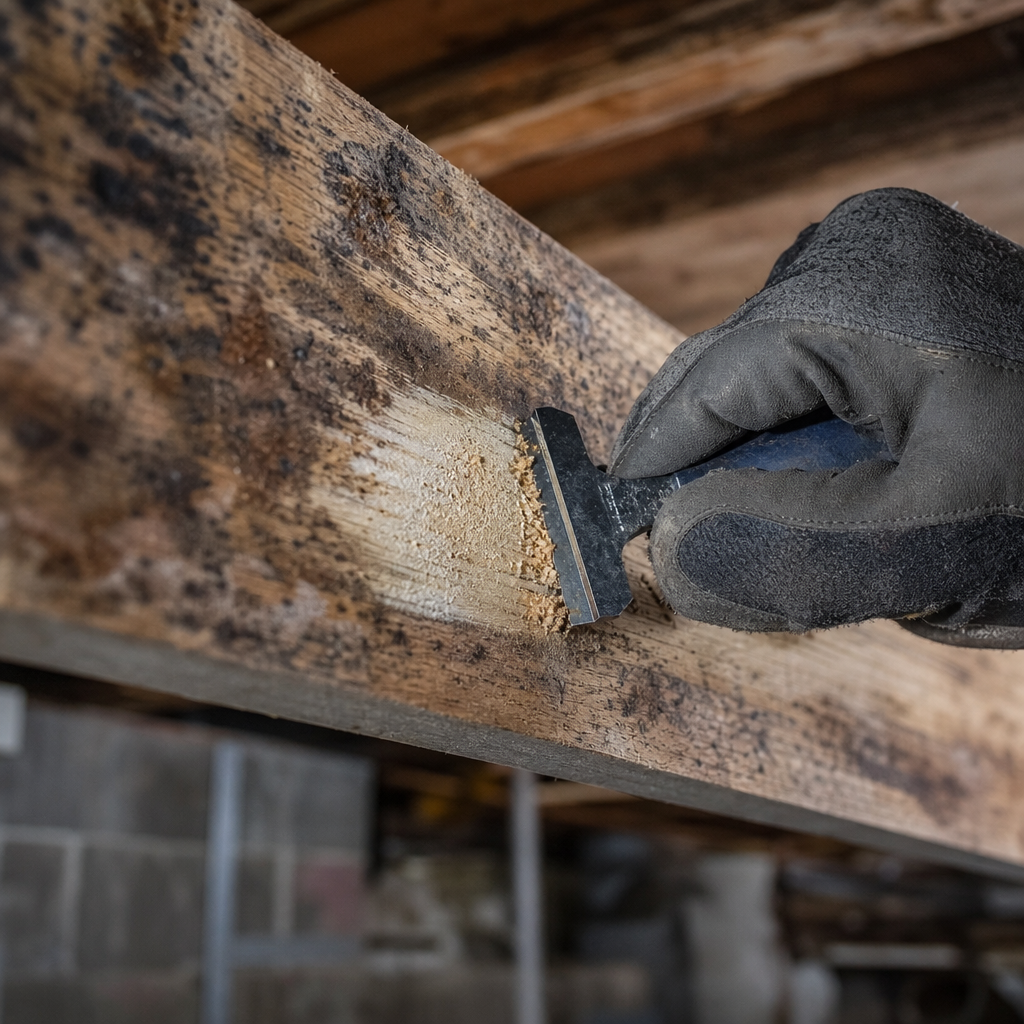
In older residential and commercial properties, managing moisture in porous masonry, stone foundations, and historical assemblies presents unique practical challenges. As noted by specialists at Wade’s Restoration, addressing underlying moisture and environmental factors remains an important general consideration when planning remediation projects.
Post-Remediation Verification (PRV)
The IICRC S520 standard includes post-remediation verification (PRV) as part of its procedural framework to evaluate and verify mold remediation work.
Working with Professionals Familiar with the S520 Standard
Engaging professionals who use or are familiar with the ANSI/IICRC S520 standard, such as the team at Wade’s Restoration, helps ensure that projects reference an established procedural framework. Following recognized industry procedures may assist in organizing remediation activities across residential, commercial, and institutional settings.
Frequently Asked Questions About IICRC S520
What is the ANSI/IICRC S520 standard?
The ANSI/IICRC S520 is a procedural standard for professional mold remediation covering structures, systems, and contents in residential, commercial, and institutional settings.
What is the current edition of the S520 standard?
The ANSI/IICRC S520:2024 is the current edition recognized in the United States.[1]
Is the S520 standard a product specification or exposure limit?
No. The IICRC S520 standard is a procedural mold-remediation document and is not a product specification or universal exposure limit.[5]
What is post-remediation verification?
Post-remediation verification (PRV) is a process included within the ANSI/IICRC S520 procedural framework to support the evaluation and verification of mold remediation work.
Sources
- S520 - IICRC – iicrc.org (2024)
- ANSI/IICRC S520-2024: Professional Mold Remediation – blog.ansi.org (2024)
- ANSI/IICRC S520-2024 – webstore.ansi.org (2024)
- preview_ANSI+IICRC+S520-2015.pdf – webstore.ansi.org (2015)
- Current Standards & Field Guides - test – IICRC – iicrc.org (2015)
Related reading: Average Cost to Fix Burst Pipe | 10% Off & Free Estimate | On-Site in 60 Minutes
Related reading: Flood Damage Insurance Coverage | Call Now-10% Off | Same-Day Service | Free Estimate
Related reading: Epa Guidelines for Mold Remediation – Call Now-10% Off – Same-Day Service – Free Estimate
Frequently Asked Questions
How does the IICRC S520 standard prevent mold spores from spreading during removal?
The IICRC S520 standard requires strict containment barriers and negative air pressure systems equipped with HEPA filtration to trap airborne spores during cleaning. Certified teams like Wade's Restoration establish these engineering controls prior to remediation to keep unaffected living areas completely protected.
What happens during an IICRC S520 post-remediation verification (PRV)?
A post-remediation verification (PRV) involves thorough visual inspections and environmental sampling to confirm that fungal ecology has returned to normal indoor baseline levels. Wade's Restoration relies on these rigorous verification protocols to validate that structural materials are completely clean before containment barriers are removed.
How do I know if my building needs IICRC S520 certified mold remediation?
Professional remediation is recommended whenever visible mold colonization affects building systems or moisture has penetrated porous structural assemblies. Property owners can schedule a comprehensive moisture assessment and visual inspection with Wade's Restoration to determine whether S520 containment and removal protocols are necessary.
About the author
 |
David Wallace David Wallace is a property restoration specialist with a background in construction management from Rutgers University. With over a decade of experience coordinating complex commercial and residential rebuilds in New Jersey, he specializes in storm damage recovery and navigating the insurance claims process. David provides actionable guidance to help property owners secure their premises and streamline their restoration projects. |
Water damage, flood, or mold emergency?
We’re available now - call for a fast, free estimate.
Call Now - Free Estimate