
Quick Summary
The ANSI/IICRC S520 standard establishes critical procedural benchmarks for professional mold remediation, prioritizing the physical removal of fungal contamination and moisture source control over superficial cosmetic treatments. Wade's Restoration strictly applies these S520 protocols across all three defined mold conditions, utilizing rigorous containment barriers, engineering controls, and material-specific techniques for building components from drywall to aging masonry. Property owners can use this guide to navigate remediation phases and cost expectations, or contact Wade's Restoration to schedule an IICRC-certified mold inspection and review an active remediation scope.
IICRC S520 Standard for Professional Mold Remediation Guide
Indoor mold growth can raise health concerns and compromise structural materials if left unaddressed. The iicrc s520 standard for professional mold remediation serves as a procedural standard that outlines procedures and precautions for mold remediation in residential, commercial, and institutional buildings, including building systems and personal property contents. Identified by the Institute of Inspection, Cleaning and Restoration Certification (IICRC) as the ANSI/IICRC S520:2024 Fourth Edition, the current edition in the provided material, the standard provides a framework covering remediation principles, building and material science, qualifications, safety, documentation, risk management, inspection, structural remediation, HVAC remediation, contents remediation, post-remediation verification, and the role of an indoor environmental professional (IEP).[3]
Remediation projects generally require an understanding of building assemblies, airflow dynamics, and moisture mechanics. Remediators, such as Wade’s Restoration, and indoor environmental professionals (IEPs) may inspect the space, set up containment and engineering controls, address affected materials, and perform post-remediation verification. This guide outlines general remediation principles, clarifies the three recognized mold conditions, and discusses how remediation methods account for building construction factors such as aging masonry and below-grade moisture intrusion.[5]
What Is the IICRC S520 Standard for Professional Mold Remediation?
The ANSI/IICRC S520 is a voluntary standard, as described by the Connecticut Department of Public Health, that outlines procedures and precautions for professional mold remediation. Rather than relying solely on cosmetic treatments or sprays, remediation generally focuses on the physical removal of fungal contamination and addressing the moisture source that contributed to the growth.[1]
The standard provides a comprehensive framework covering remediation principles, building and material science, qualifications, safety, documentation, risk management, inspection, structural remediation, HVAC remediation, contents remediation, post-remediation verification, and the role of an IEP. The Occupational Safety and Health Administration (OSHA) identifies S520 as a reference for definitions, conditions, remediation decisions, and evaluating success, while the Connecticut Department of Public Health recommends using its method to describe project scope.[2]
General Summary of Remediation Principles
A general summary of principles commonly associated with professional mold remediation includes:
- Remediator and Occupant Safety: Utilizing appropriate personal protective equipment (PPE) and safety controls to protect workers and occupants during remediation activities.
- Containment and Isolation: Implementing containment barriers and negative air pressure where appropriate to minimize the dispersal of fungal fragments and spores to unaffected areas.
- Physically Removing the Mold: Emphasizing physical removal of fungal contamination from materials rather than relying only on encapsulation or biocides.
- Controlling the Moisture Source: Identifying and resolving the underlying moisture source or moisture intrusion that allowed mold growth to develop.
- Post-Remediation Verification: Evaluating whether the project scope and remediation goals have been successfully achieved.
How S520 Differs from the IICRC S500 Water Standard
Property owners often confuse drying water damage with remediating mold. The IICRC separates these disciplines into two distinct standards: S500 addresses professional water damage restoration, while S520 addresses professional mold remediation.
| Standard | Primary Focus |
|---|---|
| IICRC S500 | Professional water damage restoration |
| IICRC S520 | Professional mold remediation |
Understanding the Three Mold Conditions Defined by IICRC S520
The ANSI/IICRC S520:2024 Fourth Edition categorizes indoor spaces into three distinct microbial states that assist in establishing project scope and remediation planning.
| Category | Condition State | Definition and Characteristics |
|---|---|---|
| Condition 1 | Normal Fungal Ecology | An indoor environment characterized by normal fungal ecology. |
| Condition 2 | Settled or Airborne Contamination | Indoor surfaces or air spaces impacted by settled or airborne fungal contamination without identified active growth. |
| Condition 3 | Actual Mold Growth | An indoor environment with the presence of actual mold growth. |
Condition 1 (Normal Fungal Ecology)
Condition 1 represents normal fungal ecology in an indoor environment, where fungal types and levels are typical for an indoor space.
Condition 2 (Settled or Airborne Contamination)
Condition 2 describes areas with settled or airborne fungal contamination without identified active growth. This may occur when spores or fungal fragments disperse and settle onto surfaces or into air spaces without establishing active colonies.
Condition 3 (Actual Mold Growth)
Condition 3 indicates the presence of actual mold growth on building assemblies, mechanical systems, or contents.
Remediating Critical Building Components: Basements, Drywall, and HVAC Systems
Need iicrc s520 standard for professional mold remediation?
We’re available now - call for a fast, free estimate.
Applying professional mold remediation guidelines requires adapting methods to the porosity of the material and the construction style of the building.
The Challenge of Pre-War Masonry and Rubble-Stone Foundations
In older properties, such as pre-war brick row homes and buildings with rubble-stone foundations located near high water tables, standard remediation protocols must account for vapor-gradient dynamics. Porous fieldstone, lime mortar, and structural brick can draw moisture inward from soil through capillary action.
When remediators address surface mold without addressing ongoing moisture infiltration, moisture can accumulate behind barriers. Remediation in these structures generally involves managing the moisture source through controlled dehumidification, vapor-appropriate coatings, and proper drainage alongside physical cleaning.
Drywall, Insulation, and Subfloor Material Considerations
During mold remediation, building materials are typically assessed based on their porosity:
| Building Component | Porosity Classification | General Remediation Consideration |
|---|---|---|
| Drywall and Fiberglass Batt Insulation | Porous | Porous materials with active growth often require removal under appropriate containment. |
| Plywood Subfloors and Dimensional Framing | Semi-Porous | Semi-porous structural framing may be cleaned, vacuumed, or abraded, and dried to appropriate moisture levels. |
| Poured Concrete and Metal Framing | Non-Porous | Non-porous materials are generally cleaned and sanitized without requiring removal. |
HVAC Systems and Air Pathway Isolation
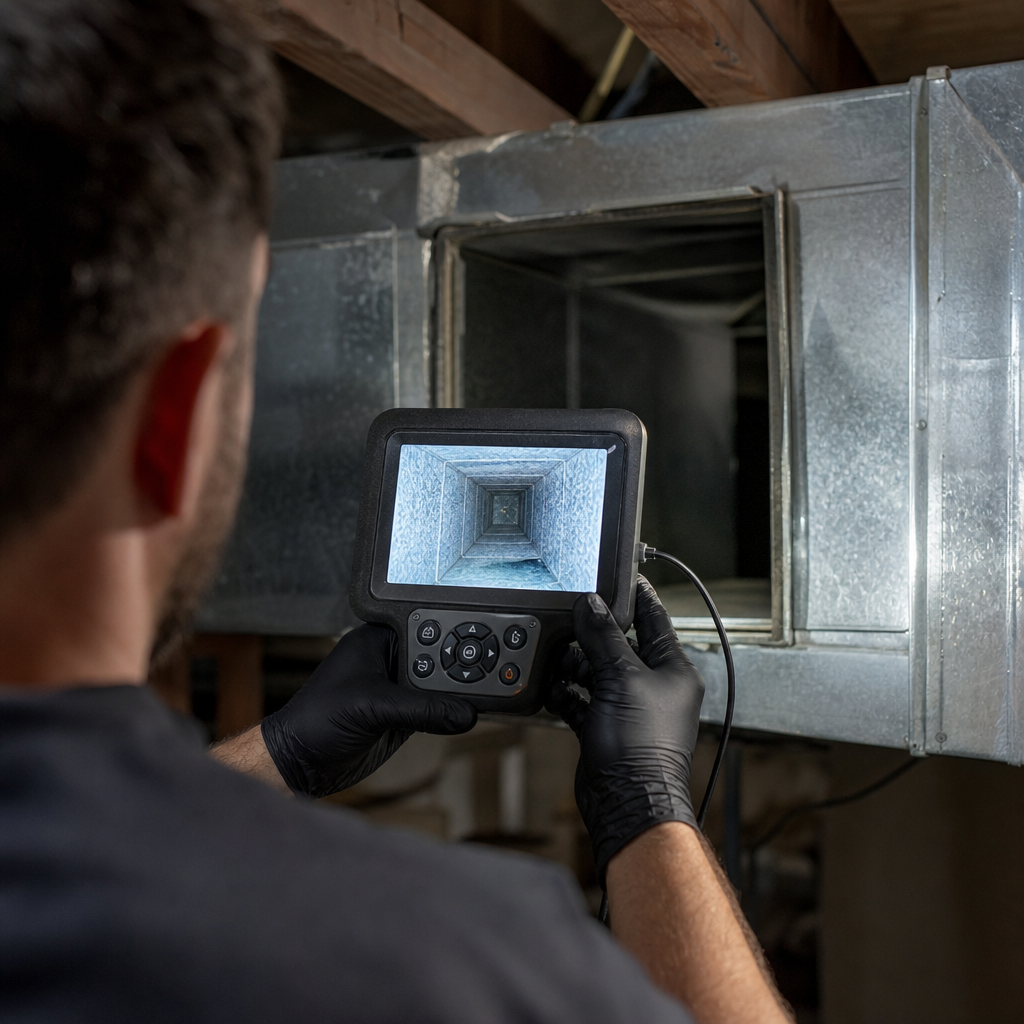
Mechanical air handlers and ductwork can distribute spores throughout a facility if not properly managed. Sealing supply and return registers before remediation helps isolate air pathways. When HVAC systems contain internal mold growth or contamination, remediators such as Wade’s Restoration clean the components using appropriate isolation, negative pressure, and HEPA-filtered collection methods.
Cost Factors in Professional Mold Remediation
Remediation costs depend on square footage, the extent of material removal, containment requirements, and the underlying moisture issue. Residential projects typically range from $1,500 for localized containment to $6,000 or more for basements and multi-room contamination. Complex structural projects involving masonry or HVAC decontamination can exceed $10,000.
| Remediation Phase | Operational Scope | Typical Cost Range |
|---|---|---|
| Diagnostic Moisture Mapping | Thermal imaging, pin and non-invasive moisture profiling | $350 – $650 |
| Engineering Controls and Containment | Poly barriers, negative air setup, HEPA filtration | $900 – $1,800 |
| Condition 3 Source Removal | Removal of porous drywall, framing cleaning, HEPA vacuuming | $1,500 – $5,000+ |
| Sub-Surface Masonry and Vapor Mitigation | Specialized drying and containment on masonry walls | $2,000 – $5,500 |
Frequently Asked Questions
Is IICRC S520 certification legally required for mold contractors?
Federal law does not mandate IICRC certification because the ANSI/IICRC S520 is a voluntary consensus standard. However, state licensing boards, insurance carriers, commercial property managers, and institutional clients may require remediators like Wade’s Restoration to follow S520 guidelines or hold active credentials to demonstrate competency.[4]
What happens during Post-Remediation Verification (clearance testing)?
Post-remediation verification is typically performed after cleaning and removal are complete, prior to dismantling containment or beginning reconstruction. An indoor environmental professional inspects the work area for residual dust, debris, and moisture, and may conduct environmental sampling to verify that the remediation objectives have been met.
How long does a mold remediation project usually take?
Most standard residential projects take between two and four days. Initial phases focus on containment setup, engineering controls, and selective removal of contaminated materials. Subsequent phases involve detailed cleaning, structural drying, and post-remediation evaluation before containment is taken down.
Need iicrc s520 standard for professional mold remediation?
We’re available now - call for a fast, free estimate.
Sources
- [PDF] 1 1. Introduction On June 7, 2006, the Governor of the State … – CT.gov – portal.ct.gov (2011)
- Mold – Standards | Occupational Safety and Health Administration – osha.gov
- CT Guidelines for Mold Abatement Contractors – portal.ct.gov
- ANSI/IICRC S520-2024 – webstore.ansi.org (2024)
- preview_ANSI+IICRC+S520-2015.pdf – webstore.ansi.org (2015)
Related reading: Iicrc S520 Standard | Call Now-10% Off | Same-Day Service | Free Estimate
Related reading: Average Cost to Fix Burst Pipe | 10% Off & Free Estimate | On-Site in 60 Minutes
Related reading: Flood Damage Insurance Coverage | Call Now-10% Off | Same-Day Service | Free Estimate
Frequently Asked Questions
Why does the IICRC S520 standard require physical removal instead of using bleach or fogging treatments?
The IICRC S520 mandates physical removal because dead or non-viable fungal spores, hyphae, and mycotoxins still pose health risks if left behind. Wade's Restoration follows these protocols by physically extracting contaminated materials and HEPA-vacuuming structural elements rather than relying on cosmetic biocides or encapsulants.
What is the difference between an Indoor Environmental Professional (IEP) and a remediation contractor under S520?
An Indoor Environmental Professional is an independent specialist who assesses indoor air quality, writes the remediation scope, and performs unbiased clearance testing. Remediators such as Wade's Restoration execute the structural containment, physical removal, and drying protocols outlined in that scope to avoid conflicts of interest.
How can property owners verify that a contractor's remediation scope complies with IICRC S520?
A compliant S520 scope will explicitly categorize affected areas into Condition 1, 2, or 3, specify engineering controls like negative air and containment, and outline underlying moisture-source repairs. Property owners can contact Wade's Restoration to review active remediation estimates and ensure their project aligns with certified industry standards.
About the author
 |
Sarah Higgins Sarah is a seasoned restoration specialist with over eight years of experience managing complex property recovery projects. Holding a B.S. in Construction Management from Rutgers University, she combines technical expertise with a compassionate approach to guide homeowners through stressful emergencies. Her writing focuses on practical advice for water damage mitigation, mold remediation, and navigating the insurance claims process. |
Water damage, flood, or mold emergency?
We’re available now - call for a fast, free estimate.
Call Now - Free Estimate