
Quick Summary
The ANSI/IICRC S520 mold standard establishes that effective remediation requires complete physical removal of contaminated materials under negative air containment rather than unverified chemical fogging. As an expert authority in structural restoration, Wade's Restoration applies these strict IICRC standards by deploying certified technicians to isolate contamination, extract fungal growth, and systematically dry structural framing. Property owners will understand the three levels of mold severity and know how to schedule a certified IICRC-compliant remediation assessment to ensure complete clearance and smooth insurance claims.
IICRC Mold Standard: S520 Remediation Guide
When dealing with indoor microbial growth, following the IICRC mold standard (ANSI/IICRC S520) means doing real physical removal under containment, not just spraying chemicals. A proper remediation project isolates the contaminated area, removes damaged porous materials, physically cleans semi-porous framing, and dries the structure until moisture readings return to baseline.[5]
Spraying bleach or running a biocide fogger does not fix a mold problem. The S520 standard establishes that mold spores, both living and dead, must be physically removed under continuous HEPA-filtered negative air pressure. Certified Applied Microbial Remediation Technicians (AMRT) track moisture levels to ensure building materials are dry before any rebuild begins.[4]
What Is the IICRC Mold Standard? (S520 Overview)
Overview: The ANSI/IICRC S520 Standard for Professional Mold Remediation is the recognized procedural benchmark for addressing fungal contamination in residential, commercial, and institutional buildings. It focuses on identifying moisture sources, removing microbial growth through physical cleaning under negative pressure containment, and verifying that the indoor environment has returned to normal fungal ecology.[2]
The ANSI/IICRC S520 serves as a recognized procedural standard for remediating mold-damaged structures and their contents. The current Fourth Edition provides technical guidance to help professional remediators determine the appropriate scope of work and confirm project success. It is designed specifically for common fungal contamination; ANSI documentation notes that the standard does not cover certain specialized biological hazards, such as Histoplasma capsulatum, Cryptococcus neoformans, hantavirus, or animal-derived pathogens, which require specific medical or hazardous waste protocols.[1]
Core Principles of the S520 Standard
The foundation of the S520 standard is source removal rather than cosmetic treatment. In older properties, such as pre-war brick row homes or buildings with rubble-stone foundations, surface fogging fails because moisture penetrates deep into structural framing and masonry. Professional remediators, such as the team at Wade’s Restoration, apply controlled engineering practices, including sealed containment barriers and HEPA air scrubbers, to prevent airborne spores from settling in unaffected living spaces.
Key Takeaways for Property Owners
- Physical extraction over chemical shortcuts: Contaminated porous materials must be removed, and semi-porous framing must be physically cleaned. Fogging alone violates standard remediation practices.
- Moisture control is mandatory: Fungal growth cannot be stopped long-term without finding and fixing the water intrusion or humidity issue driving it.
- Verification: Remediation ends when visual inspection, moisture verification, and post-remediation assessment confirm the area has returned to a normal indoor environment.
The 3 IICRC Mold Conditions: Assessing the Severity
The S520 standard classifies indoor environments into three distinct tiers based on the presence and activity of mold. Identifying the correct condition determines whether a space needs simple surface cleaning or full containment under negative pressure.
| Criterion | Condition 1 (Normal) | Condition 2 (Settled) | Condition 3 (Active) |
|---|---|---|---|
| Fungal Ecology | Normal background levels | Elevated spore counts | Active fungal colonies |
| Visible Growth | None | No visible growth structures | Visible mold present |
| Engineering Controls | Standard housekeeping | Targeted HEPA filtration | Full negative air containment |
Condition 1: Normal Fungal Ecology
Condition 1 represents an uncontaminated building where the types and quantities of indoor mold spores match what is naturally found in the local outdoor air.
Condition 2: Settled Spores
Condition 2 describes an indoor area where surfaces or dust contain elevated spore counts, but active growth is not occurring on the materials themselves. This typically happens when spores travel from an adjacent, uncontained mold problem into clean rooms.
Condition 3: Active Growth
Condition 3 indicates visible, active fungal colonization on building materials. In humid climates and older masonry buildings where porous materials absorb ambient dampness, settled spores can quickly transition into active Condition 3 growth. Remediation at this level requires physical removal, specialized personal protective equipment, and sealed negative pressure containment.
Drywall, Subfloors, and Framing: Repair vs. Replace Rules
Under the IICRC S520 standard, the decision to discard or clean building materials depends directly on their porosity and the depth of fungal root penetration.
Hidden Moisture and Cavity Growth
Water wicking behind baseboards and into wall cavities often hides significant colonization even when the surface of the drywall looks normal. Simply wiping or spraying the outer surface leaves active fungal roots undisturbed inside the damp wall cavity.
Porous vs. Semi-Porous Materials
| Material Type | Examples | S520 Standard Protocol |
|---|---|---|
| Porous (Condition 3) | Drywall, fiberglass insulation, carpet padding, ceiling tiles | Remove contaminated materials beyond visible growth, bag in sealed containment, and discard. |
| Semi-Porous | Plywood subflooring, dimensional lumber studs, structural floor joists | HEPA vacuum, clean with abrasive methods (sanding, wire-brushing, or media blasting), vacuum again, and dry completely. |
When Structural Containment Is Required
When moisture compromises structural framing, technicians set up containment zones using heavy poly sheeting and continuous negative air machines. Paired with the IICRC S500 standard for water damage restoration, this process ensures that all structural components meet defined dry standards before any new drywall or flooring is installed.
Basement and Crawl Space Remediation in Masonry Foundations
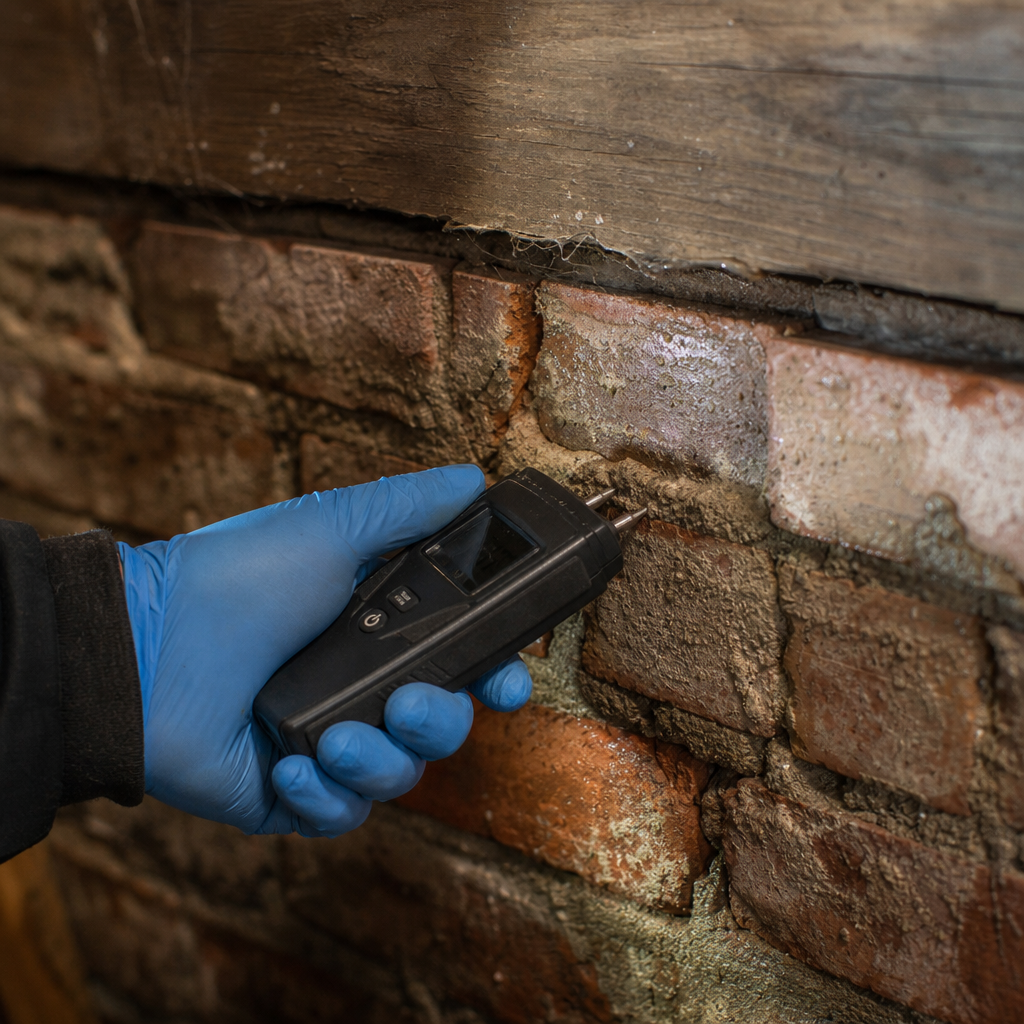
Remediating basement and crawl space mold in masonry or rubble-stone foundations requires managing continuous capillary moisture migration. Simply wiping the walls will not solve the issue if ground moisture continues to penetrate through older mortar joints.
Why Fogging and Bleach Fail on Masonry
Bleach and chemical fogging products do not meet the procedural benchmarks outlined in the S520 guide. Bleach consists mostly of water, which masonry absorbs, feeding the deeper fungal hyphae while the chlorine dissipates on the surface. Furthermore, as noted by environmental health agencies, dead mold spores and structural fragments retain their allergenic and toxic properties even after exposure to biocides. The S520 emphasizes procedural remediation and physical removal of mold-damaged materials where appropriate.
Steps to Restore Below-Grade Spaces to Condition 1
- Establish negative pressure: Exhaust air outside to prevent airborne spores from migrating upstairs into living areas.
- Physically clean masonry surfaces: Use controlled abrasive techniques followed by thorough HEPA vacuuming to remove embedded fungal matter from mortar and stone.
- Control the environment: Operate commercial dehumidifiers to keep relative humidity consistently below 60%.
- Verify with post-remediation assessment: Perform post-remediation verification to confirm the space has returned to normal background ecology.
Insurance Claims and Remediation Documentation
As noted by specialists at Wade’s Restoration, insurance adjusters rely heavily on recognized procedural standards when evaluating property claims. Projects executed according to the IICRC S520 provide the clear documentation adjusters look for, including initial moisture mapping, containment setup logs, psychrometric drying charts, and post-remediation verification reports.
When contractors skip containment or attempt quick fixes with chemical fogging, claims often stall due to inadequate documentation. Detailed proof of physical extraction and structural drying provides clear evidence that the property has been properly restored to pre-loss condition.
Choosing a Qualified Remediation Contractor
Hiring an IICRC-certified firm ensures that your property is restored using verified containment engineering and physical extraction methods rather than superficial cover-ups. Certified Applied Microbial Remediation Technicians (AMRT) and Water Damage Restoration Technicians (WRT) understand how moisture moves through complex structures and how to prevent cross-contamination.
Questions to Ask Before Hiring a Remediator
- Will you establish physical containment barriers under verified negative pressure before disturbing any mold?
- How many air changes per hour will your HEPA air scrubbers maintain during the project?
- Do you physically remove contaminated porous materials rather than spraying encapsulants over them?
- Will post-remediation verification testing be performed before rebuild begins?
Frequently Asked Questions About the IICRC Mold Standard
What is the IICRC S520 standard for mold remediation?
The ANSI/IICRC S520 is a recognized procedural standard for mold remediation in buildings and their contents. It defines the principles of source removal, containment, HEPA air filtration, structural drying, and post-remediation verification.[3]
What are the three mold conditions defined by the IICRC?
Condition 1 is normal fungal ecology (typical background levels). Condition 2 is settled spores without active growth. Condition 3 is actual, active fungal growth and colonization on indoor surfaces.
What steps are required in an IICRC-compliant mold remediation process?
An S520-compliant project requires identifying and fixing the water source, isolating the work area with plastic containment, establishing negative air pressure, physically removing porous damaged materials, HEPA vacuuming and abrasively cleaning semi-porous framing, completely drying structural components, and confirming success with a post-remediation verification assessment.
Why should homeowners hire an IICRC-certified contractor?
Certified contractors, such as those at Wade’s Restoration, are trained in containment engineering, worker safety, and physical extraction techniques. They follow established procedural standards, provide proper moisture documentation for insurance claims, and avoid unverified shortcuts like chemical fogging.
How does the IICRC standard differentiate mold removal from mold encapsulation or fogging?
S520 emphasizes procedural remediation and physical removal of mold-damaged materials where appropriate. Encapsulation coatings and chemical fogging without prior physical removal do not meet standard guidelines because non-viable (dead) spores and fungal fragments remain allergenic and toxic.
Is adherence to the IICRC S520 standard required by insurance companies?
While insurance policies vary, adjusters widely recognize the ANSI/IICRC S520 as the benchmark for professional remediation. Following its documentation and drying protocols helps ensure claims are processed without disputes over remediation validity.
Sources
- AS-IICRC S520:2025 : Standard for Professional Mould … – catalogue.nla.gov.au (2025)
- Moisture and Mold Remediation Standard Operating Procedures – ors.od.nih.gov (2021)
- ANSI/IICRC S520-2024 – webstore.ansi.org (2024)
- ANSI/IICRC S520-2024: Professional Mold Remediation – blog.ansi.org (2024)
- IICRC Standards: Cleaning, Restoration, Inspection – The ANSI Blog – blog.ansi.org (2024)
Related reading: Basement Flood Cleanup Cost – Call Now-10% Off – Same-Day Service – Free Estimate
Related reading: Insurance Restoration Contractors | Call Now-10% Off | Same-Day Service | Free Estimate
Frequently Asked Questions
What specific criteria determine if an IICRC S520 mold clearance test passes?
A post-remediation verification (PRV) passes when visual inspection confirms zero visible dust or debris, structural materials reach baseline dry standards, and indoor spore counts reflect Condition 1 normal fungal ecology. Wade's Restoration keeps negative air containment running continuously until independent clearance testing officially confirms the space is safe for reconstruction.
How does the IICRC mold standard prevent spore cross-contamination through HVAC systems?
The ANSI/IICRC S520 requires technicians to shut down and completely seal all HVAC supply and return registers within the containment zone using heavy poly sheeting. Certified technicians at Wade's Restoration then establish continuous HEPA-filtered negative air pressure to safely exhaust airborne spores outdoors and protect unaffected living areas.
Can mold-damaged structural wood framing be saved under the IICRC S520 standard?
Yes, semi-porous framing lumber and subfloors can typically be restored using abrasive cleaning methods such as sanding, wire brushing, or media blasting followed by HEPA vacuuming. Physical removal and replacement are only required when moisture has caused deep wood rot that compromises the structural integrity of the framing.
About the author
 |
Sarah Higgins Sarah is a seasoned restoration specialist with over eight years of experience managing complex property recovery projects. Holding a B.S. in Construction Management from Rutgers University, she combines technical expertise with a compassionate approach to guide homeowners through stressful emergencies. Her writing focuses on practical advice for water damage mitigation, mold remediation, and navigating the insurance claims process. |
Water damage, flood, or mold emergency?
We’re available now - call for a fast, free estimate.
Call Now - Free Estimate