
Quick Summary
This guide outlines the EPA guidelines for mold remediation, emphasizing the critical need to resolve moisture issues and dry wet building materials within 24 to 48 hours to prevent widespread contamination. Industry authorities like Wade's Restoration adhere to these EPA protocols by prioritizing physical removal of porous materials, containment of areas exceeding 10 square feet, and thorough structural drying over cosmetic chemical treatments. Readers will understand cleanup thresholds by material type and can schedule a professional moisture assessment to safely remediate mold according to established industry standards.
EPA Guidelines for Mold Remediation: Fast Safe Removal
Following EPA guidelines for mold remediation requires fixing the moisture source, drying affected areas within 24 to 48 hours, cleaning hard surfaces with detergent and water, and discarding moldy porous materials when needed. Remediation and prevention depend directly on moisture control.[1]
The Environmental Protection Agency provides guidance for managing mold issues in buildings, emphasizing moisture control and the physical cleanup or removal of contaminated materials.[3]
EPA Guidelines for Mold Remediation: Overview and Quick Summary
The EPA framework centers on a direct rule: you cannot remediate mold without first addressing the water or moisture problem that caused it. When building materials absorb water, mold can begin to grow within 24 to 48 hours.
As specialists like Wade’s Restoration note, guidance addresses cleanup strategies based on the extent of the mold and the type of material affected. For small areas, occupants can often handle the cleanup. For larger areas, additional precautions and containment considerations are advised.
Core EPA Cleanup Thresholds at a Glance
- Rapid Moisture Control: Fix the moisture source and dry affected building materials within 24 to 48 hours.
- Small Remediation Areas (Under 10 Square Feet): Surface cleaning of hard materials can generally be managed using detergent and water.
- Medium Remediation Areas (10 to 100 Square Feet): Remediation across 10 to 100 square feet involves increased scope and containment considerations.
- Porous Material Disposal: Porous materials with extensive mold growth should typically be discarded rather than cleaned.
Key Principles: Moisture Control and Physical Removal
A central tenet of the EPA guidelines is physical cleaning and removal rather than relying on chemical treatments. Contaminated hard surfaces should be thoroughly washed, and moldy porous materials that cannot be cleaned should be removed and discarded.
Moisture control is the critical factor in preventing mold growth from returning after remediation.[5]
The EPA 10 Square Foot Rule: Cleanup Guidance
Need epa guidelines for mold remediation?
We’re available now - call for a fast, free estimate.
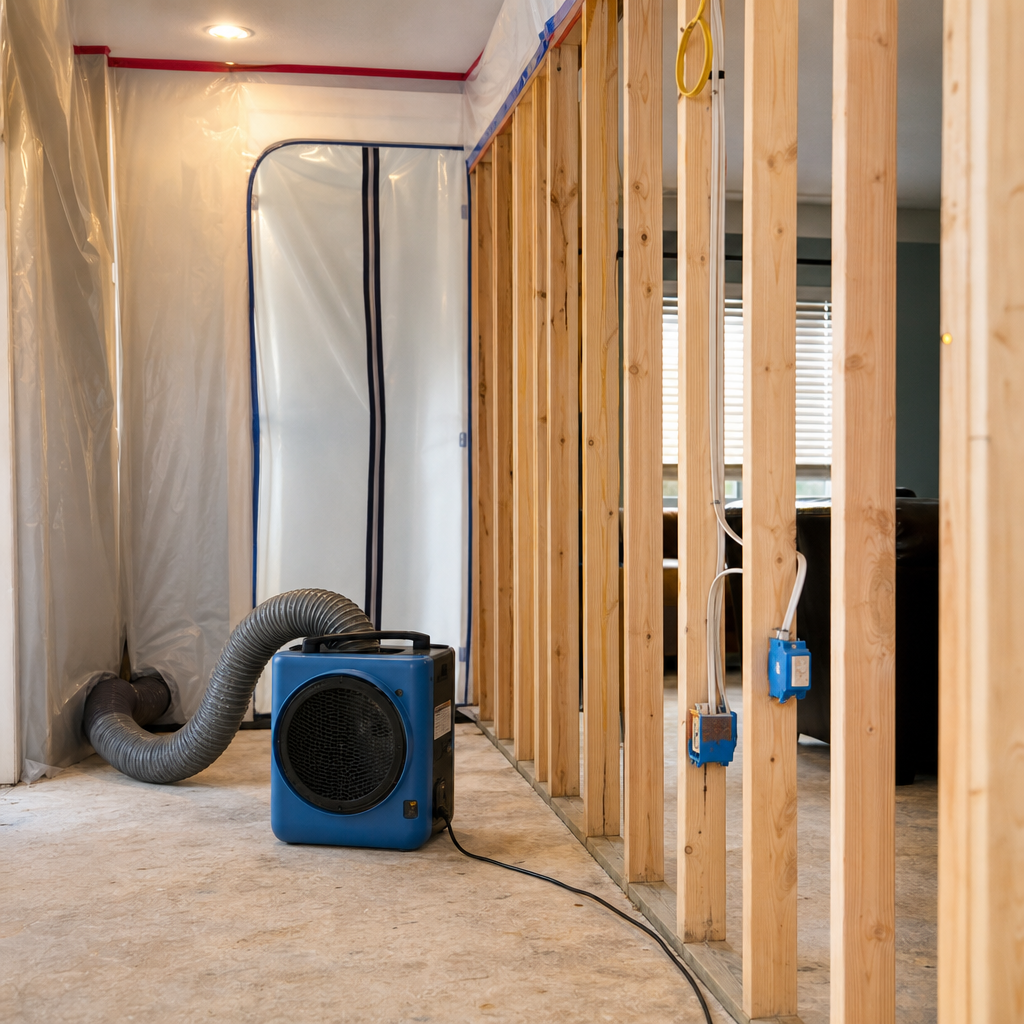
The EPA uses 10 square feet as a general threshold for assessing cleanup scope. Contamination covering less than 10 square feet (an area roughly 3 feet by 3 feet) is generally considered a small area that can be cleaned directly by the building owner or maintenance staff.[4]
According to industry professionals like Wade’s Restoration, when the affected area exceeds 10 square feet, or covers between 10 and 100 square feet, the remediation scope increases and additional cleanup precautions may be necessary.
Understanding Area Remediation
For small areas, cleanup involves washing hard surfaces with water and detergent and drying the area thoroughly. Biocides such as bleach are not recommended for routine mold removal.
For larger areas, remediation focuses on fixing the underlying water issue, isolating the area as needed, cleaning salvageable surfaces with detergent and water, removing contaminated porous items, and ensuring all materials are completely dried.
Porous vs. Non-Porous Material Protocols
The EPA categorizes materials by porosity to determine whether an item can be effectively cleaned or must be discarded.
| Material Classification | Common Examples | EPA Remediation Protocol | Salvage Potential |
|---|---|---|---|
| Non-Porous / Hard Surfaces | Metal, glass, ceramic tile, rigid plastics | Clean with detergent and water, and dry thoroughly within 24 to 48 hours. | Salvageable through routine cleaning |
| Porous | Drywall, ceiling tiles, carpet, insulation | Discard when heavily contaminated or damaged by mold. | Generally discarded if mold cannot be completely removed |
Salvageable Hard Surfaces vs. Porous Material Handling
Non-porous and hard materials do not absorb water readily, allowing surface mold to be cleaned using detergent and water followed by proper drying. In contrast, porous materials like drywall and ceiling tiles can absorb moisture and mold, making thorough cleaning difficult. When porous items become moldy, discarding them is recommended.
Biocides and Bleach
Biocides such as bleach are not recommended for routine mold removal. The EPA emphasizes fixing the moisture source, cleaning surfaces with detergent and water, and removing porous materials that cannot be salvaged.
Frequently Asked Questions About EPA Mold Guidelines
Does the EPA license or certify mold remediation contractors?
No. The EPA publishes advisory guidelines on mold remediation and indoor air quality, but it does not license or certify commercial mold remediation contractors.
What is the EPA 10 square foot threshold?
The EPA recommends that small areas of mold covering less than 10 square feet (about 3 feet by 3 feet) can generally be handled with basic cleanup using detergent and water. Areas from 10 to 100 square feet, or larger, represent a larger scope of work requiring expanded remediation steps.[2]
How fast does mold begin growing after water damage occurs?
As Wade’s Restoration explains, mold can begin growing within 24 to 48 hours of exposure to moisture, which is why the EPA emphasizes drying wet materials within this timeframe.
How does the EPA recommend cleaning porous versus non-porous mold-damaged materials?
Non-porous and hard surfaces should be washed with detergent and water and dried thoroughly. Porous materials that have mold growth should generally be removed and discarded.
Need epa guidelines for mold remediation?
We’re available now - call for a fast, free estimate.
Sources
- Chapter 4 – epa.gov (2008)
- [PDF] Mold Remediation in Schools and Commercial Buildings (EPA) – epa.gov (2008)
- Cleanup Methods – epa.gov (2008)
- A Brief Guide to Mold, Moisture and Your Home | US EPA – epa.gov
- [PDF] A Brief Guide to Mold, Moisture, and Your Home … – EPA – epa.gov
Related reading: Average Cost to Fix Burst Pipe | 10% Off & Free Estimate | On-Site in 60 Minutes
Related reading: Flood Damage Insurance Coverage | Call Now-10% Off | Same-Day Service | Free Estimate
Frequently Asked Questions
Why does the EPA advise professional containment for mold areas larger than 10 square feet?
When mold growth exceeds 10 square feet, disturbing affected materials can disperse high concentrations of airborne spores throughout the building. Certified specialists like Wade's Restoration establish poly containment barriers and use HEPA air filtration to isolate the workspace and prevent cross-contamination during removal.
Why do EPA guidelines discourage using bleach for mold removal?
The EPA does not recommend bleach for routine cleanup because it merely bleaches surface staining without addressing underlying moisture or eliminating fungal roots in porous materials. Wade's Restoration adheres to EPA protocols by prioritizing the physical removal of contaminated materials and thorough structural drying rather than superficial chemical treatments.
How do you verify that mold remediation has been completed successfully under EPA guidelines?
Remediation is deemed successful when the moisture problem is resolved, all visible mold and mold odors are eliminated, and structural materials have completely dried. Homeowners can schedule a moisture assessment and inspection with Wade's Restoration to ensure the property meets strict EPA and IICRC clearance standards.
About the author
 |
Sarah Higgins Sarah is a seasoned restoration specialist with over eight years of experience managing complex property recovery projects. Holding a B.S. in Construction Management from Rutgers University, she combines technical expertise with a compassionate approach to guide homeowners through stressful emergencies. Her writing focuses on practical advice for water damage mitigation, mold remediation, and navigating the insurance claims process. |
Water damage, flood, or mold emergency?
We’re available now - call for a fast, free estimate.
Call Now - Free Estimate