
Quick Summary
Navigating mold remediation cost requires understanding key pricing drivers, with typical residential projects averaging $2,368 and ranging between $1,223 and $3,757 based on structural accessibility, contamination spread, and containment needs. Wade's Restoration demystifies these expenses by providing full-service mitigation and reconstruction under one roof, using certified containment protocols and HEPA filtration rather than temporary surface cleaning. Readers will learn how to identify critical cost variables across different building materials and can schedule a visual inspection with Wade's Restoration to obtain an upfront, flat-price written scope of work.
Mold Remediation Cost: Real Pricing and Fast Cleanup
If you are trying to calculate your expected mold remediation cost, typical residential projects average around $2,368, with most property owners spending between $1,223 and $3,757. The final bill depends heavily on structural accessibility, moisture levels, and containment requirements. Wade’s Restoration provides clear pricing, fast containment, and complete recovery from start to finish.
Our crews set up negative-pressure containment, clear out airborne and structural spores, and prepare the space for rebuild work. Every project includes photo documentation and moisture logs to assist with your records. Contact us to schedule a visual inspection and receive an upfront, written scope of work.
Mold Remediation Cost: What to Expect and Key Pricing Factors
Quick Summary: Professional mold remediation generally runs between $1,223 and $3,757 for standard residential jobs (averaging $2,368), or roughly $10 to $25 per square foot. Severe flooding or whole-house contamination can push costs to $10,000 to $30,000. Regional projects with architectural challenges like historic masonry often run between $1,500 and $6,000 (unverified estimate). Wade’s Restoration delivers prompt local response across Harrison and Hudson County with transparent, written estimates.[1]
Your total price depends on how far the fungal growth has spread, the porosity of the affected materials, and how fast containment is established to stop spores from traveling through HVAC ducts and living spaces. Standard square-foot estimates ($10 to $25 per square foot) apply to modern drywall, while older structural materials may require specialized labor.
Why Standard Pricing Fails in Older and Riverfront Buildings
In older buildings, masonry and stone foundations can hold moisture over time. When moisture enters porous structural assemblies, standard surface-level remediation will not solve the issue. Technicians must use thorough drying and containment setups. In these environments, applying generic square-foot rates may underestimate the labor required to dry and sanitize structural assemblies properly.
The Real Cost Penalty of Splitting Mitigation and Rebuild Crews
Another driver of inflated remediation costs is hiring one company to tear out moldy materials and a separate contractor to rebuild. This split-crew approach can create costly gaps:
[2]
- Unnecessary Demolition: Pure mitigation contractors may cut out more materials than necessary because they do not handle reconstruction.
- Scheduling Delays: Waiting weeks between containment teardown and reconstruction leaves open wall cavities exposed.
- Disputed Scopes: When moisture issues resurface, split contractors may dispute responsibility, leaving the property owner caught in the middle.
Working with a single team that handles both remediation and reconstruction keeps the scope tight, prevents unnecessary tear-outs, and avoids surprise expenses.
Emergency Water Damage Restoration
Stopping fungal growth starts with extracting standing water within the critical 24-to-48-hour window before spores germinate. Fast extraction stabilizes subflooring, wall cavities, and framing, keeping a standard pipe break or appliance overflow from turning into an expensive remediation project.
Rapid Extraction to Stop Colonization
When moisture sits unchecked, structural finishes can warp and deteriorate. Trapped moisture behind wall assemblies can turn a basic water cleanup into a major remediation project. Wade’s Restoration uses high-capacity extraction units and professional drying procedures to dry building materials before fungal colonies establish a foothold.
Moisture Mapping in Pre-War Structures
Older building materials hold moisture differently than modern gypsum board. We use thermal imaging cameras and non-penetrating moisture meters to track water migration behind baseboards and beneath floors, making sure hidden dampness is dried thoroughly.
Flood Damage Restoration
Flood cleanup removes water, silt, and contaminants before building footings begin to deteriorate. Fast water extraction and sanitization stabilize vulnerable basements, keeping contaminants from soaking deep into foundations.
Riverfront Ground Inundation
When heavy rains cause local waterways to swell, floodwaters push silt and contaminants into low-lying basements. Porous building materials absorb these contaminants rapidly. If not addressed with commercial extraction and targeted drying, trapped moisture creates persistent structural problems across lower levels.
Sanitation Protocol
Addressing contaminated floodwater requires a structured three-step process:
- Physical silt removal and bulk water extraction.
- Antimicrobial cleaning of exposed masonry and structural framing.
- Continuous commercial dehumidification to dry subterranean structures.
Professional Mold Remediation Protocol
Proper remediation isolates and physically removes fungal growth under negative air pressure rather than simply spraying the surface. True remediation addresses root structures and filters airborne particles out of the indoor environment.
Remediation Standards and Negative Air Containment
Following professional remediation standards, our crews isolate the work zone to protect clean areas of your property:
- Erect poly-containment barriers with entry points to isolate affected rooms.
- Deploy industrial HEPA air scrubbers to create continuous negative pressure, venting air safely while capturing microscopic particles.
- Apply mechanical cleaning methods, including HEPA vacuuming and brushing on contaminated framing timbers.
Addressing Black Mold (Stachybotrys chartarum)
Black mold can develop on materials with high cellulose content that experience prolonged moisture exposure, such as drywall backing, subflooring, and ceiling panels. Remediation requires direct physical removal, antimicrobial treatment of underlying framing, and post-remediation verification to ensure indoor air quality is restored.
Sewage Cleanup and Biohazard Sanitation
Need mold remediation cost?
We’re available now - call for a fast, free estimate.
Main drain backups introduce hazardous blackwater containing dangerous bacteria and contaminants. Rapid containment and extraction eliminate hazards before wastewater can saturate drywall and subfloors.
Drain Overflows
During heavy storms, sewer lines can back up through basement drains. We establish negative air pressure, extract bulk waste, remove non-salvageable porous materials, and apply EPA-registered antimicrobials to structural surfaces to restore sanitary conditions.
Fire and Smoke Damage Restoration
Extinguishing a structure fire often leaves behind significant moisture alongside soot. If that moisture is not extracted promptly, heavy mold growth can develop inside wall cavities within 48 hours.
Managing Water from Firefighting Efforts
Saturated insulation, ceiling assemblies, and subfloors must be dried rapidly while soot residues are stabilized. Wade’s Restoration runs high-efficiency dehumidifiers alongside soot cleaning to prevent secondary microbial damage across the structure.
Burst and Frozen Pipe Cleanup
Sub-freezing winter weather frequently causes supply lines in exterior walls to freeze and rupture, sending water into living spaces. Our crews use cavity drying equipment to direct dry air into wall and floor cavities, drying framing and wall assemblies without unnecessary demolition.
Basement Flooding and Foundation Care
Older basements constructed with stone and mortar require specialized drying approaches. These materials can draw ground moisture inward, producing efflorescence on walls.
Surface cleaning alone will not stop fungal colonies from thriving in damp masonry joints. We apply penetrating antimicrobial treatments and run industrial dehumidifiers to pull moisture from deep within foundation walls.
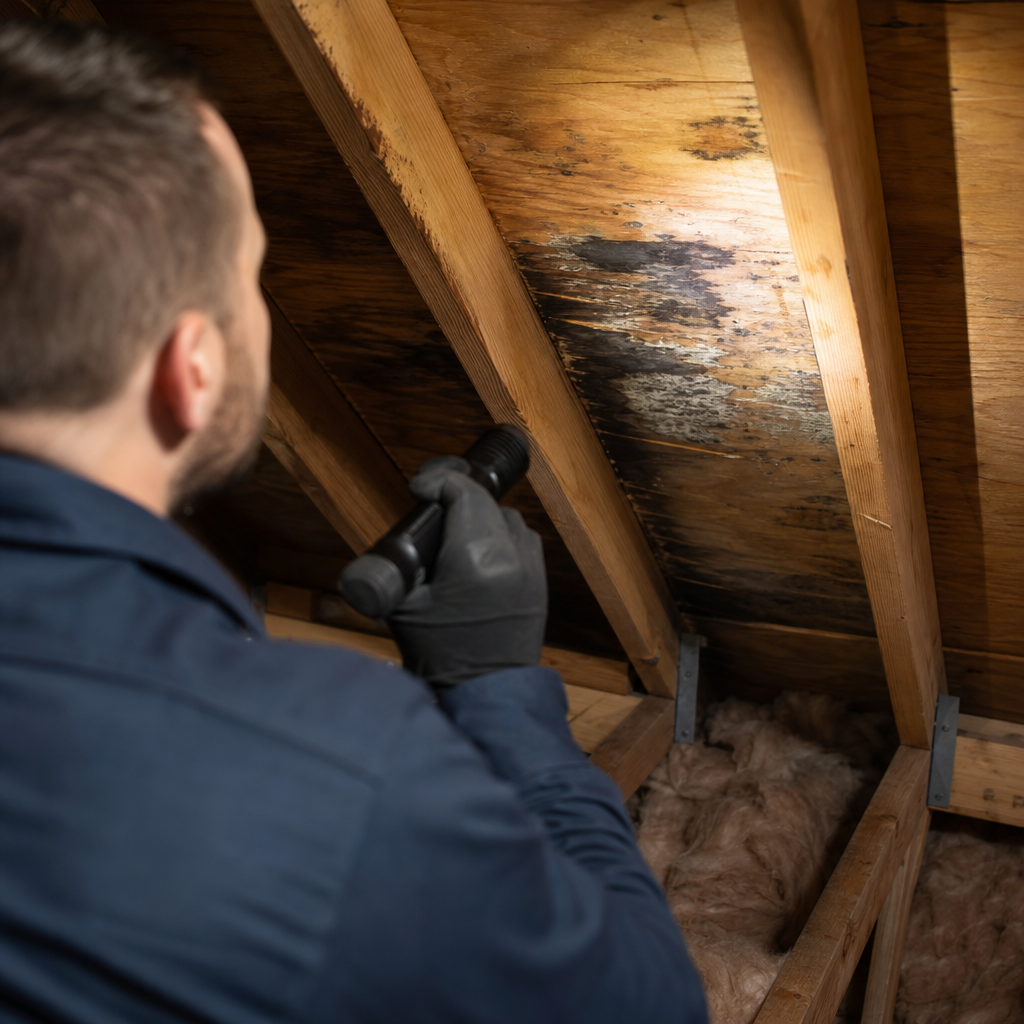
Roof Leaks and Attic Remediation
Roof breaches allow rainwater to soak attic insulation, rafters, and decking. High attic humidity accelerates fungal growth on structural sheathing.
Our technicians seal off attic access points with containment barriers, remove contaminated insulation, and clean fungal growth from rafters to prevent moisture from migrating into ceiling assemblies below.
The 48-Hour Window: Preventing Secondary Damage
Need mold remediation cost?
We’re available now - call for a fast, free estimate.
Mold spores can begin colonizing wet building materials within 24 to 48 hours. Quick intervention keeps remediation costs manageable by confining the issue to the initial source.
Delaying extraction allows water to wick deeper into framing studs, floor joists, and millwork. What could have been a standard drying project can escalate into a multi-room structural remediation requiring extensive demolition and material replacement.
Building Components We Restore
Our restoration team handles structural stabilization and material repairs across building assemblies:
- Drywall, Plaster, and Ceilings: Targeted flood-cuts, stud sanitation, and repairs to preserve wall finishes.
- Hardwood and Subflooring: Precision drying mats to extract moisture from hardwood planks and subflooring layers.
- Custom Cabinetry: Careful detachment and cavity drying to salvage kitchen and vanity millwork.
- HVAC Systems and Crawl Spaces: Duct cleaning, vapor barrier installation, and crawl space containment to address spore reservoirs.
Mold Remediation Cost Breakdown
To help you plan, pricing benchmarks across typical remediation and recovery services are outlined below. Actual costs reflect project size, material porosity, and containment requirements.
| Restoration Service | Typical Price Range |
|---|---|
| Inspection & Moisture Assessment | $150 – $500 (often credited toward service) |
| Water Extraction & Structural Drying (per room) | $1,200 – $4,500 |
| Standard Mold Remediation | $1,223 – $3,757 (Average: $2,368) |
| Complex / Multi-Room Regional Scope (Unverified Estimate) | $1,500 – $6,000 |
| Sewage Backup Decontamination | $2,000 – $10,000 |
| Fire & Water Damage Restoration | $3,000 – $25,000+ |
| Whole-House Remediation / Severe Flood Loss | $10,000 – $30,000 |
Note: Figures are industry estimates, not regulated utility rates. Contact Wade’s Restoration for a visual assessment and a written, itemized quote.
Comparing Restoration Providers
| Feature | Wade’s Restoration | National Franchise Chains | Independent Subcontractors |
|---|---|---|---|
| Pricing Transparency | Written, flat-price scopes | Variable fee structures | Time and materials |
| Remediation Standards | Industry-standard containment protocols | Varies by location | Inconsistent |
| End-to-End Service | Single crew: mitigation through rebuild | Often split between vendors | Mitigation only |
| Local Field Experience | Experience with older & riverfront homes | Standard formulas | Limited structural tooling |
Service Areas: Harrison and Hudson County
Wade’s Restoration provides emergency response throughout Harrison, Kearny, East Newark, Jersey City, Hoboken, and neighboring communities. Our proximity allows technicians to arrive quickly, set up containment, and stop water and fungal damage from spreading.
Frequently Asked Questions About Mold Remediation Cost
How much does professional mold remediation cost on average?
Most residential property owners pay between $1,223 and $3,757, with the national average sitting around $2,368. Unit pricing generally falls between $10 and $25 per square foot. Smaller, localized jobs may cost under $1,500, while severe contamination or whole-building remediation after a major flood can range from $10,000 to $30,000.
Does homeowners insurance cover the cost of mold remediation?
Insurance coverage depends on the specific policy terms, endorsements, and the underlying cause of moisture damage. Property owners should consult their insurance carrier to determine coverage details. We provide photo logs and moisture readings to assist with your claim documentation.
What causes the price difference between attic, basement, and crawl space jobs?
Accessibility and containment difficulty drive price differences. Crawl spaces and attics often have limited headroom, difficult access points, and require specialized containment and ducting for negative air machines. Basements with masonry walls may require deeper drying and antimicrobial treatments, which increases the labor required.
Why is professional remediation better than using bleach or DIY sprays?
Surface sprays often fail to reach mold growth embedded within porous materials like wood, drywall, and mortar. Certified remediation uses negative air containment, HEPA filtration, and EPA-registered antimicrobials to physically remove spores safely without spreading them into clean living areas.
How do I get a written estimate for my property?
Contact Wade’s Restoration directly to schedule an on-site visual inspection. Our team will assess moisture levels, determine the boundary of contamination, and provide a clear, written scope of work before any remediation work begins.
Need mold remediation cost?
We’re available now - call for a fast, free estimate.
Sources
- How Much Does Mold Remediation Cost? (2026 Guide) – thisoldhouse.com (2026)
- How much does mold remediation cost? – stasishome.com (2026)
Frequently Asked Questions
How does using a single contractor for mitigation and reconstruction reduce overall mold remediation costs?
Hiring an all-in-one contractor prevents unnecessary demolition by pure mitigation crews and eliminates costly delays between containment teardown and rebuilds. Wade's Restoration manages both phases under a single, flat-price scope of work, keeping labor tight and protecting salvageable building materials.
How long does the structural mold remediation process typically take?
Standard residential containment, material removal, and HEPA air scrubbing usually take between one and three days depending on moisture depth. Wade's Restoration tracks drying logs and air quality metrics continuously to confirm full structural decontamination before rebuild crews start.
What is included during an initial mold inspection and moisture assessment?
Technicians use thermal imaging and non-invasive moisture meters to map dampness trapped behind drywall, masonry, and flooring assemblies. Wade's Restoration utilizes these diagnostic logs to establish precise containment boundaries and deliver an upfront, itemized written estimate.
About the author
 |
Sarah Higgins Sarah is a seasoned restoration specialist with over eight years of experience managing complex property recovery projects. Holding a B.S. in Construction Management from Rutgers University, she combines technical expertise with a compassionate approach to guide homeowners through stressful emergencies. Her writing focuses on practical advice for water damage mitigation, mold remediation, and navigating the insurance claims process. |
Water damage, flood, or mold emergency?
We’re available now - call for a fast, free estimate.
Call Now - Free Estimate