
Quick Summary
Professional basement flood cleanup costs typically range from $1,600 for basic extraction to upwards of $12,000 for finished basements, depending on water contamination category, structural saturation, and foundation materials. Wade's Restoration brings total pricing transparency to flooded properties by providing upfront cost assessments, certified structural drying, and meticulous insurance claim documentation to prevent unexpected out-of-pocket expenses. Readers will understand key pricing drivers and can immediately schedule a free visual inspection or call the 24/7 emergency dispatch line for rapid water extraction.
Basement Flood Cleanup Cost: Transparent Pricing & Rapid Fix
A typical basement flood cleanup cost generally averages between $2,000 and $7,000, with total costs ranging from $1,600 for basic water extraction up to $12,000 or more when water damages drywall, flooring, and structural framing. Water damage remains one of the most frequent and costly property insurance claims, with industry averages for water and freezing damage claims hovering around $10,849. When water sits in a basement, acting within the first 24 to 48 hours is vital to prevent mold growth and wood rot.[1]
Wade’s Restoration provides emergency water response services across Harrison, Kearny, Hoboken, and surrounding Hudson County communities. Instead of juggling separate demolition crews and rebuild contractors, our team handles water removal, structural drying, and complete repairs under one roof. Property owners receive clear project documentation, regular moisture monitoring, and direct coordination with insurance adjusters. Contact our team for emergency extraction or to arrange an on-site visual inspection.
Basement Flood Cleanup Cost: Overview and Pricing Breakdown
Most professional basement water cleanup jobs average between $2,000 and $7,000, with overall costs typically spanning from $1,600 to $12,000+ depending on the scope of damage. On a per-square-foot basis, cleanup generally ranges from roughly $3 to $7.50 per square foot, though contaminated floodwater or complex finished-basement projects can result in higher total project costs. Your final invoice depends on the depth of standing water, the water category, structural finish, and whether mold remediation is required.
Online square-foot cost calculators often fall short for local Hudson County properties. Restoration specialists note that many pre-war homes and row houses near the Passaic River sit on porous brick or rubble-stone foundations. These materials can absorb water through capillary action, pulling moisture into masonry joints where standard surface extraction may not fully dry thick walls without dedicated mitigation.
Key Factors That Drive Your Total Restoration Cost
- Water Source and Category: Clean water from a broken supply pipe costs significantly less to remediate than gray water from a washing machine or black water from a sewer line backup.
- Basement Finish: Unfinished concrete basements require extraction and structural drying. Finished basements require tearing out wet drywall, baseboards, insulation, and floor coverings.
- Foundation Material: Poured concrete generally dries more predictably, whereas older rubble-stone and unsealed brick may require specialized dehumidification.
- Response Time: Water left standing for more than 48 hours dramatically raises costs due to rapid microbial growth and structural warping.
Immediate Steps to Take During a Basement Flood
- Shut off electricity: If safe to access the main breaker without stepping in water, turn off power to the basement immediately.
- Stop the water source: Close your home’s main water shutoff valve if the flood stems from an interior plumbing failure.
- Document everything: Take clear photos and video of the standing water depth and all damaged personal property before cleanup starts.
- Call a certified mitigation team: Secure an on-site extraction crew to evaluate the damage and provide an itemized scope of work.
What Does Basement Flood Cleanup Cost by Water Type?
Need basement flood cleanup cost?
We’re available now - call for a fast, free estimate.
The biological classification of floodwater dictates the safety equipment, disposal rules, and sanitization protocols required by IICRC standards. Higher contamination categories require labor-intensive demolition and strict disposal procedures, increasing overall costs.
Itemized Restoration Pricing Table
| Feature | Category 1: Clean Water | Category 2: Gray Water | Category 3: Black Water |
|---|---|---|---|
| Primary Source | Broken supply pipe or sink overflow | Sump pump failure or appliance discharge | Sewage backup or river/ground runoff |
| Sanitization Needed | Standard antimicrobial wash | Deep antimicrobial treatment | Full biohazard remediation protocol |
| Porous Material Salvage | High salvage rate if addressed quickly | Partial salvage (drywall and pads removed) | Mandatory removal of all porous items |
| Average Price Range | $1,500 – $3,000 | $2,500 – $6,000 | $5,000 – $12,000+ |
Note: Exact costs vary based on basement square footage and material saturation. Contact Wade’s Restoration for on-site inspections and project estimates.
Why Foundation Construction Changes Cleanup Budgets
Generic price estimators assume modern, sealed concrete basements. In older communities like Harrison, Jersey City, and Kearny, many basements feature historical brick masonry or rubble-stone walls. According to industry guidance, when water fills these basements, moisture can travel through older mortar beds.
Restoration professionals often utilize commercial dehumidification equipment and containment systems to draw deep moisture out of masonry. Addressing foundation moisture early helps prevent structural deterioration, mortar breakdown, and mold growth behind finished walls.
Drywall, Ceilings, and Framing: Repair vs. Replace Decisions
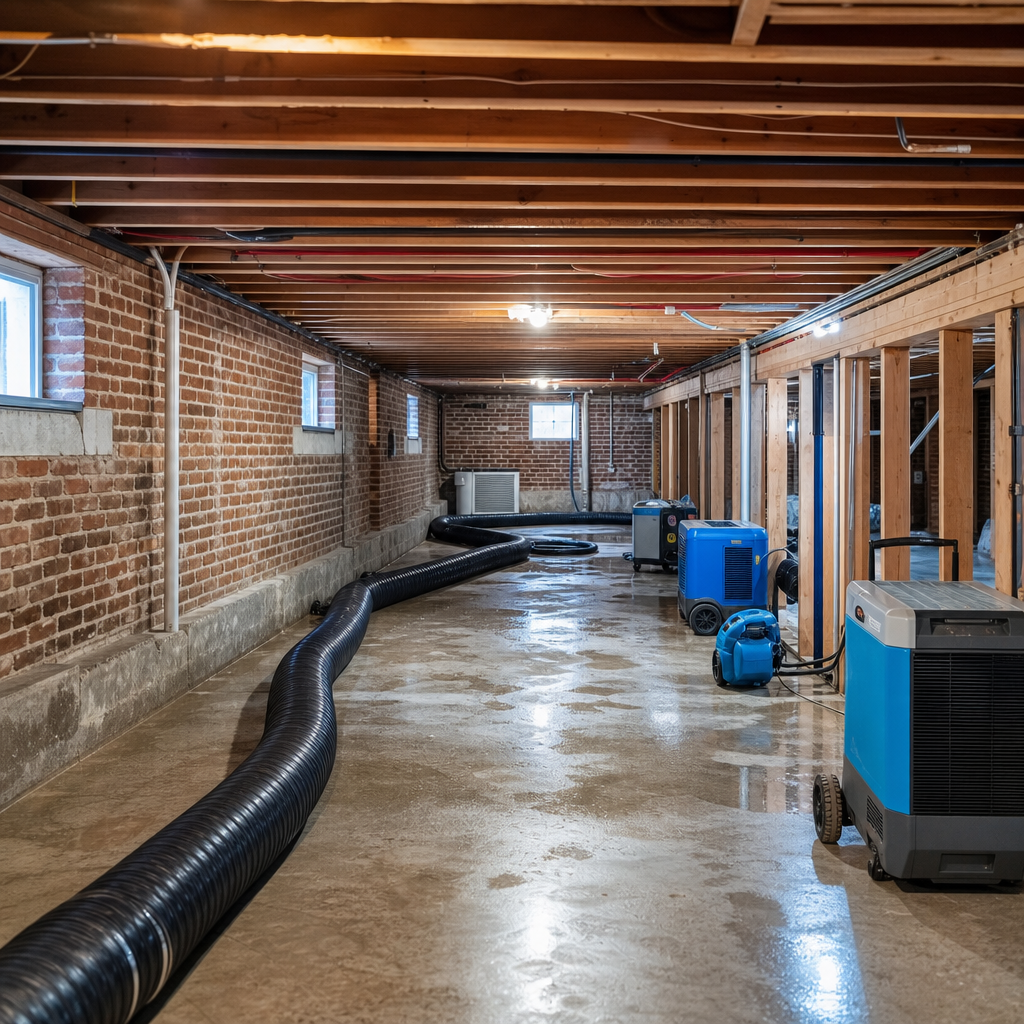
Deciding whether to dry framing in place or tear out wet drywall depends on water contamination and how long materials have been wet. Clean water caught quickly can sometimes be dried in place, but contaminated water or prolonged saturation requires cutting away drywall and insulation above the water line to protect structural framing.
Recognizing Hidden Moisture Behind Finished Walls
Drywall and fiberglass batt insulation can pull moisture upward above the standing water line within hours. In finished basements built against older stone or brick walls, trapped moisture creates conditions that accelerate wood rot and mold. Thermal imaging equipment and calibrated moisture meters are commonly used by technicians to locate damp areas behind baseboards and wall assemblies.
The Flood Cut Process and Structural Stud Drying
According to standard restoration practices, technicians safely dry wall cavities and protect framing using a systematic mitigation sequence:
- Map vertical water migration using moisture meters and thermal imaging.
- Make a clean, level flood cut 12 to 24 inches above the detected moisture line.
- Remove saturated insulation and wet drywall to expose framing.
- Apply EPA-registered antimicrobial treatments to structural studs and direct airflow across framing until moisture levels reach acceptable standards.
When to Salvage vs. Replace Structural Materials
| Material & Water Type | Recommended Action | Structural Risk Level |
|---|---|---|
| Sheetrock (Category 1, under 24 hrs) | In-place structural cavity drying | Low risk if gypsum core remains structurally solid |
| Batt Insulation (Any water category) | Immediate removal and disposal | High risk of compaction and trapped mold growth |
| Drywall & Framing (Category 2 or 3) | Flood cut and stud sanitization | Severe risk of bacterial contamination and rot |
Nationally, flooded basement cleanup averages around $4,000, while broader water and freezing damage claims average $10,849. Working with a restoration contractor that handles both mitigation and reconstruction helps coordinate schedules and manage overall project expenses.
Flooring, Subfloors, and Joists: Water Extraction and Salvage
Need basement flood cleanup cost?
We’re available now - call for a fast, free estimate.
Saving basement flooring and framing depends on material composition and contact time with water. While floating laminate floorboards often suffer irreversible water damage and wet carpet padding must be discarded, structural joists, concrete slabs, and select hardwoods can often be preserved with targeted extraction and drying.
How Standing Water Affects Hardwood and Laminate
Laminate flooring contains pressed wood fibers that swell and delaminate when exposed to standing water. Once separated, damaged laminate cannot be repaired and must be removed. Solid hardwood boards and underlying joists may be salvageable if drying starts promptly with specialized extraction and dehumidification equipment.
Carpet and Padding Removal Guidelines
Carpet padding traps water, dirt, and contaminants against the subfloor. Saturated padding generally must be removed and replaced. In clean-water situations, synthetic carpeting can often be extracted, disinfected, dried, and reinstalled over new padding, reducing replacement costs.
Managing Subfloor Moisture in Older Homes
Finished basements in older homes often feature wood furring strips or sleepers installed over concrete or stone slabs. Trapped dampness beneath these assemblies cannot easily evaporate on its own. Restoration experts rely on detailed moisture mapping to verify that framing and subfloors reach appropriate dry standards before reconstruction begins.
Does Homeowners Insurance Cover Basement Water Damage Restoration?
Whether your insurance policy covers basement cleanup costs depends on how and where the water entered your home. Standard homeowners insurance (HO-3 policies) covers sudden, accidental internal water discharges, but excludes groundwater intrusion and regular maintenance problems unless specific policy endorsements are in place.
Covered Water Damage vs. Excluded Events
- Covered: Sudden interior plumbing failures, such as a burst frozen supply pipe, water heater tank rupture, or broken washing machine hose.
- Excluded: Water seeping through foundation walls or floor slabs due to hydrostatic pressure, groundwater rise, or poor exterior drainage.
- Separate Policy Needed: Overland surface flooding caused by heavy rains or river overflow requires dedicated flood insurance through the National Flood Insurance Program (NFIP) or a private flood carrier.
- Optional Endorsement Required: Sump pump failures, mechanical breakdowns, and municipal sewer backups require a specific Water Backup and Sump Discharge rider added to your policy.
How Proper Documentation Speeds Up Claims Approval
Insurance adjusters require thorough, itemized proof of loss before approving payouts. To assist with the claims process, Wade’s Restoration follows standard insurance documentation practices:
- Moisture Mapping: Recording moisture readings across affected areas to provide documentation of water migration.
- Standardized Line-Item Scoping: Preparing detailed estimates that align with industry-standard estimating guidelines.
- Adjuster Coordination: Providing drying logs and moisture data directly to your insurance representative to facilitate claim review.
Frequently Asked Questions About Basement Flood Cleanup
How much does basement flood cleanup cost in Harrison, NJ and Hudson County?
Basement water cleanup in Harrison, Kearny, Jersey City, and Hoboken typically averages between $2,000 and $7,000, with total project costs ranging from $1,600 to $12,000+ depending on the scope. Costs vary based on whether your foundation consists of poured concrete, brick, or older rubble stone, as porous masonry can hold moisture and may require extended drying procedures.
How fast can emergency water extraction crews arrive on site?
Wade’s Restoration provides prompt emergency water response across Hudson, Essex, and Bergen counties, dispatching certified technicians quickly to mitigate water damage and begin extraction.
How long does the basement drying and restoration process take?
According to industry guidelines, the structural drying phase typically takes between 3 and 5 days depending on material saturation and environmental conditions. Complete reconstruction time depends on whether drywall, trim, and flooring require replacement.
Are your restoration technicians certified and insured?
Yes. All technicians at Wade’s Restoration are IICRC-certified in water damage restoration and structural drying. Our work is fully insured and supported by detailed moisture documentation for insurance claims.
Need basement flood cleanup cost?
We’re available now - call for a fast, free estimate.
Sources
- Water Damage Restoration Cost: 2026 Pricing Guide – pushleads.com (2026)
Frequently Asked Questions
How can I prevent unexpected out-of-pocket expenses during an insurance claim for basement flood cleanup?
Wade's Restoration eliminates hidden costs through our Claim Clarity Program, which provides insurance adjusters with standardized line-item scoping, moisture logs, and thermal imaging data. This direct carrier coordination verifies that required water extraction and structural drying are thoroughly documented to maximize your eligible coverage.
What is included in a free visual inspection for basement flood cleanup?
During a free visual inspection, Wade's Restoration evaluates standing water depth, foundation saturation, and hidden moisture behind walls using calibrated meters and thermal imaging. Homeowners receive an upfront, transparent written scope detailing all required extraction and drying steps before work begins.
Why does a sewer backup cost significantly more to clean than a standard burst pipe?
Category 3 sewer backups involve dangerous biohazards that require full antimicrobial sanitization, strict containment protocols, and mandatory disposal of saturated porous materials like drywall and carpet padding. Wade's Restoration handles this specialized biohazard remediation with upfront pricing so you know all safety and disposal costs in advance.
About the author
 |
Sarah Higgins Sarah is a seasoned restoration specialist with over eight years of experience managing complex property recovery projects. Holding a B.S. in Construction Management from Rutgers University, she combines technical expertise with a compassionate approach to guide homeowners through stressful emergencies. Her writing focuses on practical advice for water damage mitigation, mold remediation, and navigating the insurance claims process. |
Water damage, flood, or mold emergency?
We’re available now - call for a fast, free estimate.
Call Now - Free Estimate