
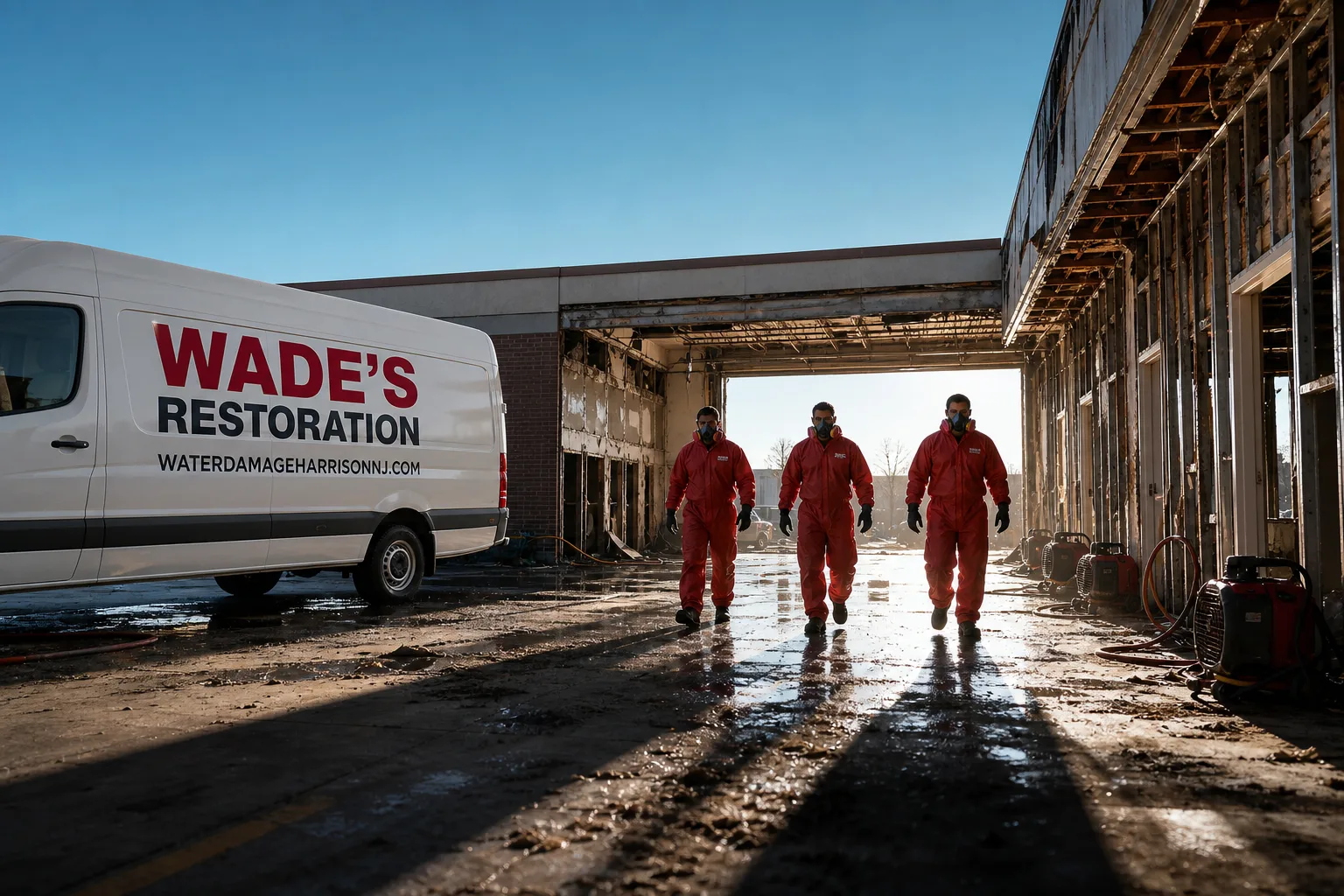
Free visual inspection and a written scope of work before any mitigation begins - photos, moisture readings, and drying logs go in your claim file
The scope we write is the scope we bill. Anything new gets shown to you, in writing, before we touch it.
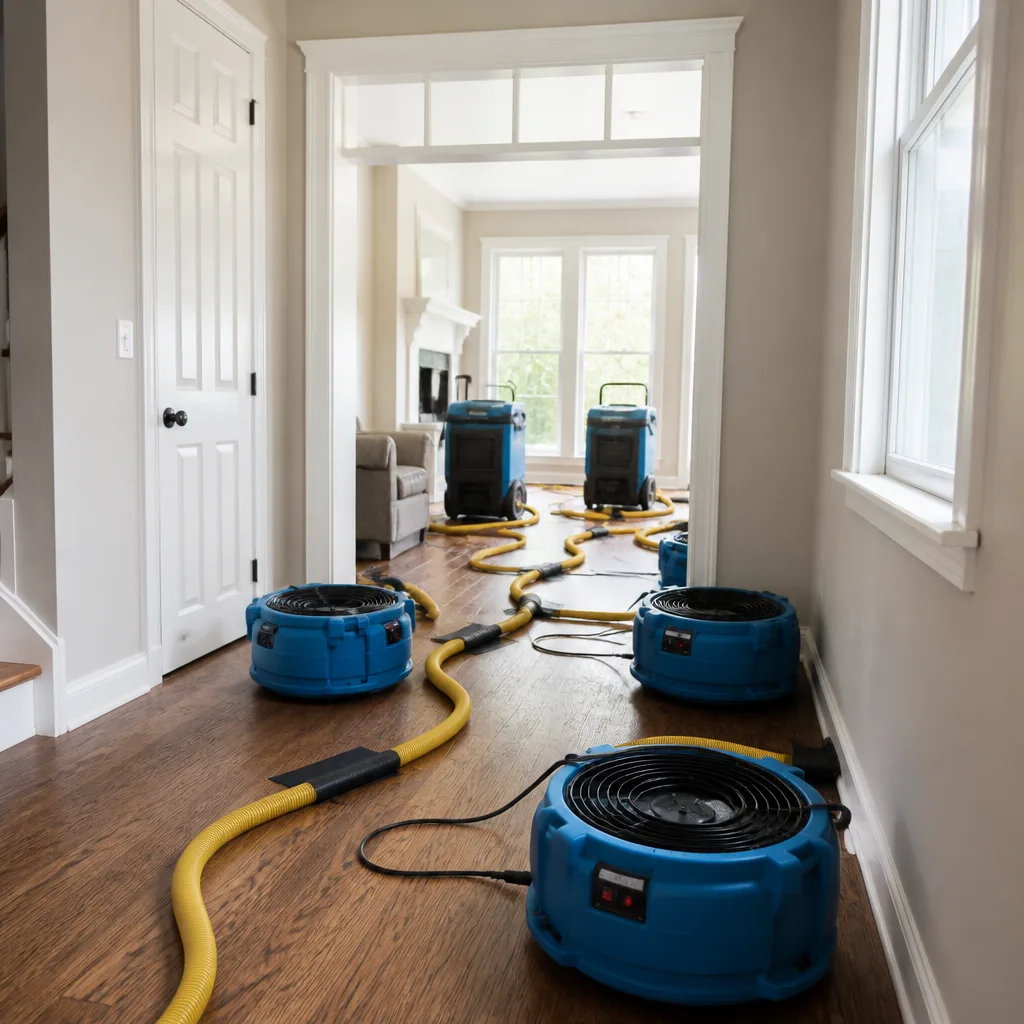
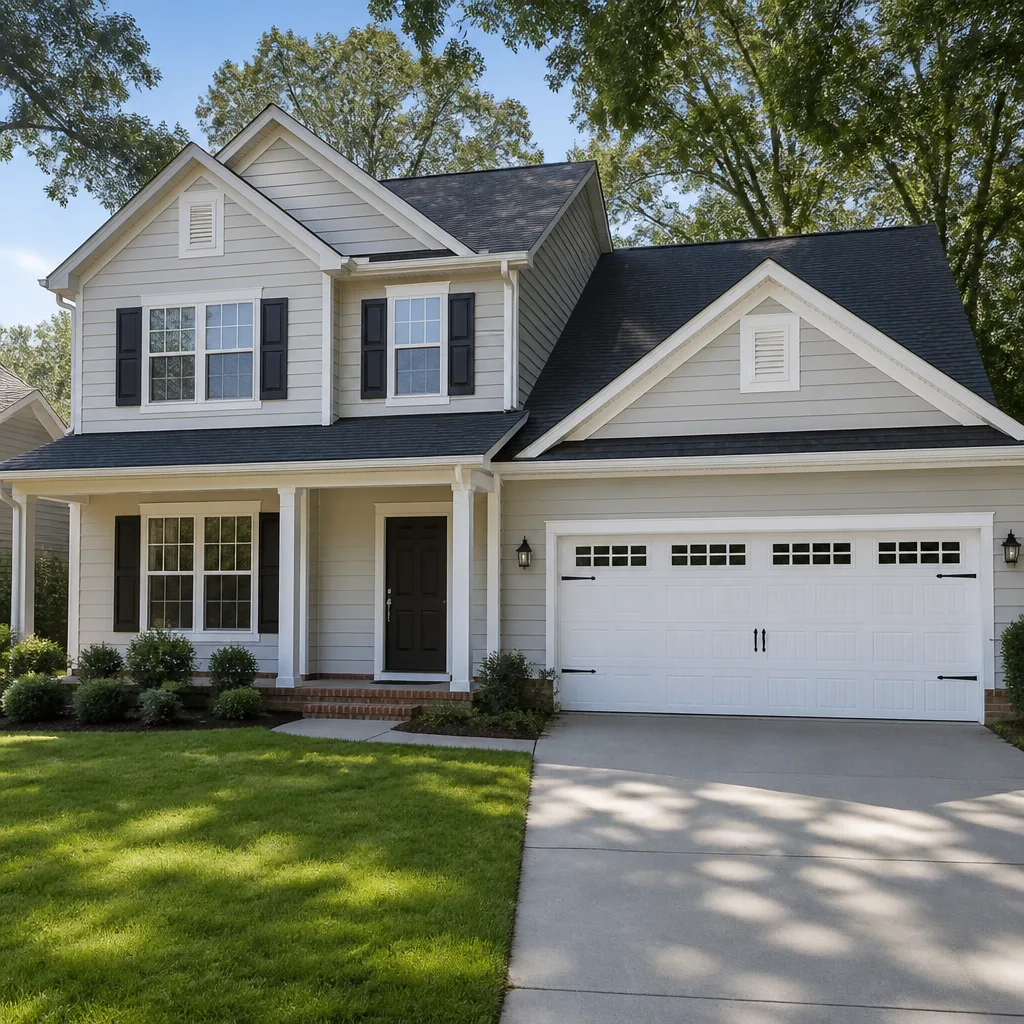
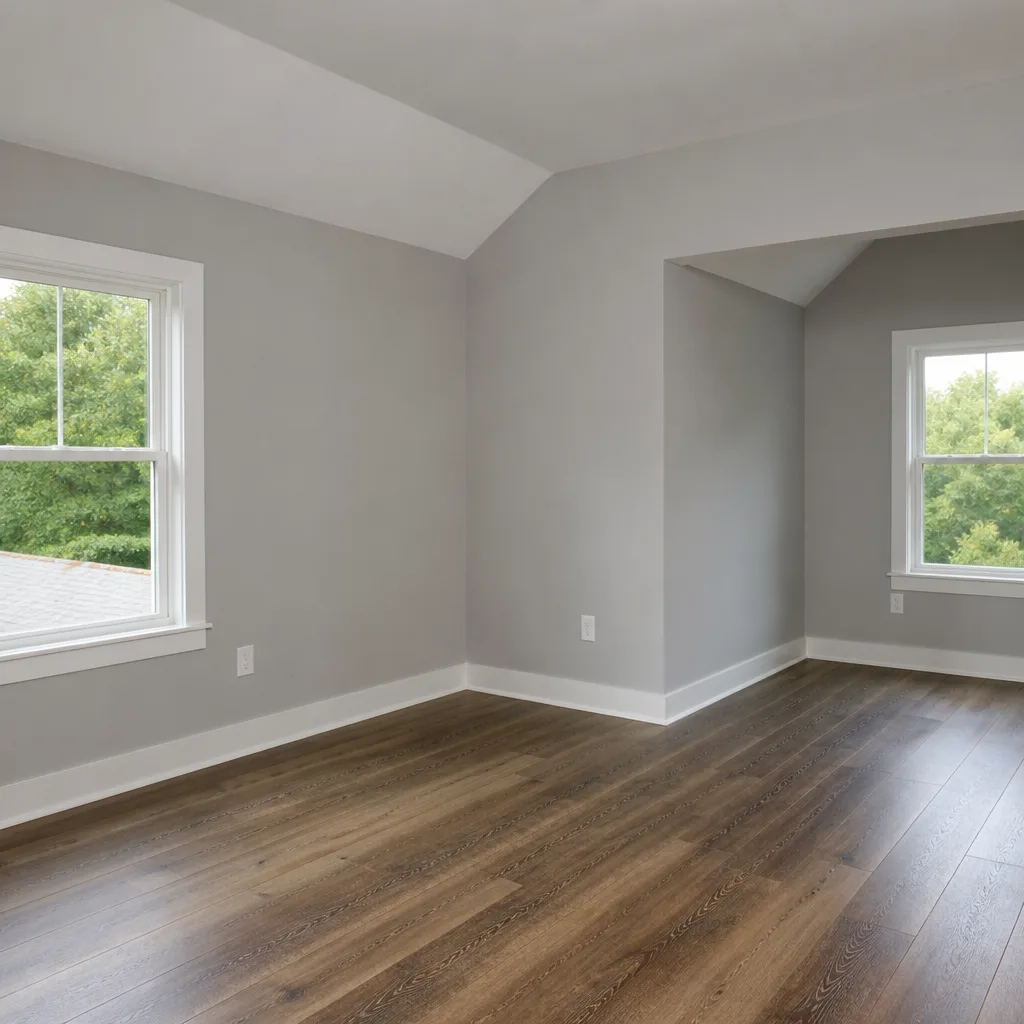
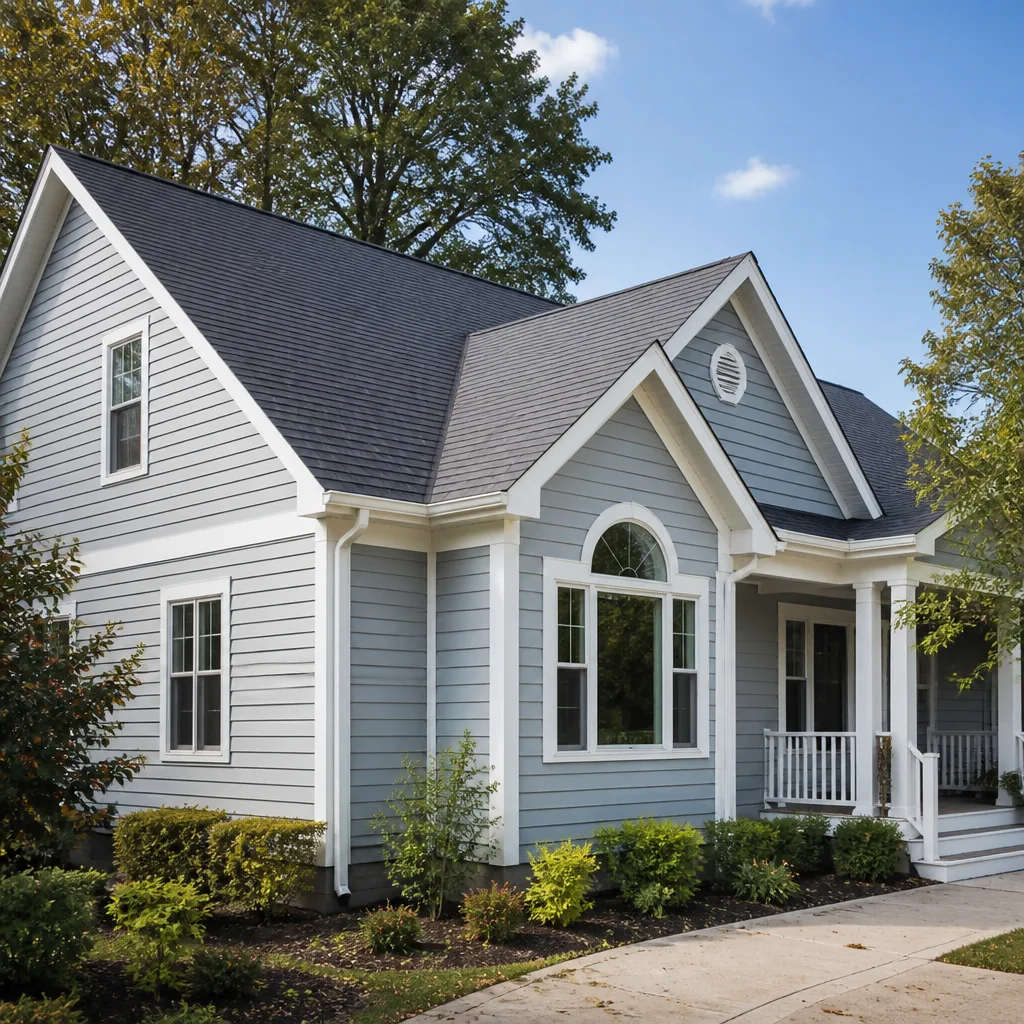
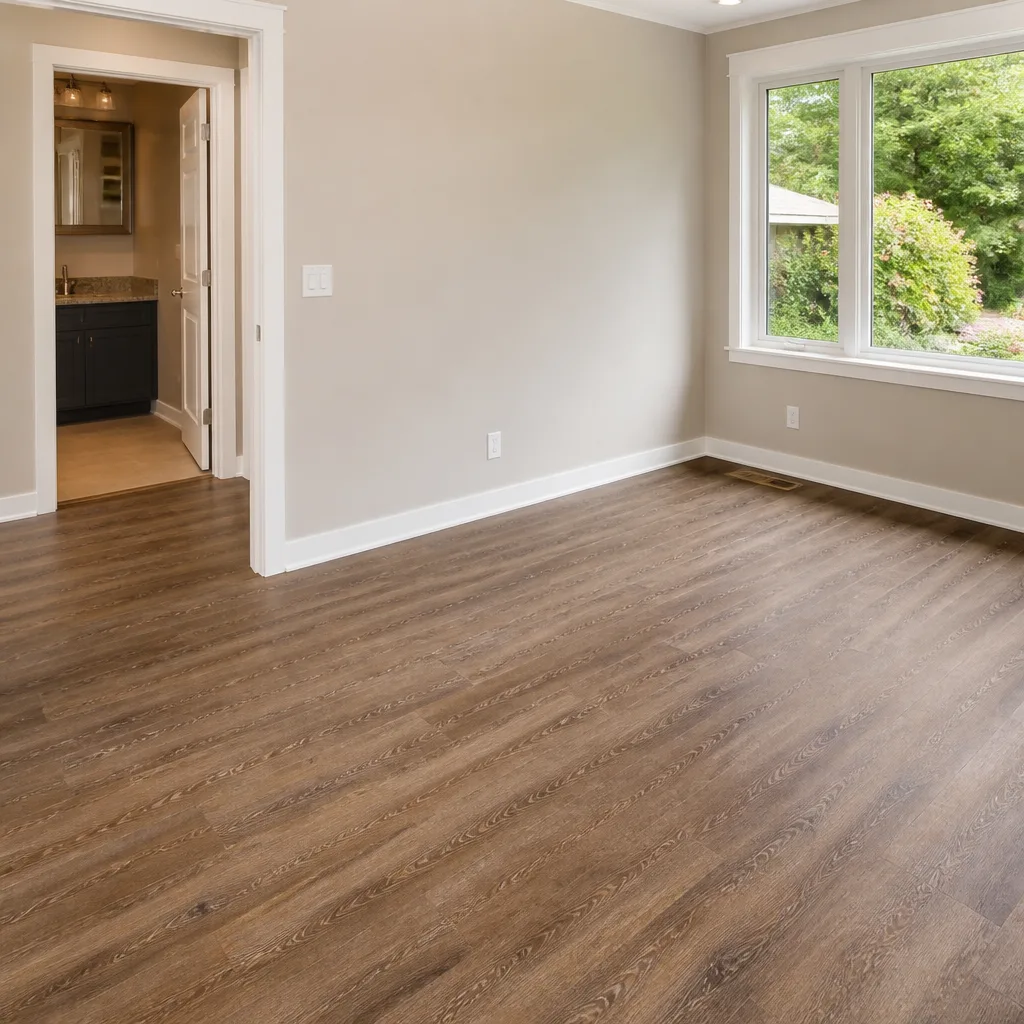
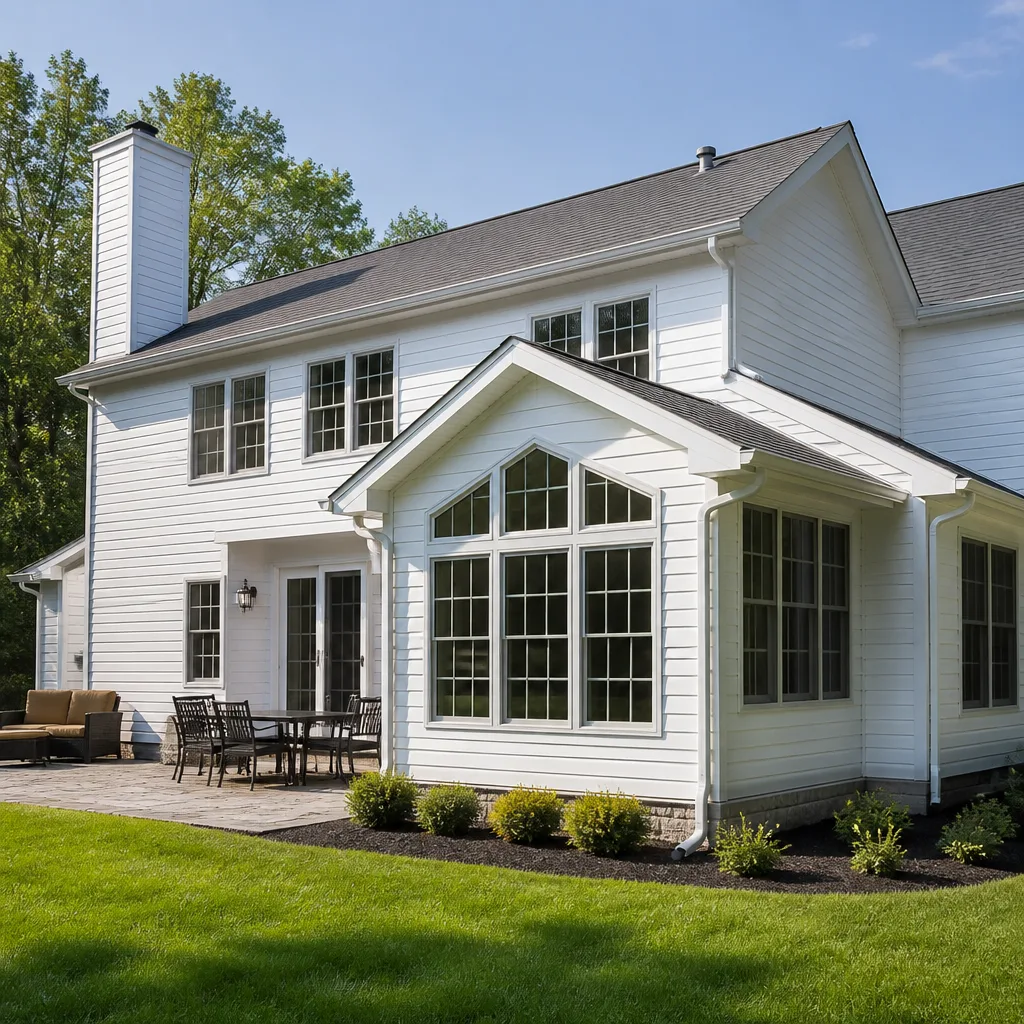
 Before
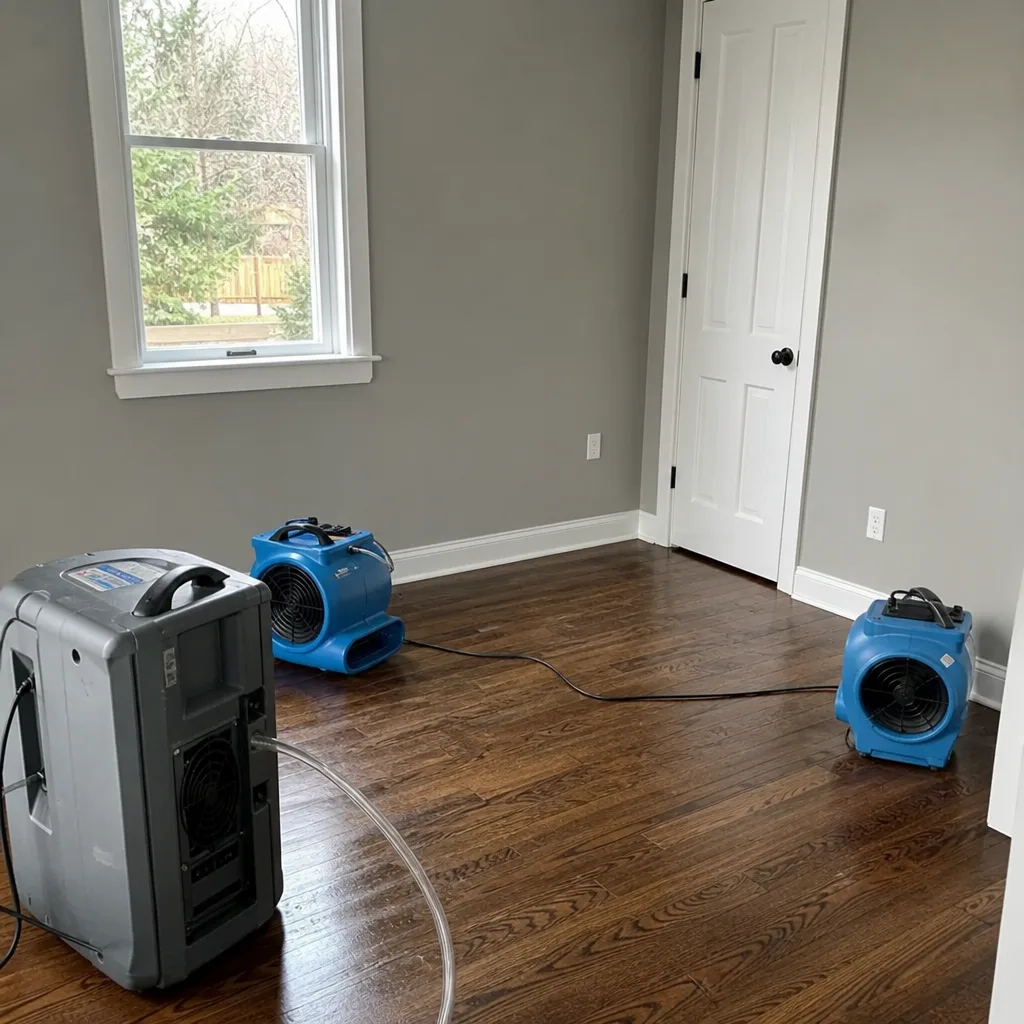 After
After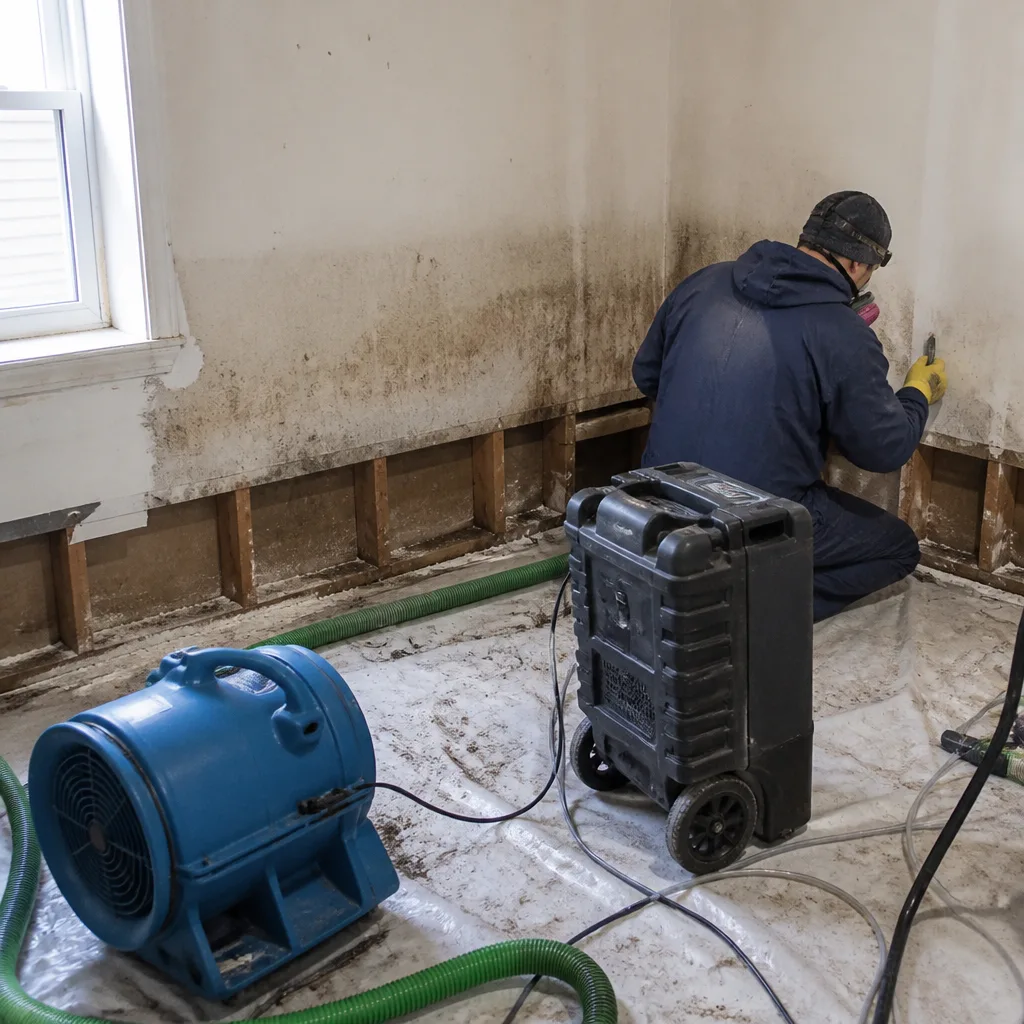 Before
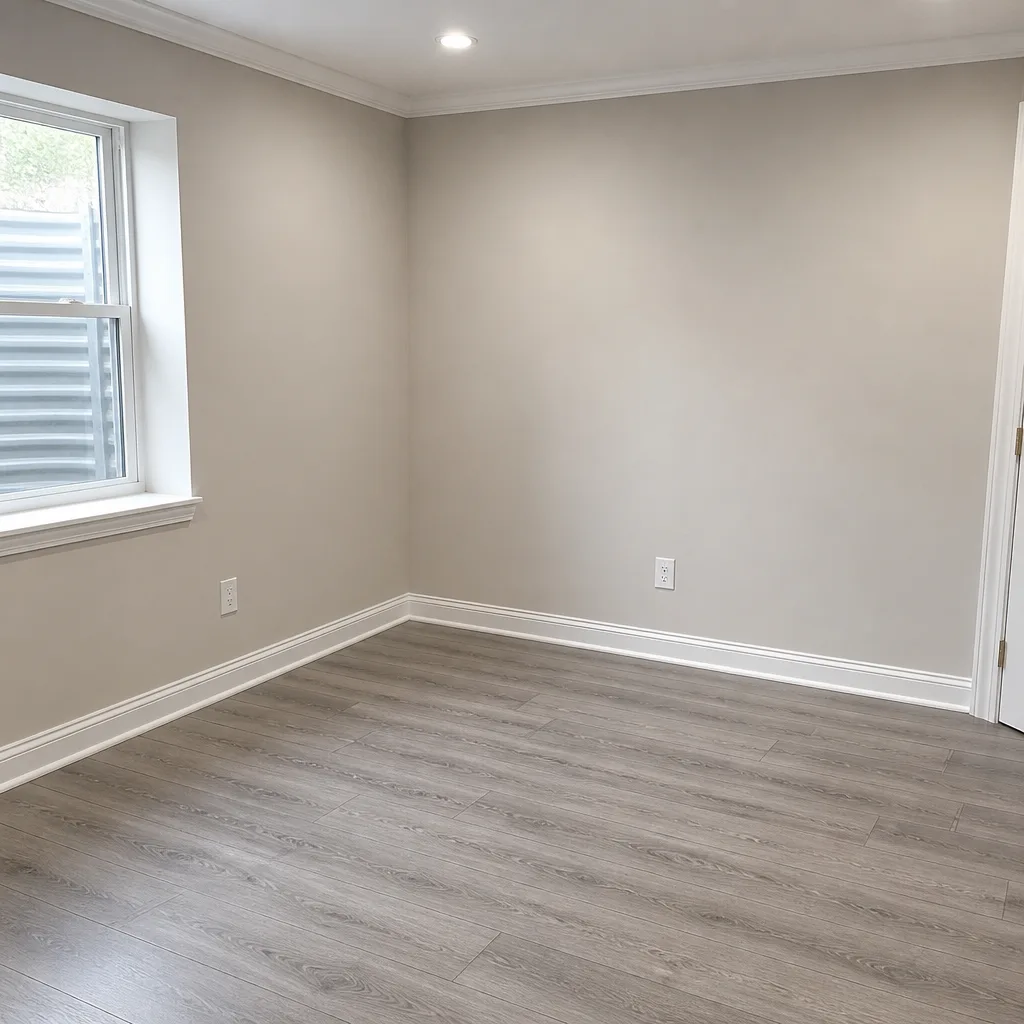 After
After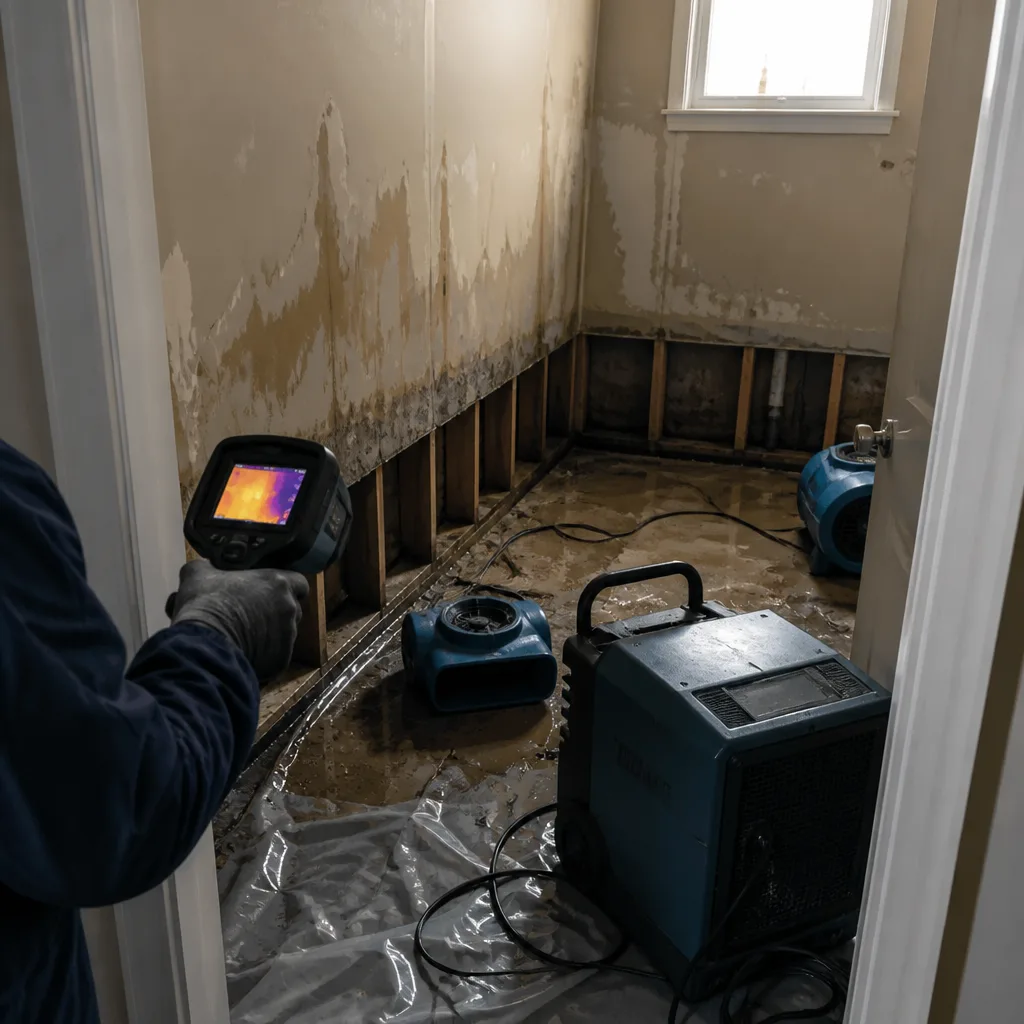 Before
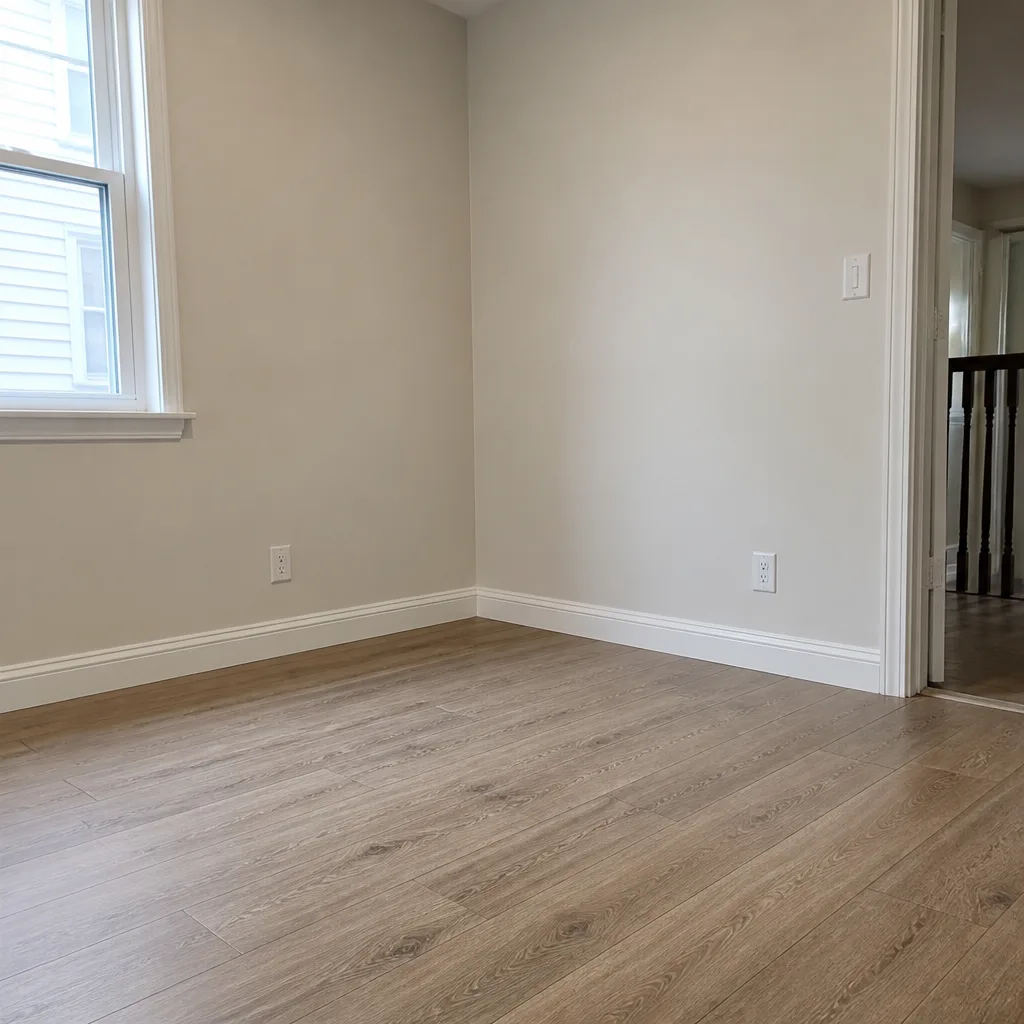 After
After24/7 Emergency Water Damage Restoration in Harrison
Water damage restoration in Harrison typically runs $1,200 to $4,800 for extraction and structural drying, and we answer the phone live at (856) 501-6142 around the clock. If the Passaic River just backed into your basement or a supply line let go inside a 1920s row home, the first hour decides how much drywall, framing, and flooring actually survives. Wade’s crew can be on the road to Harrison within 45 minutes, and the visual inspection is free. Harrison sits inside a FEMA AE flood zone, which means most of the water in your basement isn’t clean and never behaves like a spilled bathtub. We treat it accordingly from the first moisture reading to the last day of drying.
Understanding Water Damage Restoration Severity in Harrison Properties
Water damage gets classified into three categories, and Harrison sees more Category 3 than most towns in Hudson County. Category 1 is clean water from a supply line or tub overflow. Category 2 carries biological or chemical contaminants, the kind you get from a failed sump pump or a washing machine discharge. Category 3 is unsanitary water: Passaic River overflows, combined sewer backups, storm water pushed backward through floor drains. Category 3 means contaminated materials get cut out and bagged, not dried and painted. In Harrison’s pre-war attached brick and wood-frame stock, moisture mapping matters enormously because adjoining row home walls wick water sideways. A basement flood three doors down off Frank E. Rodgers Boulevard can raise the moisture content inside your common wall, even if your own floor looks dry. That’s why we take thermal imaging and hygrometer readings on both sides of a party wall, not just at the point of standing water.
Structural drying after a Category 3 event is not simply running fans. It requires controlling the dew point, calculating grains per pound of moisture in the air, and tracking daily moisture content in studs, joists, and subfloor until each material hits its dry standard. Harrison’s older homes, most built between 1900 and 1945, have uncoated concrete or rubble-stone foundations that absorb water like a sponge and release it slowly for weeks. Our Water Damage Restoration team documents all of those numbers daily, and you get the full log at the end of the job.
Why Harrison Property Owners Choose Wade’s Restoration
- 45-minute response commitment to Harrison. Wade’s crew stages from the metro New York office and heads straight to your block, not a queue of jobs in three other counties.
- A live person answers 24/7. No answering service, no voicemail tree, no “someone will call you back.” Wade Ferris answers his own phone, including at 2 a.m. when the river is rising.
- IICRC-certified crews. Wade’s people hold WRT and ASD certifications, so extraction, containment, and drying follow the same standards an adjuster respects.
- Free visual inspection. We won’t charge you just to show up and tell you what you already know. That’s a no-charge phone call.
- Direct insurance billing. We bill your carrier directly and deal with the adjuster ourselves. You don’t spend your week relaying messages between us and a claim department.
- One team from extraction to reconstruction. If the water means tearing out drywall and rebuilding, the same crew handles end to end. No handoff to a third party you’ve never met.
Our Water Damage Restoration Process
Inspection & Assessment
We walk every affected room, map moisture with thermal imaging and penetrating meters, and identify whether you’re dealing with Category 1, 2, or 3 water. In Harrison row homes, that includes checking the common wall adjacent to the wet room. You get a written scope before any work begins, so you know the number before the equipment rolls in.
Extraction & Stabilization
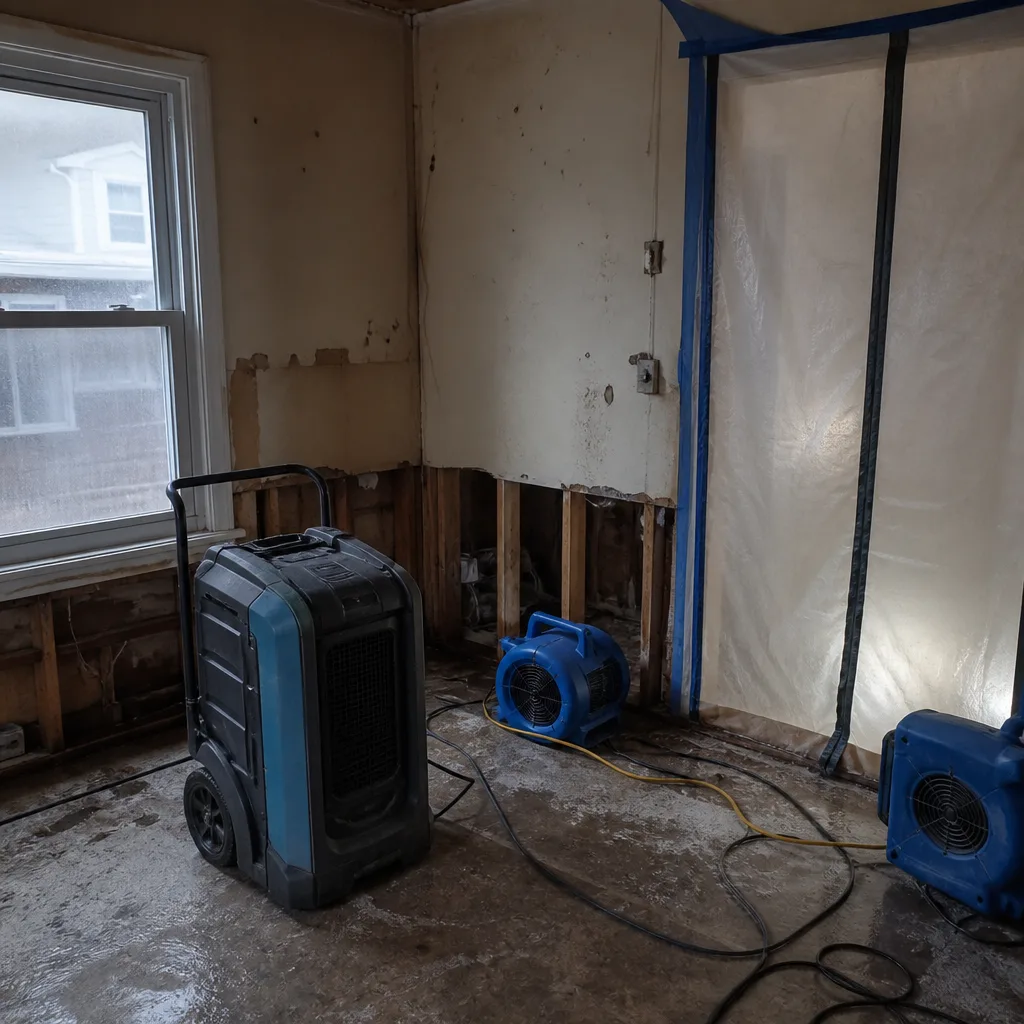
Standing water gets pulled immediately with truck-mounted extraction and submersible pumps. We stabilize the structure by containing the affected area, shutting off water at the source, and removing saturated materials that can’t be saved, especially after Passaic River backups.
Structural Drying & Dehumidification
Dri-Eaz dehumidifiers and XPOWER air movers get placed according to the square footage and class of water loss. We take daily moisture readings and adjust equipment placement until studs, joists, and subfloor hit their dry standards. Harrison’s older masonry and rubble foundations can take longer, and we account for that.
Cleaning & Sanitization
After Category 3 water, all affected surfaces get cleaned, sanitized, and treated with an antimicrobial where material allows. Hard surfaces get scrubbed with an EPA-registered disinfectant. Porous materials that absorbed contaminated water get removed, not sprayed and left in place.
Mold & Pre-Existing Damage Documentation
Because Harrison’s flood-prone blocks have seen repeated inundation since Irene and Sandy, we routinely find prior remediation that was cut short. Hidden mold behind framing gets photographed and documented carefully before removal, so your new claim scope has clear evidence of what already existed before this loss.
Repairs & Restoration
Once everything is dry and clean, we rebuild what was removed: drywall, insulation, baseboards, flooring, and storm-rated door or window work where wind-driven rain exposed weaknesses. The 90-Day Done Right Promise applies to every water job, in writing.
Need Emergency Water Damage Restoration in Harrison Now?
Crews minutes away, answering live 24 hours a day. The sooner we start, the less it costs.
Working With Your Insurance Company
Harrison flood claims get complicated fast, especially when a river event and a sewer backup happen inside the same structure. That dual-source loss is exactly what we handle on the regular. We document from the first hour: photos of standing water before anything moves, room-by-room damage shots, daily moisture readings, and a line-item scope of work written in the format your carrier’s adjuster expects. Wade talks to the adjuster directly, and you’re not stuck in the middle translating construction estimates over the phone. If pre-existing mold or prior incomplete remediation is exposed during drywall removal, we document it separately with photos and moisture logs, so your new claim has clean boundaries around what this event caused versus what was already there. We bill your insurer directly where coverage applies, and the 90-Day Done Right Promise remains in writing regardless of who writes the check.
What We Provide Your Insurer
- Thorough documentation of the loss
- Photos of all damage, room by room
- Moisture readings and drying logs
- A detailed, line-item scope of work
- Direct coordination with your carrier
Built for Harrison’s Loss Calendar
Harrison doesn’t have a single flood season. It has flood triggers stacked all year. January and February deep freezes burst copper supply lines in uninsulated basements and crawl spaces all over the riverfront blocks and the side streets off Harrison Avenue. March and April bring snowmelt and spring rain, and the Passaic River basin saturates to the point that any additional rainfall moves laterally into old rubble-stone foundations. Summer thunderstorms in July and August can drop two inches in an hour, overwhelming the combined storm and sanitary sewers that date to the town’s industrial era, and producing sewage backups in basements in minutes. Nor’easters in October and November push riverine backflow through storm drains and floor drains at once, hitting Category 3 water on multiple blocks simultaneously. A rowhouse with a 1920s cast-iron waste line and a fieldstone foundation doesn’t get a quiet year. The same structures on the same blocks off Bergen Street and Hamilton Street have been wet before, repeatedly, and that history matters when we scope any new loss.
Water Damage Restoration Across Harrison’s Neighborhoods
Harrison’s compact grid means response routes are short, but the building stock changes block by block and so does the typical loss pattern. Over near the Passaic riverfront and the blocks running down toward the PATH station, we see more Category 3 riverine backups and basement inundation, and more row homes with prior patchwork remediation hiding behind fresh drywall. Up the hill toward Hamilton Street and the neighborhoods closer to the Kearny line, the structures shift to two and three-family wood-frames with front entry stairways that channel rain water straight into below-grade entries. The blocks around Harrison High School and east of Frank E. Rodgers Boulevard see more sump pump failures and interior supply line bursts than river flooding. In the older attached brick rows off Bergen Street, water travels laterally through common walls, so a third-floor bathroom overflow in one home can show up as a first-floor ceiling stain two addresses over. Knowing those patterns means we arrive with the right assumptions and the right equipment, instead of starting every job from zero.
Specialized Water Damage Restoration Services We Offer in Harrison
Emergency Water Extraction
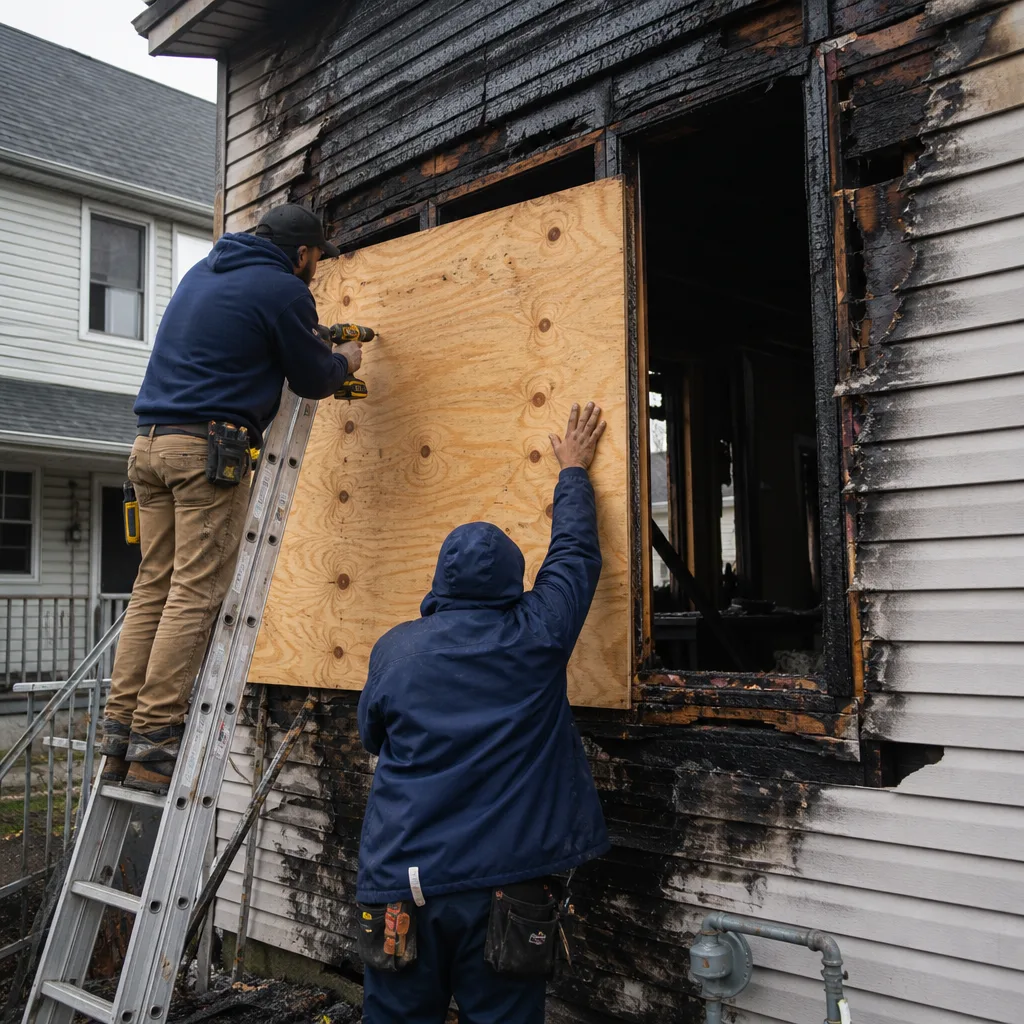
Standing water in a Harrison basement has often been sitting for hours before it’s noticed, especially in the two-family homes where an upstairs tenant’s leak goes unreported. We pull it fast with truck-mounted extractors, because every hour of saturation means more drywall and flooring marked for removal.
Structural Drying & Dehumidification
Drying a 1920s brick row home isn’t the same as drying a newer detached house. Harrison’s masonry walls release moisture slowly, and the shared party walls between attached homes mean you can’t just dry one side and call it done. We run Dri-Eaz dehumidifiers and XPOWER air movers on a calculated layout, and we adjust daily based on moisture content readings until your studs and joists actually meet the dry standard.
Flood Cleanup
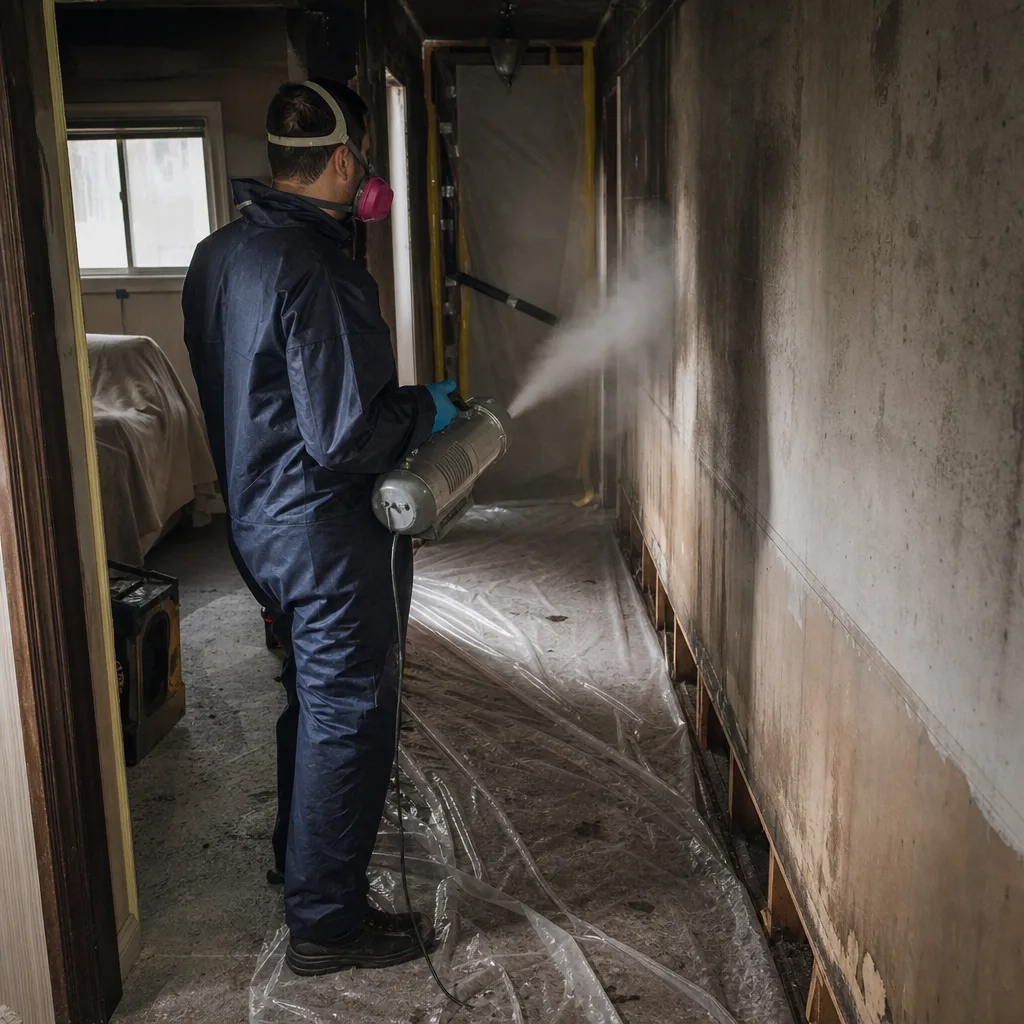
When the Passaic overflows into Harrison’s riverfront blocks, the water is contaminated. Period. We treat every flood cleanup in the AE zone as Category 3 from the start: containment, bagging, disinfection, and removal of porous materials that absorbed river water. There’s no drying a flood-soaked carpet and calling it clean.
Burst Pipe Restoration
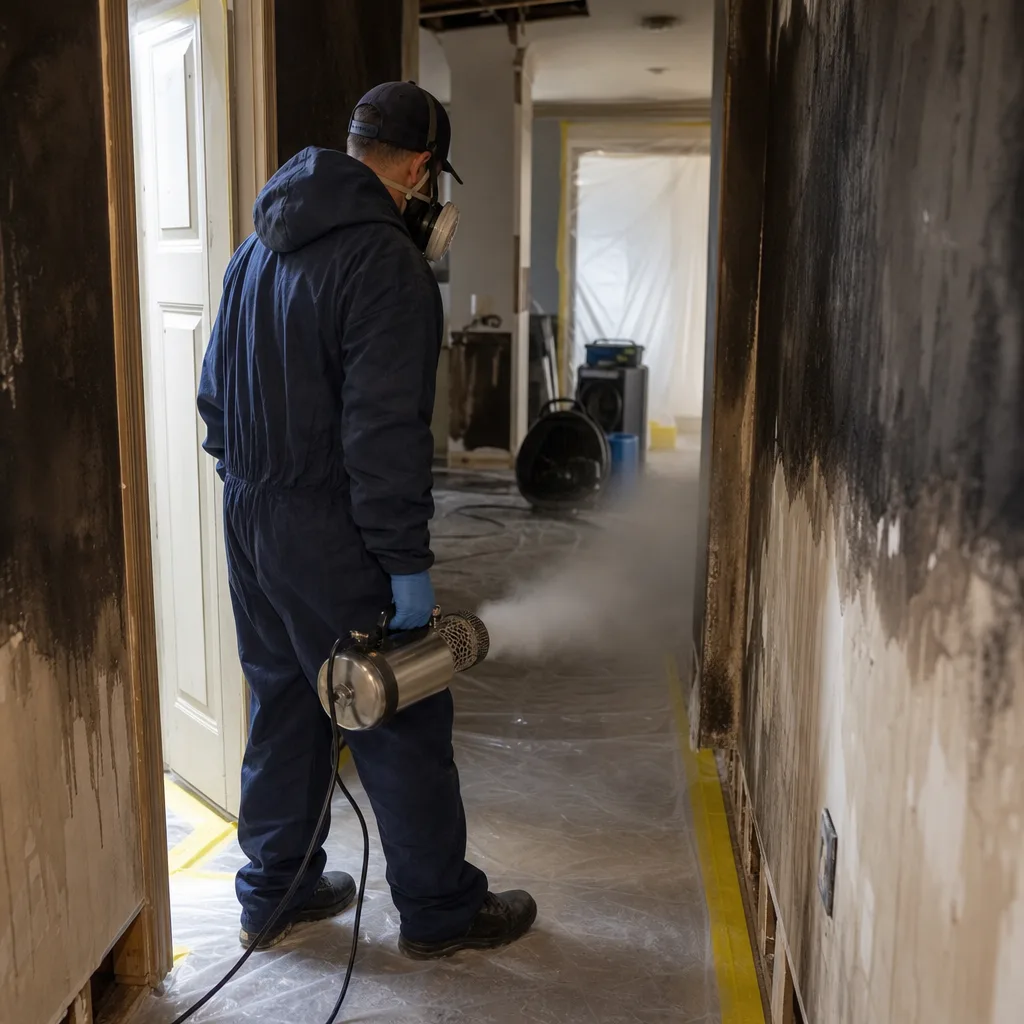
Cold snaps in January and February split uninsulated copper and old galvanized supply lines all over Harrison’s pre-war housing stock. The immediate job is stopping the water and extracting it, but the restoration work extends to repairing the pipe, drying the cavity, and rebuilding the wall or ceiling that got opened up to expose it.
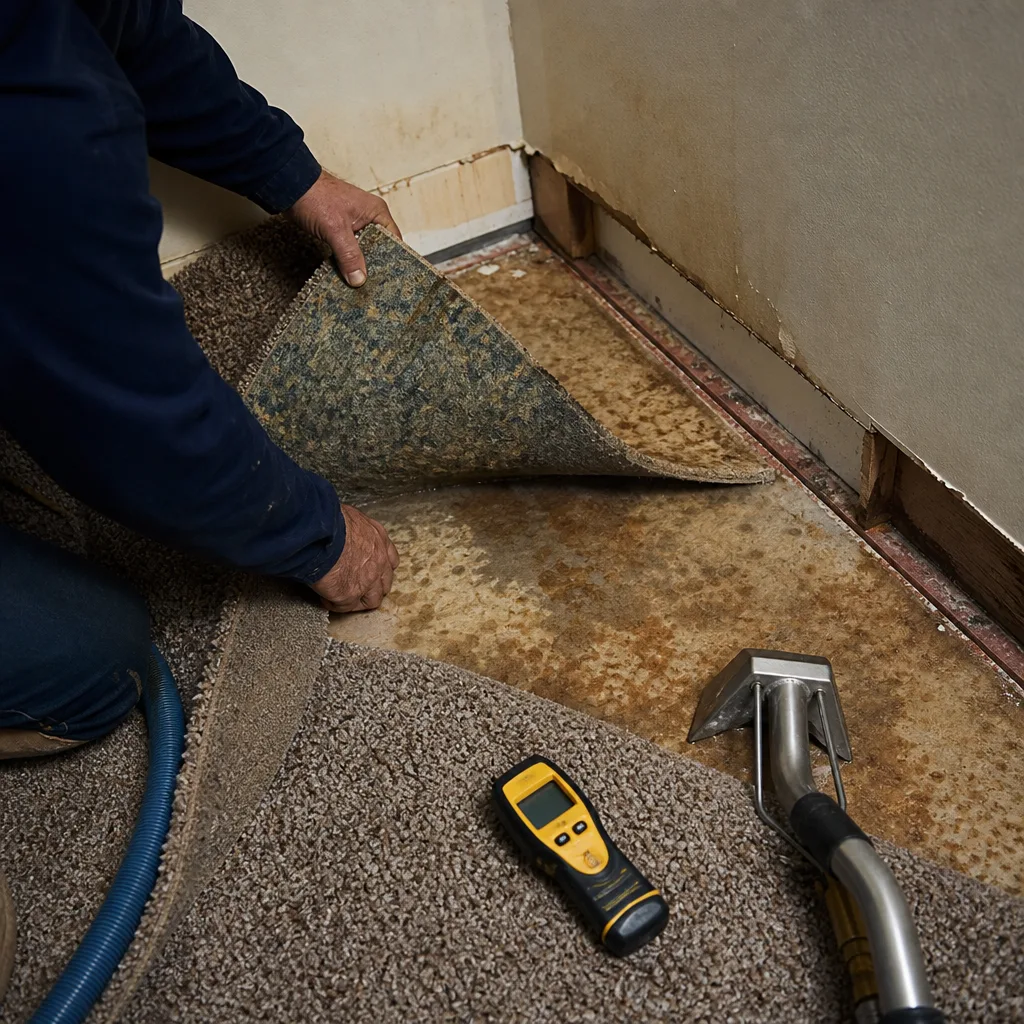
Basement Water Removal
Harrison basements are often partially below the water table by design, with sump pumps working against the Passaic River basin’s natural saturation. When a sump fails or a floor drain backs up with combined sewage, we extract, sanitize, and dry, and we check the foundation walls for seepage that will keep coming back if left alone.
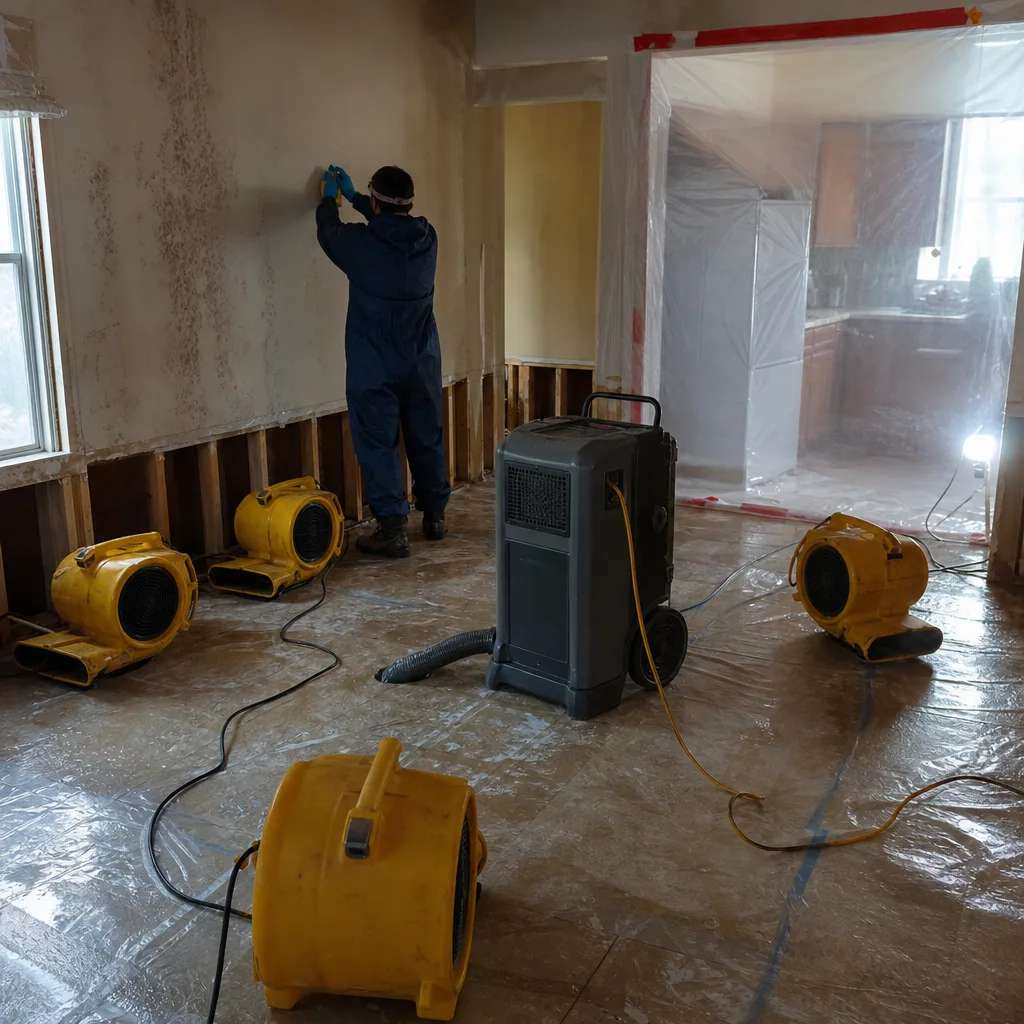
Ceiling & Roof Leak Water Damage
Wind-driven rain during nor’easters finds its way under aged roofing on Harrison’s older wood-frame homes, and the first sign is usually a sagging ceiling on the top floor. We cut out the wet drywall, contain the area, dry the ceiling cavity, and document the leak location so you can get the roof or flashing repaired before the next storm repeats the loss.
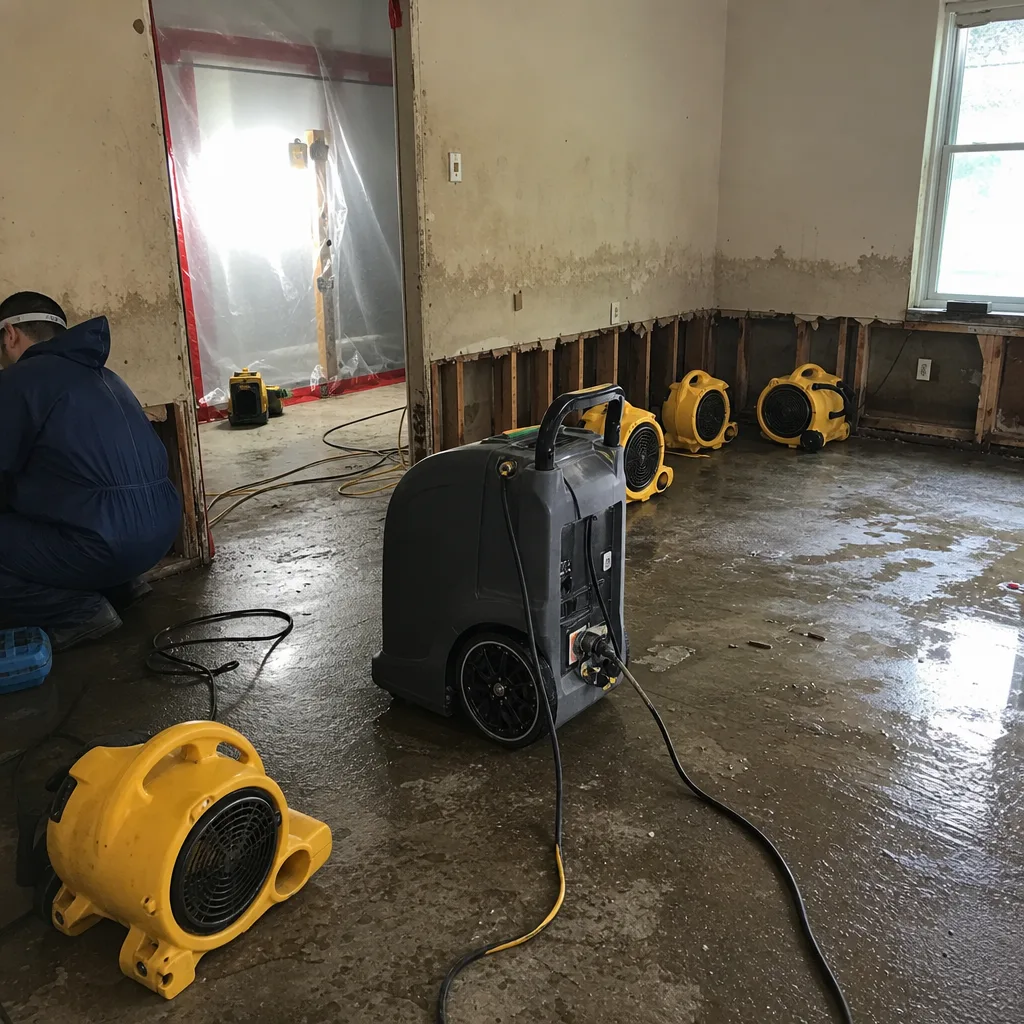
What happens when you call
- 1
A real person answersNo phone trees - you reach a local pro.
- 2
You get an upfront price rangeHonest numbers before anyone is dispatched.
- 3
A background-checked tech heads outLicensed & insured, dispatched right away.
- 4
You approve before work beginsNothing starts until you say go.
Water Damage Restoration Costs in Harrison, NJ
A straightforward supply line burst and extraction in a Harrison basement typically runs $1,200 to $2,800. A Category 3 sewer or Passaic River backup that requires containment, full removal of saturated drywall and flooring, sanitization, and structural drying lands between $3,500 and $8,500 depending on square footage and how far the water traveled through the structure. Full reconstruction on top of the water work in a pre-war row home, including new drywall, trim, paint, and possibly storm-rated door or window repair, pushes into the $9,000 to $20,000 range. The variables that move the number are the water category, how many rooms are affected, whether common walls between attached homes are wet, and how much contaminated material gets removed versus preserved. Insurance coverage depends on your policy: standard homeowner policies cover sudden and accidental pipe bursts but generally exclude rising river water unless you carry flood insurance through NFIP. We give the written scope before any work starts, and the free visual inspection is the fastest way to get a firm number on your specific home.
We Also Serve Cities Near Harrison
Wade’s Restoration handles water damage work across the surrounding Hudson County area. If you’re in Kearny, North Arlington, Jersey City, or Lyndhurst, the same 45-minute response commitment and 24/7 live answer apply. Call (856) 501-6142 and we’ll head your way.
Serving Harrison, NJ - Our Local Coverage Area
We’re based in the Harrison area and know this community well. Use the map below to see our service coverage - if you’re nearby, we can almost certainly help.
Harrison Water Damage Restoration Questions, Answered
How does Harrison’s FEMA AE flood zone affect my water damage restoration scope?
It changes the water classification on site. Because Harrison’s riverfront and low-lying blocks sit in a FEMA AE flood zone, any water from a Passaic River overflow or combined sewer backup is treated as Category 3: contaminated, requiring removal of saturated porous materials and full sanitization. A restoration scope in the AE zone almost always includes more material removal and more aggressive drying than an inland pipe burst, because river water and sewer backflow penetrate further and carry biological contamination. We also document every step carefully for FEMA and NFIP-related claims where applicable.
What prior-remediation issues are common in Harrison’s older row homes?
We regularly pull drywall in Harrison’s pre-war row homes and find hidden mold behind framing from a previous owner who dried in place between claims. After Irene, Sandy, and the routine Passaic overflows, a lot of basements never actually got dried to the studs. Homeowners got a fan, or a contractor cut corners, and new drywall went over wet framing. That mold wakes up the next time the basement gets wet. When we open your walls, we document what’s there with photos and moisture readings, and we remediate it as part of the scope, clearly separated from the new loss for your adjuster.
Do I need to worry about wind-rated doors and windows after a storm in Harrison?
After a nor’easter, a lot of Harrison homeowners focus on the basement, and for good reason. But wind-driven rain that worked through a failed exterior door or old window frames is what soaked the top floor or the stairwell in the first place. If the storm damaged a door track or shifted the frame, the next wind event will drive water through the same gap. We assess door and window integrity as part of the water damage scope, and we can reinforce or replace storm-rated components so you’re not filing another claim in six months.
How quickly should I start water extraction after Passaic River flooding hits my Harrison basement?
Immediately, and we mean that literally. After river water enters, mold colonization can begin in 24 to 48 hours if materials stay saturated. In Harrison’s humid river basin climate, that timeline compresses. Every hour the water sits means more drywall, insulation, and flooring becomes unsalvageable, and the structural framing starts holding moisture that takes days longer to dry. Call (856) 501-6142 as soon as you see water. Wade answers live, and the crew can be extracting inside the hour.
Will my Harrison insurance claim cover removal of pre-existing mold found during restoration?
That depends on your carrier and the specific policy language, and we’re direct with you about what we see. Many policies exclude mold if it’s classified as a pre-existing condition or the result of a prior unrepaired loss. That’s exactly why we document everything we find with dated photos and moisture readings before we remediate, and it’s why Wade talks to the adjuster directly. In some cases, the mold is a direct result of this new event and the claim covers it. Either way, you’ll know what’s in the scope and what’s not before anyone swings a hammer.
How long does structural drying take in a Harrison row home?
Three to five days is typical for an isolated pipe burst. A Category 3 Passaic River or sewer backup in one of Harrison’s older masonry row homes runs five to nine days, because the stone and concrete foundation releases moisture slowly and the common walls between attached homes retain water that a detached-house job would never have. We take moisture readings every single day and give you the full log at the end, so you can see the numbers drop instead of taking anyone’s word for it.
Can we stay in our Harrison home during water damage restoration?
For a clean Category 1 pipe burst isolated to one room, usually yes, with containment around the work area. For Category 3 flood or sewer water, especially after a Passaic River event, the affected areas get sealed off with containment barriers and negative air pressure, and you may need to avoid those rooms until sanitization is complete. Every home is different, and we’ll tell you plainly on the first visit what’s safe and what isn’t, instead of letting you find out the hard way.
What should I do in the first 30 minutes after water damage in Harrison?
Shut off the water source if you can reach it safely. Shut off electricity to the affected area at the breaker if water is near outlets or appliances. Move small items up and out of standing water if you can do so without walking through contaminated water. Then call (856) 501-6142. Don’t use a shop vac on Category 3 water, don’t rip out drywall without documenting it first for your insurer, and don’t wait until morning. In Harrison, where the water table sits high and the river doesn’t give you a grace period, the first 30 minutes set the cost of the entire job.
Call Wade’s Restoration at (856) 501-6142 for a free visual inspection and a straight answer on what your Harrison water damage actually needs. If the Passaic is rising or a pipe just let go, don’t wait for a call back that may never come. Wade answers his own phone, and he’ll be on the road to your block.
Written by Wade Ferris, Owner at Wade’s Restoration, serving Harrison, NJ.