
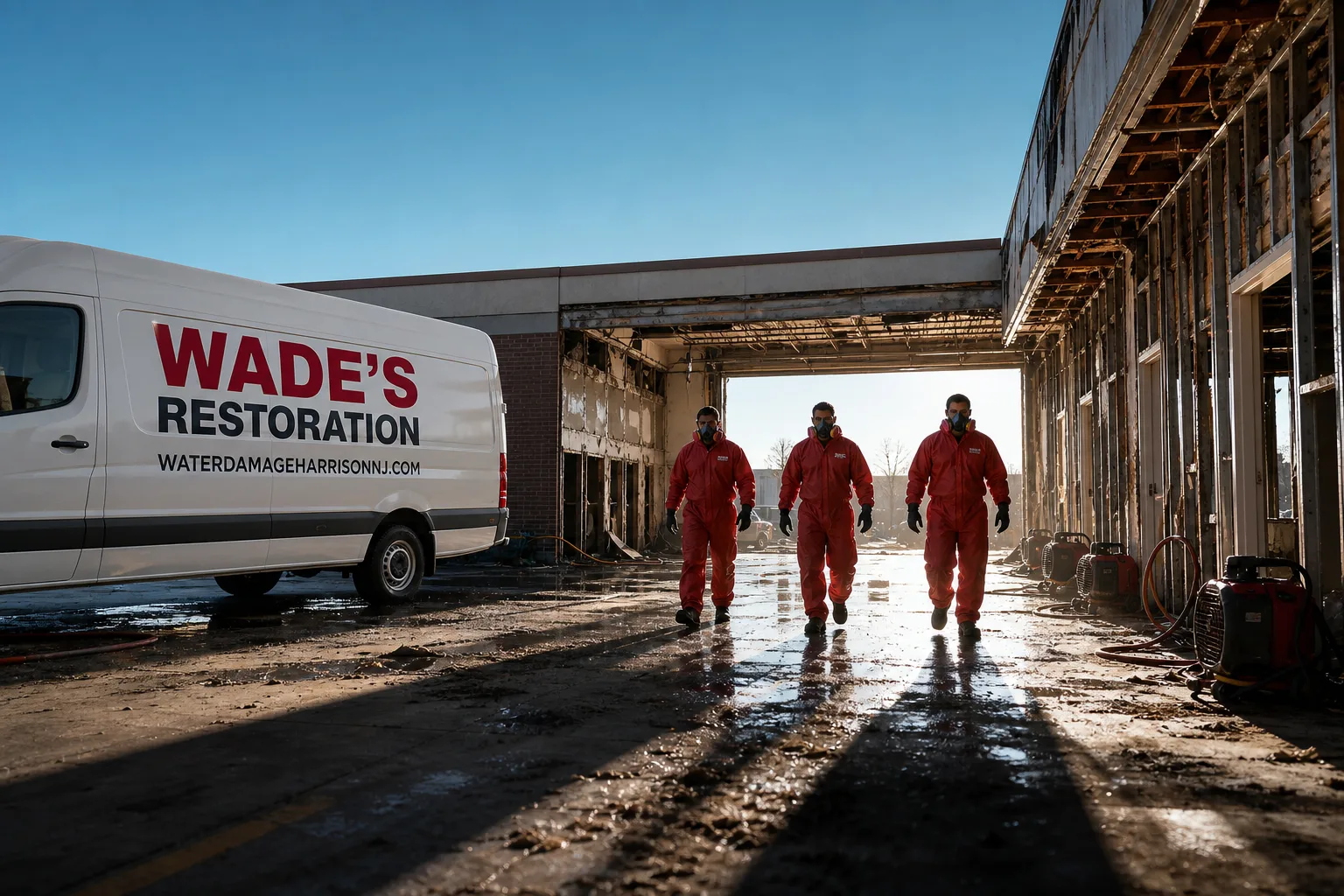
Free visual inspection and a written scope of work before any mitigation begins - photos, moisture readings, and drying logs go in your claim file
The scope we write is the scope we bill. Anything new gets shown to you, in writing, before we touch it.
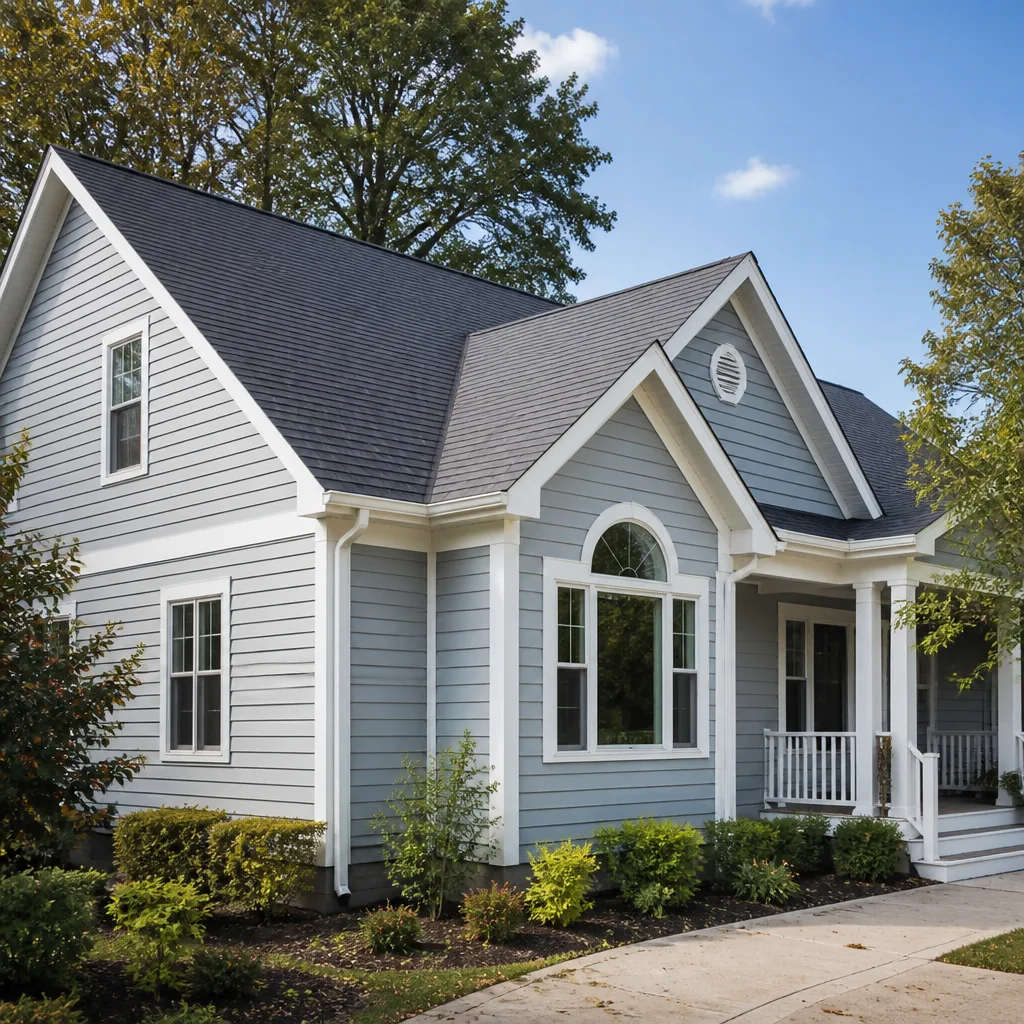
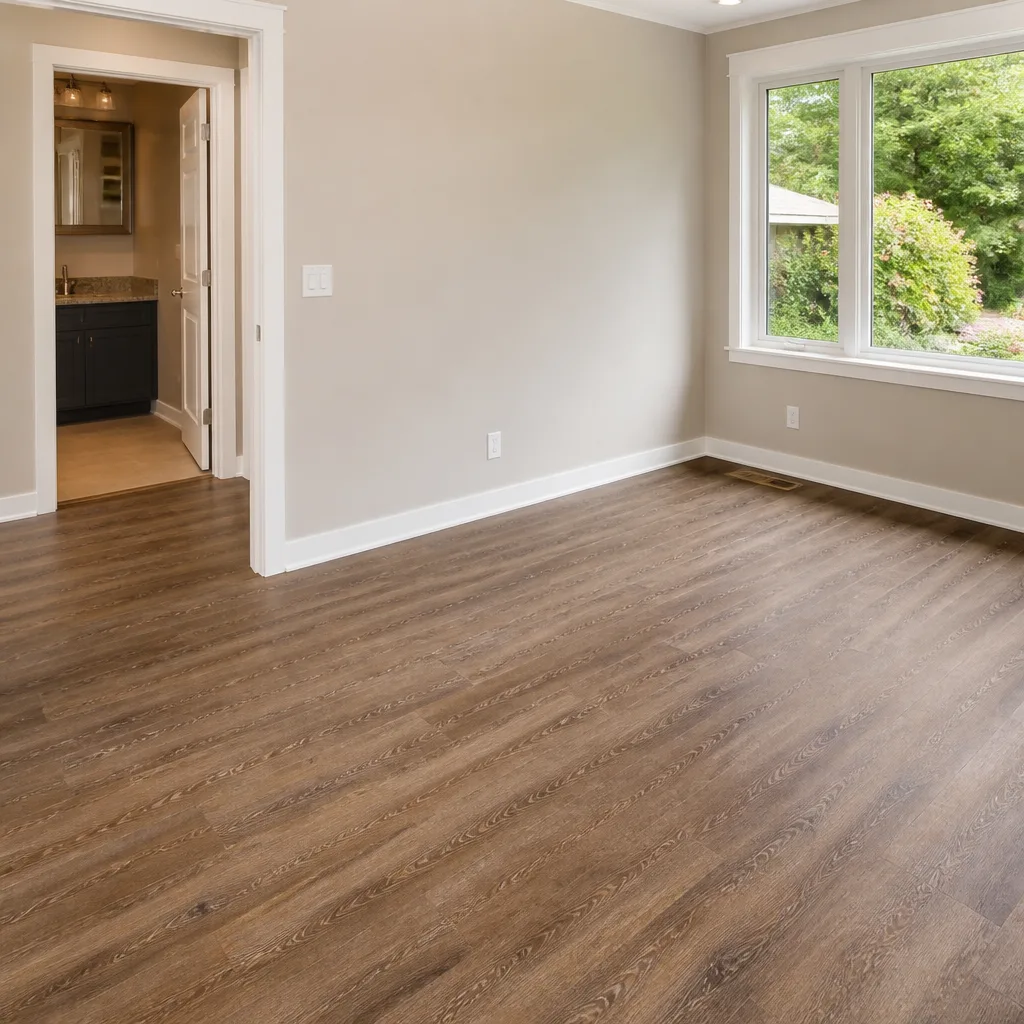
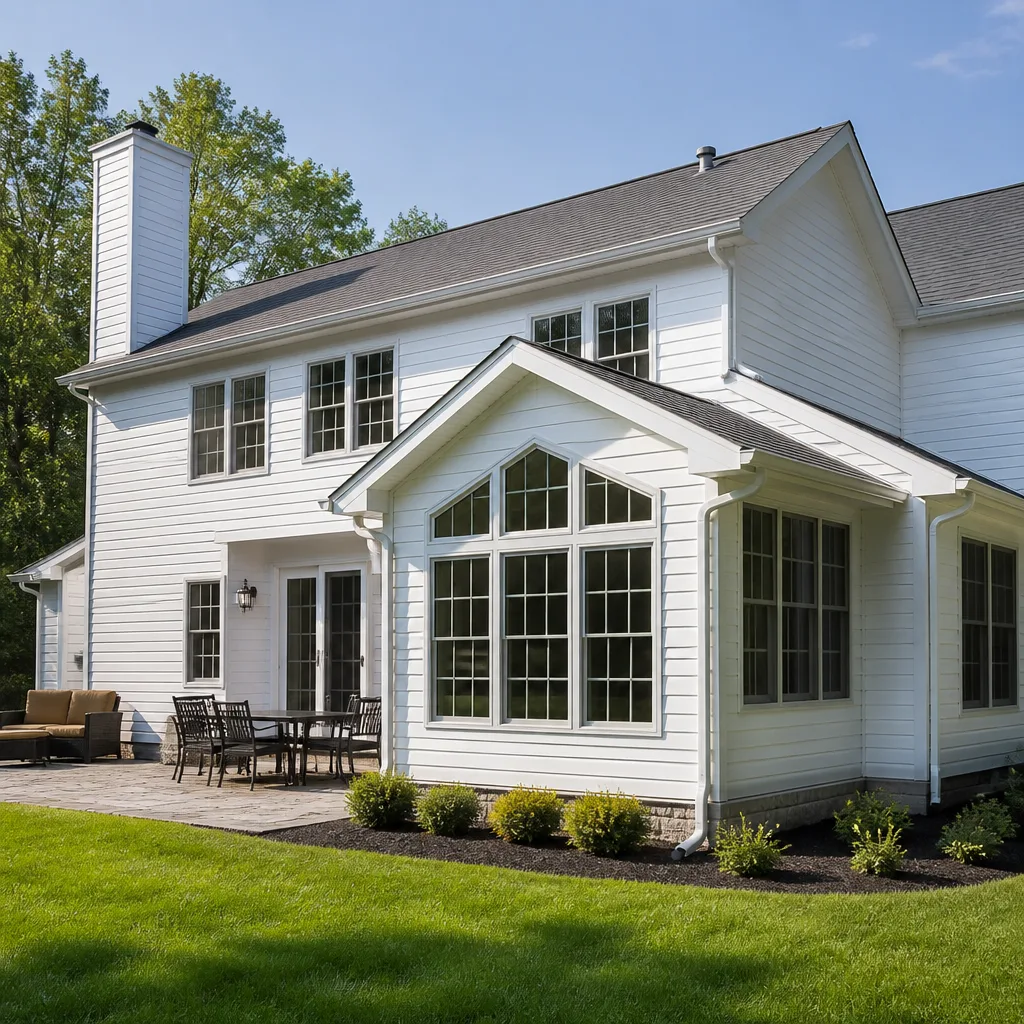
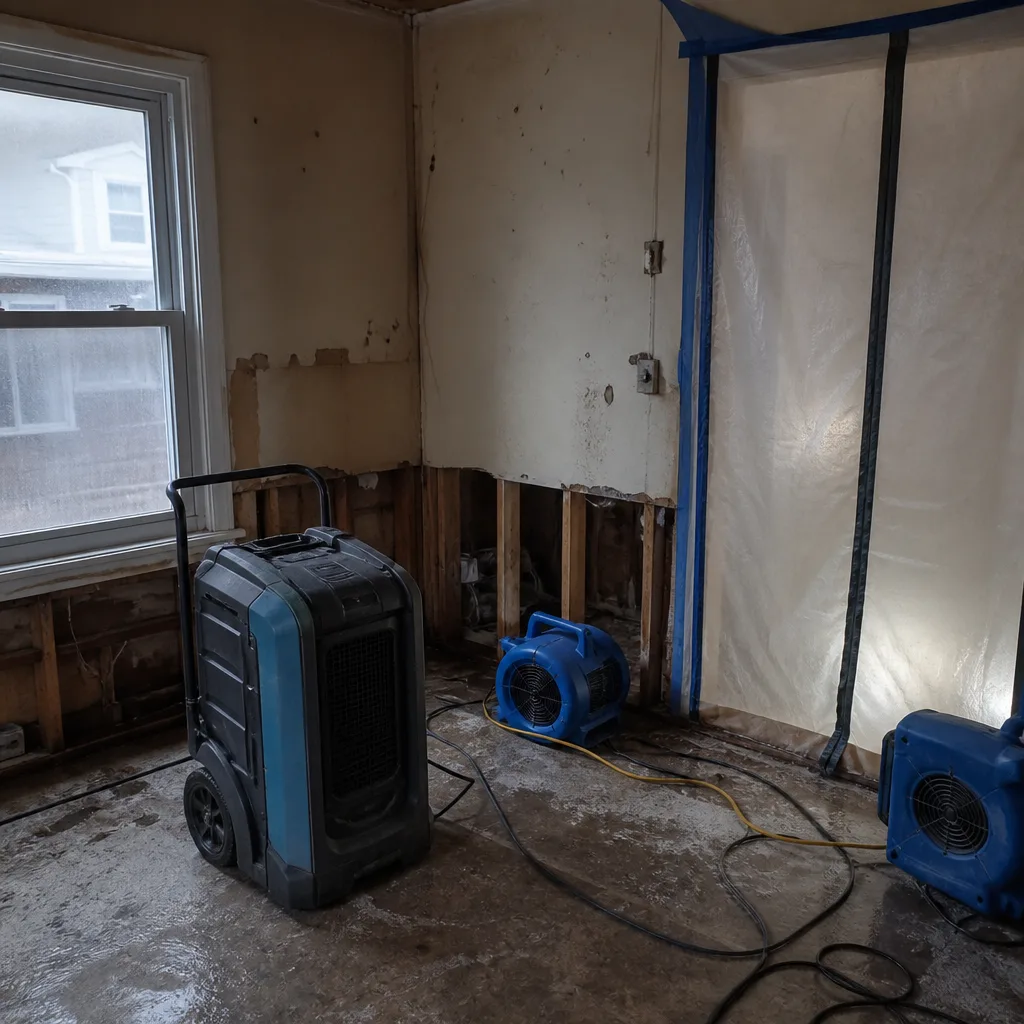 Before
 After
After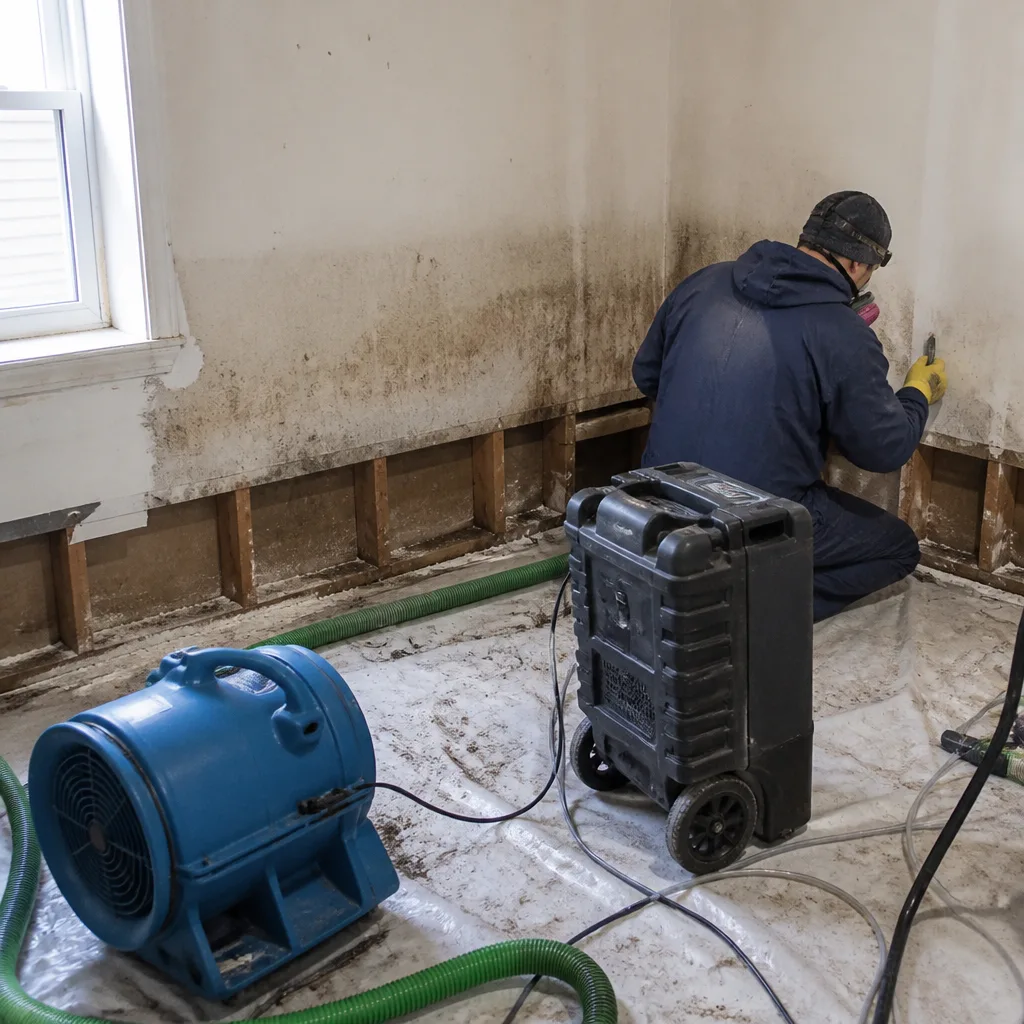 Before
 After
After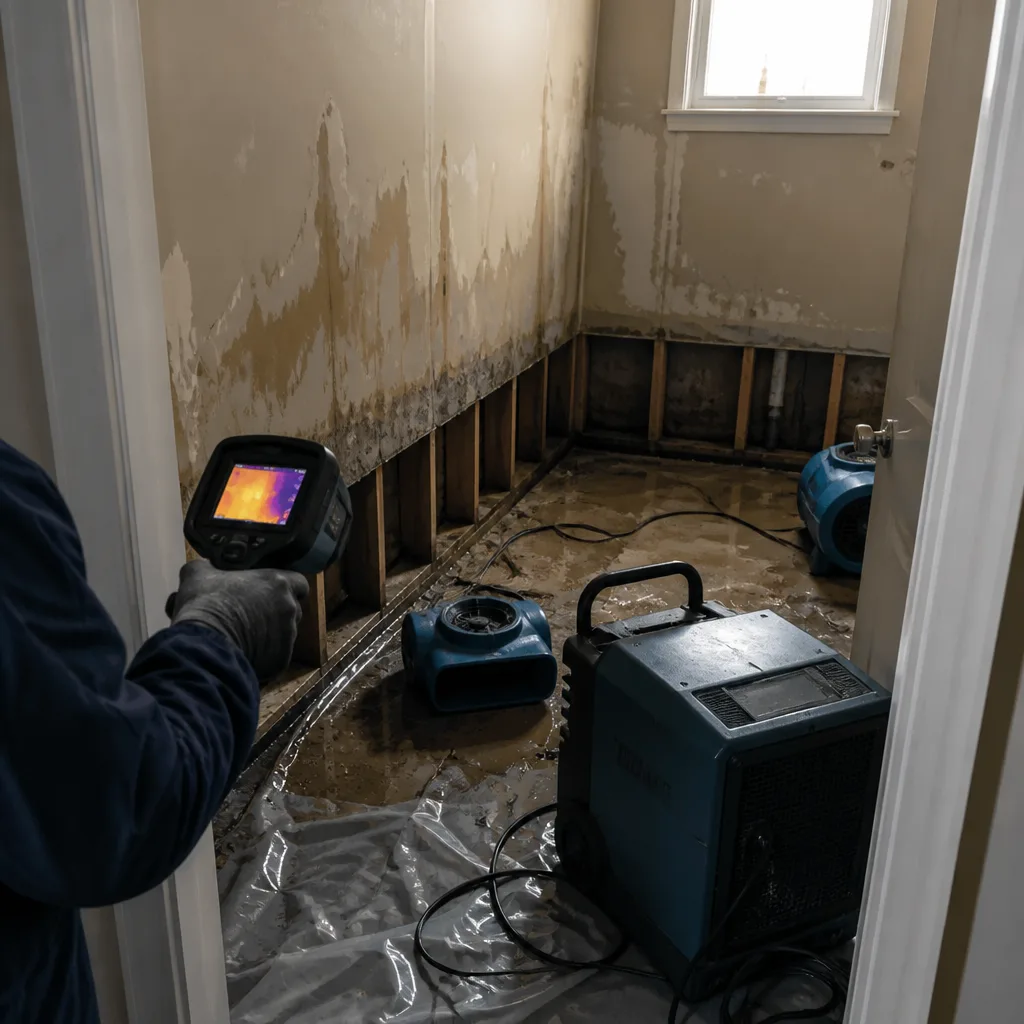 Before
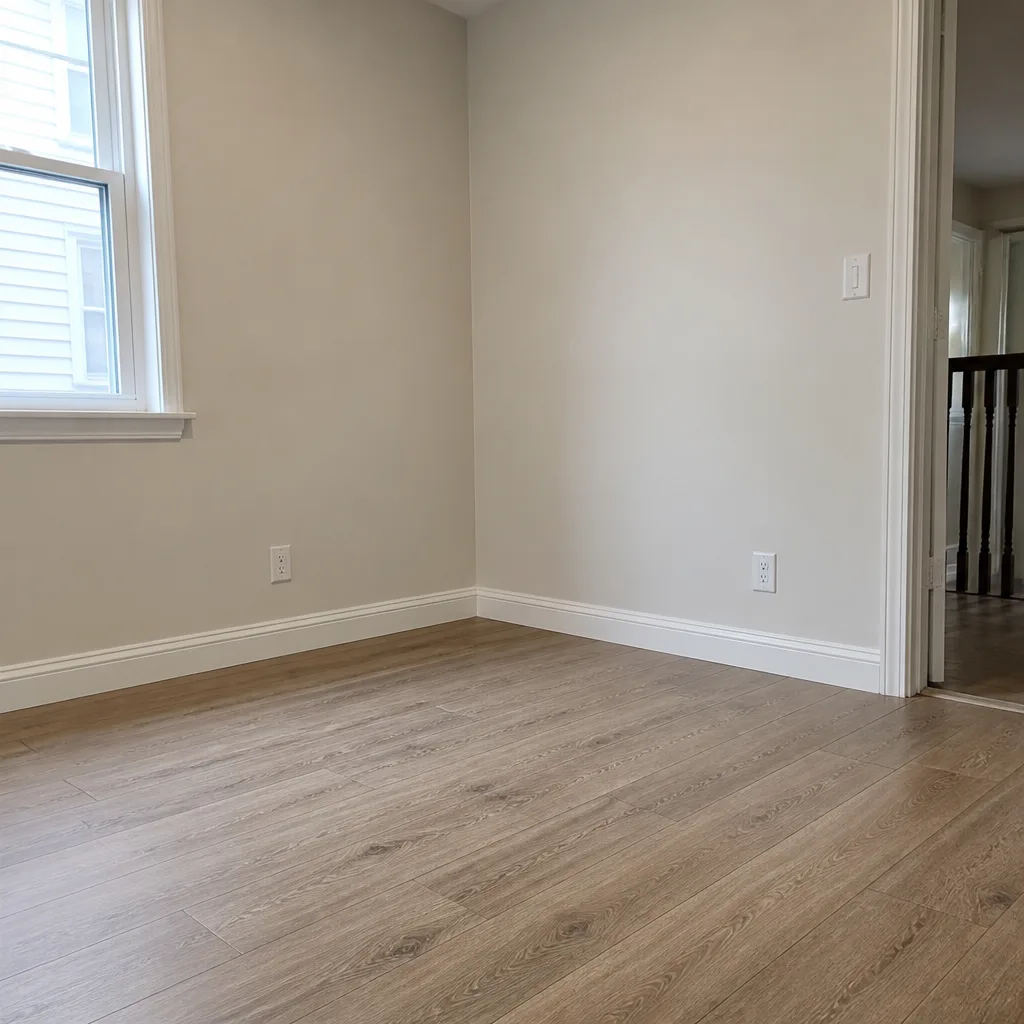 After
After24/7 Emergency Commercial Restoration in Harrison
Commercial storm and flood damage in Harrison doesn’t wait for business hours, and neither do we. A Passaic River overflow or a nor’easter ripping through a storefront at 2 a.m. needs someone moving on it right then, not a call center promising someone will get back to you Monday. Call (856) 501-6142 any hour and you’ll get Wade himself or a live member of his crew, and we can have extraction equipment running inside the hour. The first 60 minutes after water gets into a commercial space decides whether you’re drying drywall or replacing it, whether inventory survives, and whether your doors stay closed for two days or two weeks. Harrison sits in a FEMA AE flood zone directly on the Passaic, which means we’re not talking about a one-off broken pipe here. We’re talking about recurrent riverine flooding that hits the same blocks over and over, and every hour you wait gives contaminated water more time to wick up wall cavities and into stock, wiring, and floor assemblies. Free visual inspection, no charge to show up in-county. We bring moisture meters and thermal imaging, not a sales pitch.
Understanding Commercial Restoration Severity in Harrison Properties
Restoration work in Harrison breaks down by water category, and too many property owners never hear this distinction until after a scope of work is already written. Category 1 is clean water from a supply line or a burst sprinkler head. Category 2 carries significant contamination, think washing machine discharge or sump overflow. Category 3 is grossly contaminated: Passaic River floodwater, sewage backflow from the town’s combined sanitary/storm system, anything that has picked up street runoff. Harrison gets more Category 3 calls than almost any municipality in the county, because when the Passaic rises, it pushes back through floor drains and basement sumps in the same structure that’s already taking water from a failed storm sewer. Those pre-war brick row homes and two-family wood frames along the riverfront, most built between 1900 and 1945, have uncoated poured-concrete or rubble-stone foundations. No modern vapor barrier. Water pushes through foundation walls and floors, and what starts as a “wet basement” becomes a full commercial loss when you realize the floor assembly is saturated and mold has already started colonizing the back side of the drywall. Moisture mapping matters here because the visible wet line on a wall rarely shows the full travel of water through old plaster, stacked brick, and dead air spaces.
Why Harrison Property Owners Choose Wade’s Restoration
- 45-minute response commitment. Wade heads out himself for commercial calls in Harrison. Not a crew you’ve never met, not a subcontractor. The guy whose name is on the truck.
- 24/7 live answer, always a person. Call (856) 501-6142 and a human picks up. Wade answers his own phone, including at two in the morning when the Passaic is rising.
- IICRC-certified crews. Wade’s people carry WRT, FSRT, and AMRT certifications. That’s Water Damage Restoration Technician, Fire & Smoke Restoration Technician, and Applied Microbial Remediation Technician. Real codes, real training, not a guy with a wet vac.
- Free visual inspection. No trip charge inside the county, no charge to assess the damage, no charge for a second opinion on any written estimate you’ve already got.
- Direct insurance billing. We document everything, send it straight to your adjuster, and handle the back-and-forth so you’re not the one relaying information between two sides.
- One crew, start to finish. From extraction and drying through rebuild, you’re working with Wade’s team. No hand-off to a “restoration partner” you’ve never met.
Our Commercial Restoration Process
Inspection & Assessment
We get to your Harrison property, walk it top to bottom with thermal imaging and moisture meters, and identify every affected surface. We measure the water category, map the migration path, and check for prior restoration work that was cut short, which is common in flood-prone blocks near the Passaic.
Extraction & Stabilization
We get standing water out fast using truck-mounted extraction and, on large losses, multiple extraction points running at once. Then we stabilize: board up broken storefront glass, tarp compromised roof sections, and shore up anything unsafe before it gets worse.
Drying & Dehumidification
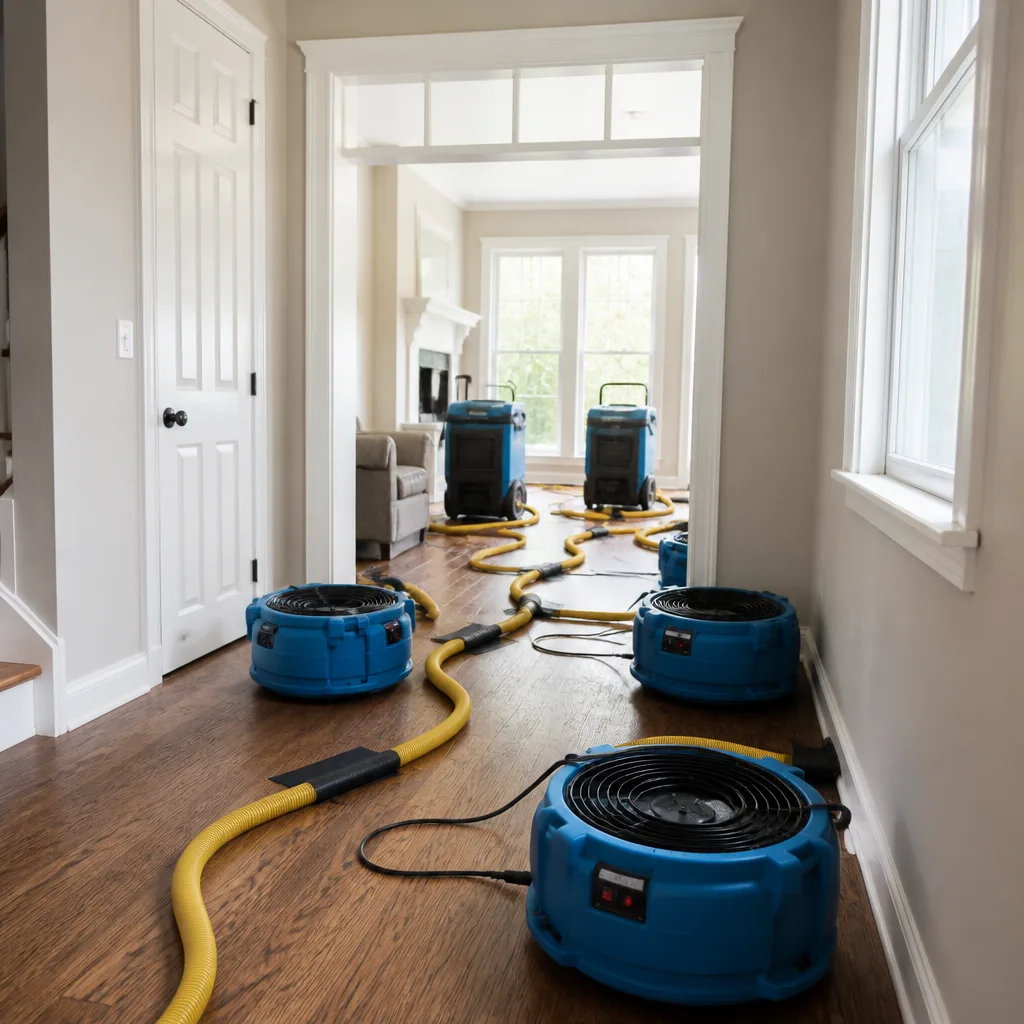
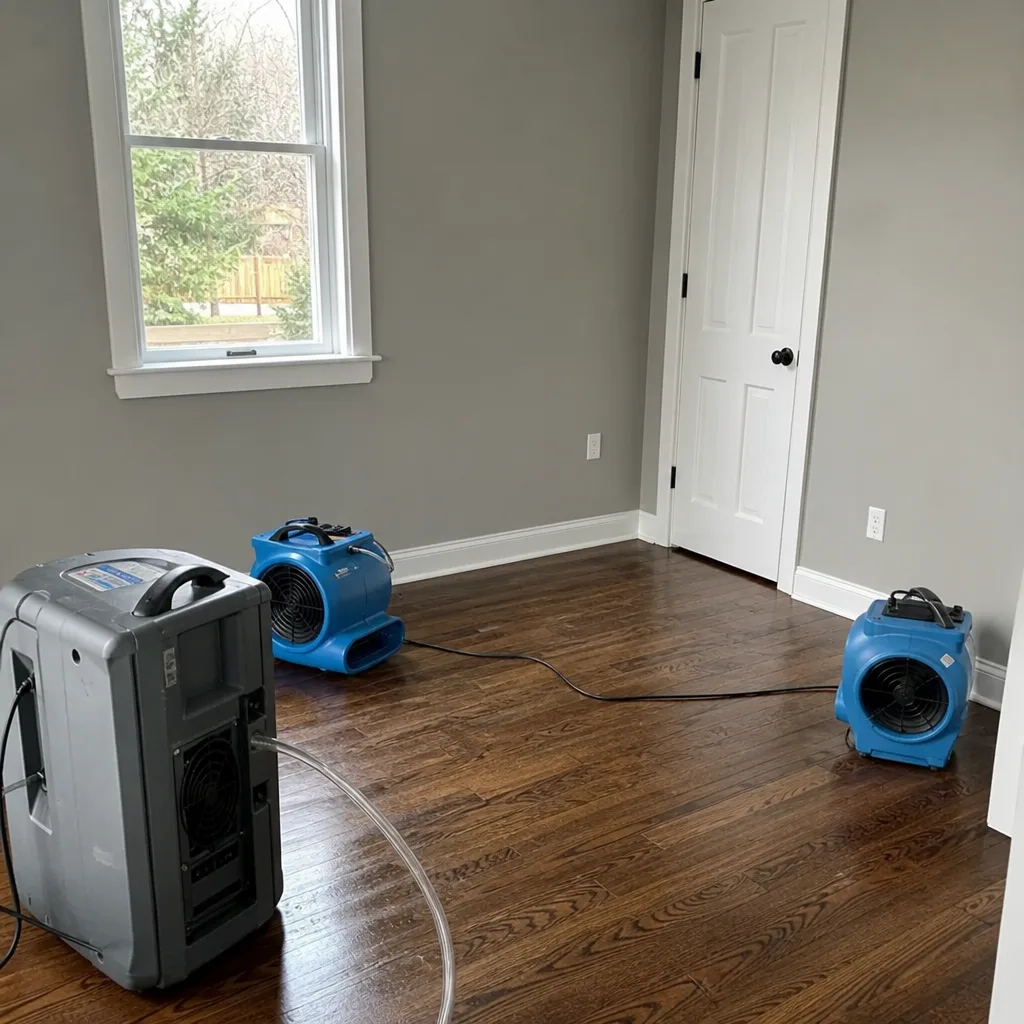
Commercial-grade Dri-Eaz dehumidifiers and XPOWER air movers go in, set to building-material-specific drying targets. Wade’s crew takes moisture readings every single day, and you get the full log at the end. Almost nobody does this, and it’s how you prove to your insurer that drying was done right.
Cleaning & Sanitization
HEPA air scrubbers run during this phase, not just at the beginning. We clean salvageable contents, apply antimicrobial treatment where water category demands it, and remove what cannot be saved. Then we address smoke residue, soot, or sewage-contaminated materials depending on the loss.
Specialty Treatment & Hazard Abatement
This is where Harrison work gets specific. Pre-1978 buildings mean we test for asbestos and lead paint before any demolition. If prior remediation left mold behind framing, that gets documented and removed now, not sealed up for the next flood to find.
Repairs & Restoration
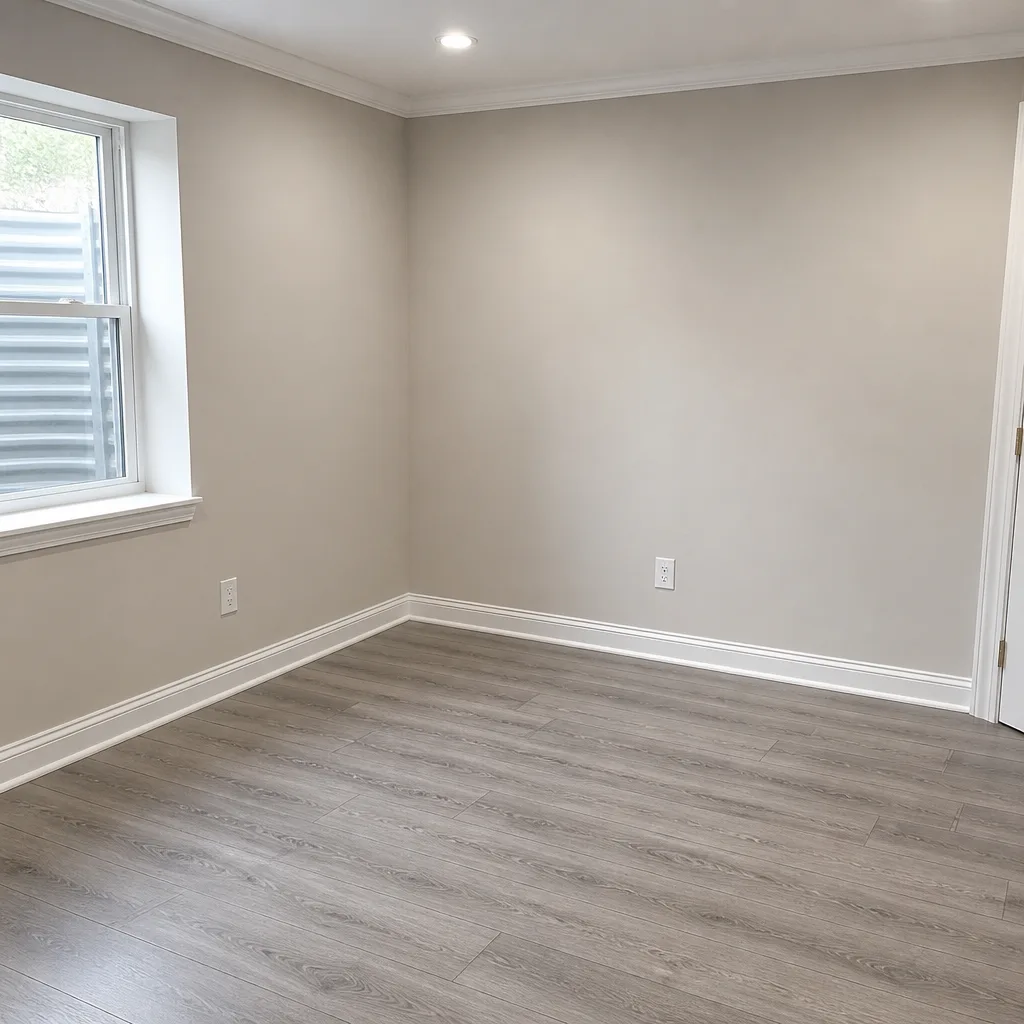
We rebuild to wind-rated code for Harrison’s position on the Passaic: Impact-rated overhead doors, reinforced storefront systems, proper flashing and drainage. The 90-Day Done Right Promise is in writing on every water, fire, and mold restoration contract. If it’s not done right, Wade comes back and makes it right.
Need Emergency Commercial Restoration in Harrison Now?
Crews minutes away, answering live 24 hours a day. The sooner we start, the less it costs.
Working With Your Insurance Company
Nobody wants to become a full-time claims manager the week their commercial space floods. That’s not the job you signed up for, and you shouldn’t have to do it between phone calls and electricians. Wade deals with the adjuster directly. That means he’s on the phone with them before the first day is done, explaining the Category 3 water in the basement, the moisture readings from the floor assembly, and why this particular flood event requires more than a coat of Kilz and a new baseboard. The documentation starts the moment we arrive, because flood claims in a FEMA AE zone get extra scrutiny, and vague descriptions don’t hold up when an adjuster asks why a full gut was necessary. We’d rather hand them a wall-to-wall record than have you stuck answering questions you didn’t know to prepare for.
What We Provide Your Insurer
- Thorough documentation of the loss
- Photos of all damage, room by room
- Moisture readings and drying logs
- A detailed, line-item scope of work
- Direct coordination with your carrier
Built for Harrison’s Loss Calendar
Harrison doesn’t have a “restoration season,” but the patterns are there if you’ve worked the town long enough. January and February bring hard freezes that burst supply lines in unheated rear additions and older storefronts along Frank E. Rodgers Boulevard. March into April is the wildcard: snowmelt up the Passaic watershed plus early spring rain events push the river toward overtopping, and you get that slow-rising, foundation-saturating seepage in riverside commercial basements. Late May through August is thunderstorm season, and Harrison’s biggest ugly secret is the combined sanitary/storm sewer system. When a summer convective storm drops two inches in forty-five minutes, those old lines cannot handle the volume, and Category 3 sewage backflow comes up through floor drains in the same building that’s also taking rain through a flat roof. Autumn is nor’easter territory. Wind-driven rain finds every old brick mortar joint, every rotted window casing, every overhead door gasket that was already cracked. Harrison’s pre-war buildings weren’t designed for wind loads any modern code would accept, so every storm season we replace wind-rated doors and reinforce storefront tracks that failed because they’d never been upgraded.
Commercial Restoration Across Harrison’s Neighborhoods
The riverfront blocks along the Passaic, from the Red Bull Arena side of town down past the old industrial waterfront, see the most severe flood loss. These are mostly early-1900s brick structures with rubble-stone foundations, and once the river gets into them, the water doesn’t leave quietly. We respond up into the Frank E. Rodgers Boulevard corridor differently: storefront glass, overhead doors, and roof drainage are the usual culprits there, because that’s where a lot of the retail and restaurant stock sits. The blocks around Harrison Avenue and the residential-commercial mix near Hamilton Street have two-family wood-frames converted to mixed use, and those are the ones where we find the hidden prior damage, old Category 3 mitigations dried in place between insurance claims, mold quietly working behind intact surfaces. Over by the PATH station and the newer development near it, wind damage to overhead doors and rooftop HVAC curb flashings is the pattern, because those buildings sit more exposed to nor’easter gusts than the tighter rowhouse blocks. Each area has its own failure profile, and a crew that has worked Harrison for years already knows what they’re walking into before they open the door.
Specialized Commercial Restoration Services We Offer in Harrison
Large-Loss Response
When a Harrison commercial building floods from a Passaic overflow or a major system failure, you’re not dealing with one suite affected. You’re dealing with the whole first floor, the basement, electrical rooms, inventory, and tenants. Wade coordinates a large-loss response with multiple extraction teams, temporary power if needed, and a documented sequence of drying so your insurer can see that the work happened in the right order at the right speed. This is not a job for a pickup truck and two dehumidifiers.
Business Interruption Minimization
Every day a commercial space in Harrison is closed is revenue gone and tenants calling. Wade’s crew works to get temporary barriers up, the water out, and the structure stabilized fast enough that you’re closed for days, not months. In Harrison’s restaurant and retail strips, that means an organized, visible effort that lets you tell your customers a credible reopening date. Documented drying logs also help substantiate a business interruption claim if you file one.
Document & Inventory Recovery
Floodwater doesn’t care if it’s soaking drywall or a century of paper records. Harrison’s older commercial buildings often house years of files, manifests, or architectural documents in basements that flood regularly. We freeze-dry what can be saved, digitize or stabilize documents as we go, and work with contents-restoration specialists under our supervision. The same applies to inventory: we separate what can be decontaminated from what has to be written off, and we document it line by line for your insurer.
Office & Retail Restoration
An office above a flooded Harrison basement is still out of commission when the humidity from below drives indoor RH past 60% and the mold clock starts ticking. Retail spaces need more than drying: display units, point-of-sale wiring, and finished surfaces have to be back to showable condition. We do both, with the same daily moisture log and the same written scope before any work starts.
Multi-Unit & HOA Restoration
Harrison’s two- and three-family converted buildings often fall under HOA or landlord responsibility, which means three parties to a claim: the owner, the tenant, and the association. Wade deals with all of them directly. He also knows how to keep a job in a shared structure from turning into a dispute: written scope, daily logs, and a clear line between what gets restored and what gets replaced.
Industrial Facility Cleanup
The industrial blocks down by the river have their own concerns: heavy electrical services, machine bases bolted to slabs, chemical inventory, and drainage systems that predate the Clean Water Act. We handle those cleanups with the same documentation standard, but with extra attention to confinement and protecting running operations wherever possible.
What happens when you call
- 1
A real person answersNo phone trees - you reach a local pro.
- 2
You get an upfront price rangeHonest numbers before anyone is dispatched.
- 3
A background-checked tech heads outLicensed & insured, dispatched right away.
- 4
You approve before work beginsNothing starts until you say go.
Commercial Restoration Costs in Harrison, NJ
You’ll want straight numbers, so here they are. A small commercial water-damage cleanup in Harrison, say a supply-line break in a single tenant suite with 200 square feet of drywall and carpet affected, typically runs $2,800 to $5,500. A Category 3 sewage-backup or Passaic river-flood cleanup in a basement or first floor runs $6,000 to $14,000 on average, and that goes up fast if you have finished tenant space, office equipment, or extensive cabinetry involved. A full commercial storm-damage restoration with drywall replacement, flooring, storefront repair, and wind-rated overhead door replacement can land between $18,000 and $50,000 depending on square footage and how much of the building was pre-1978. What moves the price: water category, how far water traveled before extraction started, whether prior incomplete remediation turned up, and whether asbestos or lead abatement is required. Insurance generally covers sudden and accidental damage, but a claim on a building in Harrison’s FEMA AE zone often gets an adjuster looking hard at whether damage came from a single event or from ongoing seepage. That’s where our documentation makes a real dollar difference. The free visual inspection leads to a firm, written scope before any work starts, not an estimate that doubles a week later.
We Also Serve Cities Near Harrison
If your commercial property is in a neighboring town, you’re still in our service area. We regularly work in Kearny, North Arlington, Jersey City, and Lyndhurst, and the same 45-minute response commitment and live 24/7 answer apply across the region.
Serving Harrison, NJ - Our Local Coverage Area
We’re based in the Harrison area and know this community well. Use the map below to see our service coverage - if you’re nearby, we can almost certainly help.
Harrison Commercial Restoration Questions, Answered
How does Harrison’s FEMA AE flood zone affect the scope of work for commercial storm damage?
A Harrison commercial storm-damage scope has to account for Category 3 water as the default, not the exception. What looks like “just a wet basement” after a Passaic overflow is actually contaminated floodwater that requires antimicrobial treatment, not just drying. The AE zone also means we check carefully for prior incomplete remediation before we scope a new loss, because many buildings along the river have already been through multiple claims and some of that work was dried in place, not removed. Call (856) 501-6142 for a free inspection and a scope built for this town, not a template from a state away.
What do you look for on wind-rated overhead doors after a nor’easter here in Harrison?
After a nor’easter, we check track alignment, panel deformation, and proper wind-load rating on overhead doors. Harrison’s pre-war buildings often have doors that were never upgraded to current wind codes, and a door that holds fine during calm weather will fail at the track during the next storm. Post-storm track damage misaligns the door, which then lets wind and rain into the building. We document the damage, repair the track, and recommend the right wind-rated replacement if the door can’t be brought up to code for Harrison’s exposure along the Passaic. Call (856) 501-6142 and we’ll look at it free, no trip charge in-county.
Why does Harrison have so many Category 3 water calls compared to inland Hudson County?
Harrison sits in the Passaic River floodplain with a combined sanitary and storm sewer system that predates modern engineering. When heavy rain hits, river water pushes back through the same floor drains that should be carrying sewage away, and both come up into the basement together. That’s Category 3 by definition, and it’s why a Harrison commercial flood cleanup routinely involves sewage-contaminated water in the same space as river overflow. If you’ve just had a Category 3 event, call (856) 501-6142 now. We’re answering live and we’ll be there fast.
How do you handle asbestos or lead paint in Harrison’s pre-1978 commercial row homes during restoration?
Before any demolition in a building built before 1978, we test for asbestos pipe insulation, floor tiles, and lead paint. If a positive result comes back, we follow an abatement protocol and coordinate with licensed specialists, then document it for your insurer. Skipping that test is how a small restoration job turns into a regulatory problem and a future liability. It’s part of our written scope process on every Harrison commercial job in the old brick stock along the riverfront. Call (856) 501-6142 if you need a clear answer on what your building is going to require.
What documentation do I need for insurance on a repeated Passaic flood loss in a Harrison commercial building?
You need pre-loss condition documentation, a clear event date, photographs of all damaged areas, a line-item scope, and drying logs. In Harrison specifically, you’ll often also need documentation showing whether prior flood claims’ remediation was complete, because adjusters will ask. We pull drywall regularly to find old Category 3 mitigations that were never finished, and we photograph that before we do anything else. That documentation is often the difference between a claim that gets paid and one that stalls in “more information needed.” Call (856) 501-6142 and Wade will walk you through it in plain terms.
How long does commercial restoration take in Harrison after a flood?
Extraction starts within an hour of our arrival. Drying typically runs three to five days with commercial Dri-Eaz or Phoenix equipment, and we monitor daily with moisture readings you can see. Reconstruction depends on scope: a small tenant suite can be back open in two to three weeks. A full first-floor gut from Category 3 water in an old brick building can run two to three months once you factor in asbestos abatement, rebuilding to wind-rated code, and final inspections. We’ll give you a timeline in writing before any work starts. Call (856) 501-6142 for a free assessment.
Can tenants stay in the building during commercial restoration work in Harrison?
It depends on what we find. A contained, Category 1 water loss in one suite can often proceed while other tenants stay. A Category 3 floodloss involving sewage backflow or river water means containment barriers, negative air pressure, and possibly temporary relocation for affected areas. We’ll tell you straight, because the liability of letting people work next to exposed contaminated material is not something any competent restoration company will gamble on. Call (856) 501-6142 and we’ll assess your specific building.
What should I do in the first 30 minutes after a commercial flood or storm event in Harrison?
First, cut power to affected areas if you can do it safely, and don’t enter standing water that may be energized or contaminated. Then call (856) 501-6142. Do not start extracting water yourself with a shop vac and do not open walls to “let them dry.” The moisture mapping evidence we need for your insurance claim is harder to gather after a homeowner or tenant has already disturbed the scene. The sooner our crew arrives, the more we can save and the less the whole thing costs. Wade answers his own phone, day or night.
Written by Wade Ferris, Owner at Wade’s Restoration. Wade has been answering his own phone and working commercial restoration in Harrison’s flood-prone blocks since 2007. He holds IICRC certifications in Water Damage Restoration, Fire & Smoke Restoration, and Applied Microbial Remediation, and he stands behind every job with a written 90-Day Done Right Promise.